Saturday PM
Sessions marked with this symbol indicate that this session or event is part of the
Leading Edge and Beyond mini-track. |
171. Practice Forum: Saturday, 12:001:20
San Antonio A (3rd floor-CC)
Improving the Use and Usefulness of Multisource Comments
The use of comments in multisource feedback is relatively understudied compared to work on quantitative ratings. Presenters explore several different means of improving the use and usefulness of comments, including identifying characteristics of helpful comments, presentation of summary quantitative ratings before offering comments, and automated content coding technology.
Kristofer J. Fenlason, Data Recognition Corp, Chair
Jennifer D. Kaufman, Dell Inc., Brandy Orebaugh Agnew, Dell Inc., Improving 360 Comments at Dell: Objective Statements and Ratings Summaries
Nikki L. Moore Miller, Ameriprise Financial, Kimberly J. OFarrell, Minnesota State University-Mankato, Carrie Christianson DeMay, Data Recognition Corp,
Do Multisource Feedback Comment Characteristics Help or Hinder Perceived Performance Improvements?
Dale S. Rose, 3D Group, Greg Robinson, 3D Group, Comment Usefulness in the Eyes of the Feedback Holder: Leaders Speak
Carrie Christianson DeMay, Data Recognition Corp, Anna Chandonnet, Data Recognition Corporation, Colleen Rasinowich, Data Recognition Corp, Kristofer J. Fenlason, Data Recognition Corp,
Application of an Automated Content Analysis Process to Multisource Comments
Submitted by Anna Chandonnet, achandonnet@datarecognitioncorp.com
172. Symposium: Saturday, 12:001:20 San Antonio B (3rd floor-CC)
The Evolution and Utilization of Personal Resources in Self-Regulation
Personal resources, such as time, effort, and emotions, are critical factors in work motivation. Utilizing a variety of within-person methodologies, the studies in this symposium examine the development and evolution of self-regulatory resources over time, as well as the application of resources towards the attainment of single and multiple goals.
Aaron M. Schmidt, University of Akron, Chair
James M. Diefendorff, University of Colorado-Denver, Erin M. Richard, Florida Institute of Technology,
Examining the Within-Person Relationships Among Effort, Affect, and Motivation in a Single Performance Episode
Chad Michael Dolis, University of Akron, Aaron M. Schmidt, University of Akron, The Role of Discrepancies and Combined Goal Expectancy on Resource Allocation and Multiple-Goal Performance
Aaron M. Schmidt, University of Akron, Chad Michael Dolis, University of Akron, Adam P. Tolli, University of Akron,
Goal Framing, Individual Differences, and Temporal Dynamics
Patrick D. Converse, Florida Institute of Technology, Richard P. DeShon, Michigan State University,
A Tale of Two Tasks: Depletion and Adaptation Over Multiple Self-Regulatory Tasks
John J. Donovan, Virginia Tech, Discussant
Submitted by Aaron M. Schmidt, aschmidt@uakron.edu
173. Symposium: Saturday, 12:001:20 Houston C (3rd floor-CC)
Revising the Five-Factor Model: A New Six-Dimensional Model of Personality
The 5-factor model has recently been disputed based upon new evidence from lexical studies of personality structure, which suggests that there are 6 (not just 5) cross-culturally replicable personality dimensions. A resulting 6-dimensional model of personality is discussed and some applications of the model in I-O psychology are presented.
Kibeom Lee, University of Calgary, Chair
Michael C. Ashton, Brock University, Co-Chair
Michael C. Ashton, Brock University, Kibeom Lee, University of Calgary, David L. Morrison, University of Western Australia, John Cordery, University of Western Australia, Patrick D. Dunlop, University of Western Australia,
An Overview of the HEXACO Model of Personality Structure and the HEXACO Personality Inventory
In-Sue Oh, University of Iowa, Huy Le, HumRRO, Chon-Seok Kim, White Information Networking, Tae-Yong Yoo, Kwangwoon University,
Honesty-Humility and Emotional Competencies as Predictors of Task and Contextual Performance over General Mental Ability and the Big Five Personality
Bernd Marcus, University of Western Ontario, Kibeom Lee, University of Calgary, Michael C. Ashton, Brock University,
Explaining the Relationship Between Integrity Tests and Counterproductive Behavior Using the HEXACO Model of Personality
Reinout E. de Vries, Vrije Universiteit Amsterdam, Leadership and the HEXACO Model of Personality
Robert T. Hogan, Hogan Assessment Systems, Discussant
Submitted by Kibeom Lee, kibeom@ucalgary.ca
174. Special Event: Saturday, 12:001:20 State Room 1 (3rd floor-CC)
I-O Masters Council
I-O masters program directors and other interested faculty come together to learn from each other. Issue of particular interest to running I-O masters programs are targeted in an interactive discussion format. An additional objective is to develop a network among I-O masters program directors for ongoing mutual benefit.
Patrick M. McCarthy, Middle Tennessee State University, Facilitator
175. Symposium: Saturday, 12:001:20 State Room 3 (3rd floor-CC)
The Validity of Selection Instruments: Single Scales Versus Configurations
This symposium addresses issues relating to the use of multiple scales for making selection decisions. We also review alternatives for accurately assessing validity and presenting results when cut scores are used and compare these alternatives to the traditional examination of correlations between individual predictor variables and job performance.
Jeff Foster, Hogan Assessment Systems, Chair
Brian M. Bonness, EASI-Consult, LLC, A Review of Benchmarking for Combining Scale Scores
Stephen T. Murphy, University of Oklahoma, Scott A. Davies, Hogan Assessments Systems,
Meta-Analysis of a Personality Profile for Predicting Sales Success
Michelle Streich, University of Tulsa, Jeff Foster, Hogan Assessment Systems, Alternatives for Assessing Validity When Cut Scores Are Used for Selection
Jeffrey D. Facteau, Previsor, Inc., Discussant
Submitted by Jeff Foster, jfoster@hoganassessments.com
176. Symposium: Saturday, 12:001:20 State Room 4 (3rd floor-CC)
Employee Well-Being in Small Businesses: Health Promotion, Climate, and Stress
The Small Business Wellness Initiative (www.sbwi.org), a collaborative project funded by the Department of Health and Human Services, yielded 4 research studies, each taking a different perspective (employees, business owners, and work climate). Discussion focuses on the application of I-O psychology to the wellness needs of small business owners.
Charles Aden, Organizational Wellness & Learning Systems, Joel Bennett, Organizational Wellness & Learning Systems, M. Aaron Sayegh,
Organizational Wellness & Learning Systems, Job Stress and Physical Health: Is Wellness a Protective Resource?
Ashleigh Schwab, The University of Texas at Arlington, Katherine Roberto, The University of Texas at Arlington, Joel Bennett, Organizational Wellness & Learning Systems, Ada Woo, The University of Texas at Arlington,
Stress Climate and Behavioral/ Productivity Problems for Small Business Owners
Camille Patterson, Tarrant Council on Alcoholism and Drug Abuse, Ada Woo, The University of Texas at Arlington, M. Aaron Sayegh, Organizational Wellness & Learning Systems, Team Awareness and Health Promotion: Multilevel Analysis of Experimental Effects
Joel Bennett, Organizational Wellness & Learning Systems, Beyond Drug-Testing to Wellness Revisited: Tools for Technology Transfer
James Campbell Quick, Goolsby Leadership Academy (UTA), Discussant
Submitted by Mark C. Frame, Frame@uta.edu
177. Theoretical Advancement: Saturday, 12:001:20
Lone Star C3 (2nd floor-CC)
Theoretical Advancements in E-Learning Research
Recent reviews of e-learning research have highlighted the lack of theory to guide research and practice and also concluded that e-learning research is lagging practice. The purpose of this session is to present theory to guide e-learning research and to discuss how such research can address challenges faced by practitioners.
M. Susan Taylor, University of Maryland, Chair
Kara L. Orvis, Aptima, Practitioner Presentation: Challenges of E-Learning
N. Sharon Hill, University of Maryland, Toward An Integrative Theoretical Framework for E-Learning Research
Karen Wouters, Ghent University, Bradford S. Bell, Cornell University, Aligning Training and Technology: A Theoretical Framework for the Design of Distributed Learning Systems
Steve W. J. Kozlowski, Michigan State University, Kenneth G. Brown, University of Iowa,
Expanding the Criterion Domain Used to Evaluate Training in Work Organizations: A Social Capital Perspective
Eduardo Salas, University of Central Florida, Discussant
Submitted by N. Sharon Hill, ns.hill@comcast.net
178. Symposium: Saturday, 12:001:20 Austin 1 (2nd floor-H)
The Qualitative Study of Leadership: Research Methods and Substantive Findings
Leadership research is disproportionately quantitative, but there is growing interest and encouragement for applying qualitative methods. This session will demonstrate unique design choices in using qualitative methods to study leadership as well as present empirical findings from recent studies of derailment, leadermember exchange, leading creative talent, and team engagement.
Jennifer T. Lindberg, North Carolina State University, Chair
S. Bartholomew Craig, North Carolina State University, Co-Chair
Ellen Van Velsor, Methodological Issues in the Comparison of Leadership Experience Data From Unique Groups
Herman M. Tse, University of Queensland, Marie T. Dasborough, Oklahoma State University, Neal M. Ashkanasy, University of Queensland,
A Qualitative Approach to Understanding LeaderMember Exchange Relationships
Daniel Rosenberg, North Carolina State University, Jennifer T. Lindberg, North Carolina State University, S. Bartholomew Craig, North Carolina State University,
Improving Leadership in University-Based Cooperative Research Centers
Jennifer T. Lindberg, North Carolina State University, Robert B. Kaiser, Kaplan DeVries Inc.,
Engaging Leadership: A Qualitative Study of How Leaders Impact Team Engagement
Jerry Hunt, Texas Tech University, Discussant
Submitted by Jennifer T. Lindberg, jtlindbe@unity.ncsu.edu
179. Symposium: Saturday, 12:0012:50 Seminar Theater (2nd floor-H)
Advances in Measurement Equivalence: New Item Parameter Replication (IPR) Approach
This symposium will cover recent advances in using current and new cut-off criteria to detect differential item functioning. Three ME investigations into a personality measure, a Monte-Carlo simulation and in a performance appraisal will be presented. The practical applications of using these new cut-offs and procedures will be discussed.
Nambury S. Raju, Illinois Institute of Technology, Chair
Michael S. Henry, Stanard & Associates, Inc./ITT, Nambury S. Raju, Illinois Institute of Technology,
Examining Traited and Situational Impression Management on Personality Tests via Item Response Theory
Kristen A. Fortmann, Illinois Institute of Technology, Nambury S. Raju, Illinois Institute of Technology, T.C. Oshima, Georgia State University,
The DFIT Framework: Development and Evaluation of New Criteria for Polytomous DIF
Larry J. Laffitte, ARI-LDRU, Tuan Q. Tran, Kansas State University, Optimizing Factor Structures With Measurement Equivalence Using Confirmatory Factor Analysis and Item Response Theory
Michael A. Barr, Chicago School of Professional Psychology, Discussant
Submitted by Larry J. Laffitte, larry.laffitte@leavenworth.army.mil
180. Roundtable: Saturday, 12:001:20 Majestic 6 (37th floor-H)
The Advancement and Success of Women of Color in Organizations
Many organizations have embraced diversity in recent years; however, as research demonstrates, women of color are still faced with enormous obstacles. A recent case study reveals that organizations committed to identifying and addressing issues faced by women of color can help overcome barriers to career and professional development.
Kecia M. Thomas, University of Georgia, Host
Arlene Green, Frito-Lay, Co-Host
Michelle Collins, HRD Solutions, Co-Host
Greg Tupper, Tesoro Corporation, Co-Host
Submitted by Greg Tupper, greg@hrdsolutions.com
181. Practice Forum: Saturday, 12:001:20
Majestic 7 (37th floor-H)
Integrating HR Systems Using Job-Related Competencies
Many organizations are recognizing the benefits of using job-related competencies to integrate their HR systems (e.g., selection, compensation, training). This practice forum presents the approaches, results, and challenges encountered in 3 major organizations pursuing such efforts. Discussion focuses on lessons learned and implications for theory and future research.
Ren Nygren, Development Dimensions International, Chair
Geneva M. Phillips, Boeing Company,
Jody Toquam-Hatten, Boeing Company, Dianna Peterson, Boeing Company, Driving Integrated Human Resource Solutions: Data Considerations With a Competency-Based Approach
Stacia J. Familo-Hopek, UPS,
Carolyn L. Facteau, Facteau and Associates, LLC,
Job Analysis for Selection: The Foundation That Allows the Walls to Stand
Alan G. Frost, Darden Restaurants,
Jay Romans, Hughes Supply,
Linking Position Profiling to the Bottom Line: An Outside-In Approach
Edward L. Levine, University of South Florida, Discussant
Submitted by Ren Nygren, ren.nygren@ddiworld.com
182. Practice Forum: Saturday, 12:001:20
Majestic 3 (37th floor-H)
Global RecruitmentPossible, Probable, or Present Here And Now?
Multinational businesses often apply core business processes across the globe. Local recruitment practices sometimes resist global standardization. This forum shares the experience of Royal Dutch Shell Plc (Shell) in rolling out a truly global campus recruitment process. The presenters contrast Shells approach with that of other global companies.
James Bywater, SHL Group Plc, Chair
Leah Toney Podratz, Shell Oil Company, Co-Chair
James Bywater, SHL Group Plc, Leah Toney Podratz, Shell Oil Company, Heika Bauer, Shell International, Thi Bui, Shell Oil Company,
Global RecruitmentPossible, Probable, or Present Here and Now?
Submitted by Leah Toney Podratz, leah.podratz@shell.com
183. Practice Forum: Saturday, 12:301:50
Houston A (3rd floor-CC)
Technology and Selection System Design: Challenges and Best Practices
Practitioners are creating and using Web-based job analysis and validation tools to decrease the invasiveness, time, and cost of consulting engagements. This forum will present how technology can benefit selection system design projects and highlight practical implications, challenges, and best practices associated with technology with examples from industry.
Sarah S. Fallaw, Previsor, Inc., Chair
Lilly Lin, Development Dimensions International, Use of Technology to Streamline Job Analysis Processes
Ryan Ross, Hogan Assessment Systems, Jared D. Lock, Hogan Assessment Systems, Combining Job Analysis, Archival Data, and Technology to Establish Validity
Shana S. Stukalsky, Applied Psychological Techniques, Inc., David M. Finch, Applied Psychological Techniques, Inc., Christina Norris-Watts, Applied Psychological Techniques, Inc.,
From Rater Errors to System Solutions: Evaluating Web-Based Performance Measurement
Craig R. Dawson, Previsor, Inc., Sarah S. Fallaw, Previsor, Inc., Technology in Selection System Consulting: Client Considerations
Robert D. Gatewood, Texas Christian University, Discussant
Submitted by Sarah S. Fallaw, sfallaw@previsor.com
184. Practice Forum: Saturday, 12:302:20
Houston B (3rd floor-CC)
Chinas Rising Economic Tide: Are I-O Psychologists Missing the Boat?
Chinas rising economy has created tremendous need for leadership development, talent management, training, and hiringareas where I-O psychology can bring tremendous value. Both research and hands-on experience will be shared including suggestions for how to more effectively bring the practice of I-O psychology to organizations and individuals within China.
Kirk L. Rogg, Aon Consulting, Chair
Donald D. Davis, Old Dominion University, Brian J. Ruggeberg, Aon Consulting, Katy Mohler Fodchuk, Old Dominion University, Ying Liu, Old Dominion University, Kurt L. Oburn, Old Dominion University,
I-O Psychology in China: Developing Culturally Informed, Research-Based Practice
Barbara L. Kruse, LOMA, Lessons Learned in Implementing Certification and Knowledge Tests in China
James D. Eyring, Dell, Accelerating Leadership Development in the PRC
Darrell D. Hartke, Aon Consulting, Lorraine C. Stomski, Aon Consulting, Joseph A. Gier, Self-employed,
Does China Have the Right Stuff for Global Leadership?
Ying Liu, Old Dominion University, Donald D. Davis, Old Dominion University, Measuring and Enhancing
Teamwork in Chinese Organizations
Submitted by Kirk L. Rogg, Kirk_Rogg@aon.com
185. Panel Discussion: Saturday, 12:302:20
State Room 2 (3rd floor-CC)
Making the Move From Psychology to B-Schools: Issues to Consider
There is an increasing trend for I-Os to move from psychology departments to business schools. This panel includes 5 who made the switch (all as junior faculty in the past 5 years) and 1 who is seriously concerned about this trend. This session will focus on answering the audiences questions.
Deidra J. Schleicher, Purdue University, Chair
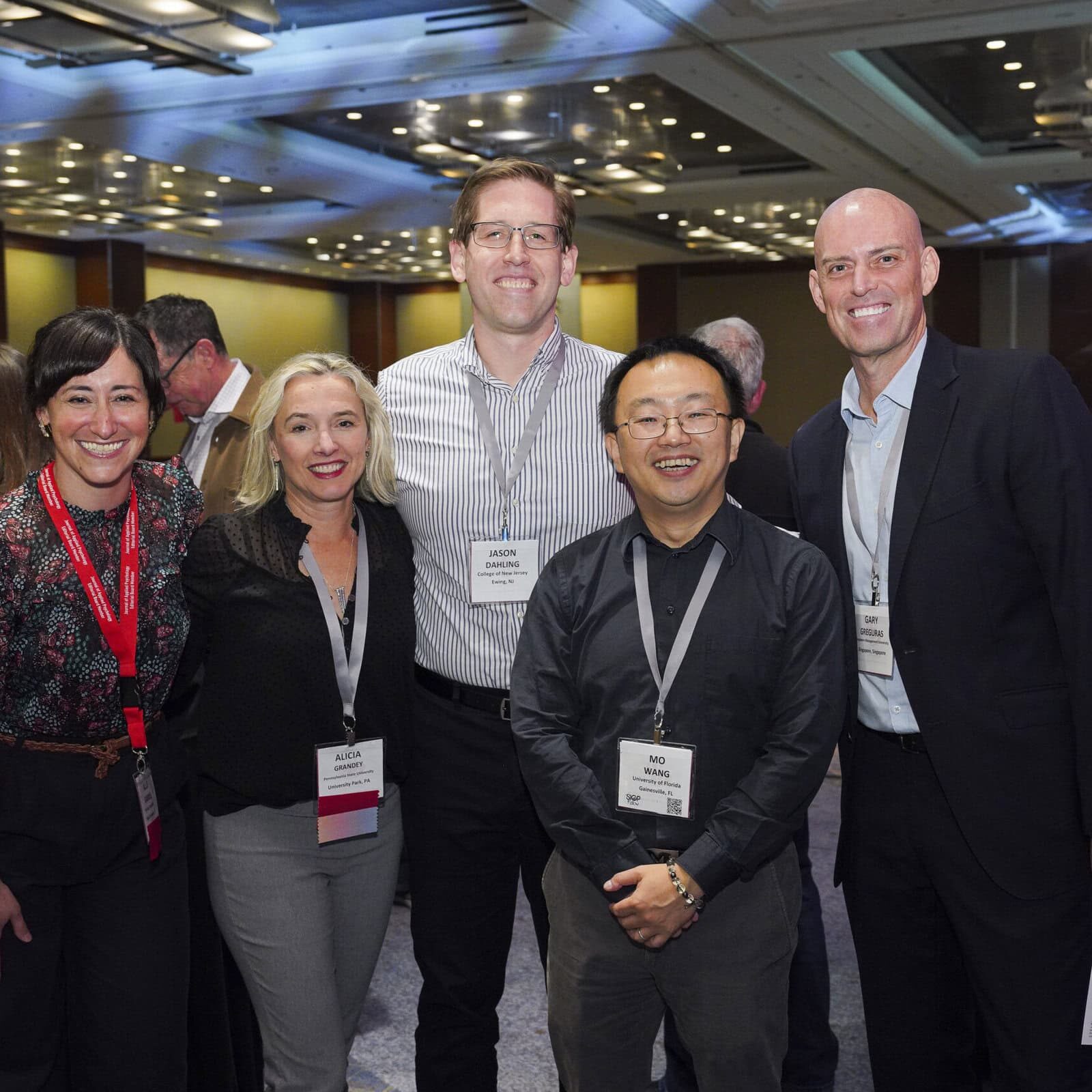
Gary J. Greguras, Singapore Management University, Panelist
Scott Highhouse, Bowling Green State University, Panelist
Michelle A. Marks, George Mason University School of Management, Panelist
Jerel E. Slaughter, University of Arizona, Panelist
Paul E. Tesluk, University of Maryland, Panelist
Submitted by Deidra J. Schleicher, deidra@purdue.edu
186. Symposium: Saturday, 12:301:50 Lone Star C1 (2nd floor-CC)
Toward Better Understanding and Measurement of Emotional and Social Intelligence
The papers in this symposium describe recent emotional and social intelligence research. Advances in measurement and understanding of these related constructs will be described, including evaluation of the incremental validity of 3 new EI measures, a taxonomy of social competence constructs, and a theory of antecedents of social work performance.
Walter C. Borman, Personnel Decisions Research Institutes, Chair
Richard D. Roberts, ETS, Ralf Schulze, ETS, Gerry Matthews, University of Cincinnati, Moshe M. Zeidner, University of Haifa, Johannes Sattler, University of Muenster,
Self-Estimated Emotional Intelligence: Not Much More Than Personality?
Ralf Schulze, ETS, Richard D. Roberts, ETS, Jennifer Minsky, ETS, Gerry Matthews, University of Cincinnati,
Developing Performance-Based Measures of Emotional Intelligence
Morgan J. Morrison, JCPenney Co. Inc., Eric D. Heggestad, University of North Carolina-Charlotte,
Seeking an Adequate Framework: Exploring the Comprehensiveness of the Social Competence Inventory
Robert J. Schneider, Personnel Decisions Research Institutes, Jeff W. Johnson, Personnel Decisions Research Institutes,
Direct and Indirect Antecedents of Socially Competent Work Performance
Maureen OSullivan, University of San Francisco, Discussant
Submitted by Robert J. Schneider, Robert.Schneider@pdri.com
187. Symposium: Saturday, 12:301:50 Lone Star C2 (2nd floor-CC)
Enduring Challenges in Linkage Research: Some Lessons From the Field
Linkage research in applied settings presents many obstacles, from concept to completion. This session presents 4 case examples of linkage research in organizations, focusing on several key challenges, including effective performance measurement, atypical units of analysis, counterintuitive findings, and defining clear action steps from the results.
Kelly R. Harkcom, ISR, Chair
Adam Zuckerman, ISR, Co-Chair
Graeme J. Ditchburn, ISR, Linkage Research With Atypical Performance Measures or Units of Analysis
Allen I. Kraut, Baruch College/Kraut Associates, William E. Dodd, Independent Consultant,
The Employee Attitudes That Precede Client Satisfaction: A Case Study
Larry W. Norton, PETsMART, Inc., Adam Zuckerman, ISR, Linking Employee Attitudes to Business Performance at PETsMART
Mark Griffin, Australian Graduate School of Management, Discussant
Submitted by Kelly R. Harkcom, kelly.harkcom@isrinsight.com
188. Panel Discussion: Saturday, 12:302:20
Lone Star C4 (2nd floor-CC)
What Exactly is Executive Coaching Anyway? Graduate Students Question Experts
This panels purpose is to clarify the field of executive coaching for those considering a career or research on this topic. Graduate students will question practitioners and academics on an assortment of issues ranging from when I-O psychologists should engage in coaching to the ethical and practical dilemmas coaches face.
Robert L. Dipboye, University of Central Florida, Chair
Deborah DiazGranados, University of Central Florida, Co-Chair
Nic Bencaz, University of Central Florida, Co-Chair
Paul E. Levy, University of Akron, Panelist
Manuel London, SUNY-Stony Brook, Panelist
Anna Marie Valerio, Executive Leadership Strategies, LLC, Panelist
Vicki V. Vandaveer, Vandaveer Group, Inc, Panelist
Rodney L. Lowman, Alliant International University, Panelist
Susan Johnson Mecca, Personnel Decisions International, Panelist
Submitted by Nic Bencaz, nicbencaz23@hotmail.com
189. Special Event: Saturday, 12:301:20 Austin 2 (2nd floor-H)
M. Scott Myers Award for Applied Research in the Workplace
Project GLOBE: Original Goals, Current Critiques, and Future Directions
Project GLOBE is a large scale, cross-cultural research project designed to assess the relationship between organizational culture, societal culture, and leadership attributes. In this presentation, the original goals, the current critiques of the project, and preliminary findings from the ongoing phase will be discussed.
Joyce E. Bono, University of Minnesota, Chair
Robert J. House, University of Pennsylvania, Presenter
Paul J. Hanges, University of Maryland, Presenter
Mansour Javidan, Haskayne School of Business, Presenter
Peter W. Dorfman, New Mexico State University, Presenter
Vipin Gupta, Fordham University, Presenter
Mary Sully de Luque, Thunderbird, The Garvin School, Presenter
190. Practice Forum: Saturday, 12:301:50 Austin 3 (2nd floor-H)
Measuring Organizational Productivity Using ProMES (Productivity Measurement and Enhancement System)
Given the importance of capturing the performance domain at different organizational levels, the Productivity Measurement and Enhancement System
(ProMES) is an intervention that provides comprehensiveness and flexibility of measurement. Practitioners from the United States and Europe will discuss applications of ProMES in different organizational settings.
Robert D. Pritchard, University of Central Florida, Chair
Jose H. David, iPR PharmaceuticalsAstraZeneca, Co-Chair
Robert D. Pritchard, University of Central Florida, Implementing the Productivity Measurement and Enhancement System
Kenneth Malm, ProMES AB, Magnus Bergstrom, Fortum Corporation, Using the Web to Measure and Improve Productivity at Multiple Levels
Satoris S. Youngcourt, Personnel Decisions International, Jose H. David, iPR
PharmaceuticalsAstraZeneca, Developing an Overall Index of Organizational Productivity
Submitted by Jose H. David, jdavid@tamu.edu
191. Panel Discussion: Saturday, 12:301:50
Majestic 1 (37th floor-H)
Publishing in Psychological Bulletin, Psychological Review, etc.: Strategies
and Tactics
Many I-O scholars are interested in publishing in broad psychology journals but are unsure how to do so. Experience with the publication processes of such journals shows that there are important differences between the broader and the disciplinary journals. The purpose of this session is to highlight those differences and to consider strategies for overcoming them.
Jose M. Cortina, George Mason University, Chair
Carsten K. W. De Dreu, University of Amsterdam, Panelist
Fritz Drasgow, University of Illinois at Urbana-Champaign, Panelist
Timothy A. Judge, University of Florida, Panelist
Deniz S. Ones, University of Minnesota, Panelist
Submitted by Jose M. Cortina, jcortina@gmu.edu
192. Symposium: Saturday, 12:302:20 Majestic 4-5 (37th floor-H)
Adaptation, Withdrawal, and Turnover: Current Issues and Directions
This symposium presents current directions in the prediction and measurement of withdrawal and turnover. The research presented focuses primarily on newcomer adaptation/withdrawal, unit-level withdrawal, and job embeddedness. These empirical studies move beyond the traditional emphasis on job satisfaction and job alternatives to explore more complex constructs and issues.
Frederick L. Oswald, Michigan State University, Chair
Stephanie M. Drzakowski, Michigan State University, Co-Chair
David G. Allen, University of Memphis, Karen R. Moffitt, University of Memphis, Tobias Huning, University of Memphis,
The Role of Socialization Tactics and Perceived Organizational Support in Understanding Newcomer Turnover
Stephanie M. Drzakowski, Michigan State University, Neal W. Schmitt, Michigan State University, Frederick L. Oswald, Michigan State University, Alyssa Friede, Michigan State University, Anna Imus, Michigan State University, Brian H. Kim, Michigan State,
Adaptive and Maladaptive Withdrawal Behaviors in Ten U.S. Colleges and Universities: A Latent Growth Modeling Approach
Robert E. Ployhart, University of South Carolina, Jeff A. Weekley, Kenexa, Jase Ramsey, Moore School of Business,
A Longitudinal Examination of Unit-Level Turnover on Store Effectiveness
David D. Rowlee, Morehead Associates, Inc., Sara B. Stokes, Morehead Associates, Inc., Margarita V. Shafiro, Portland State University,
Toward a Further Understanding and Expansion of Job Embeddedness Theory: The Impact of Organizational Size on the Propensity to Leave
Brooks C. Holtom, Georgetown University, Simon T. Tidd, Vanderbilt University, Terence R. Mitchell, University of Washington, Thomas W. Lee, University of Washington,
Toward a Greater Understanding of the Dynamic Nature of Job Embeddedness
Robert J. Vandenberg, University of Georgia, Discussant
Submitted by Stephanie M. Drzakowski, merrit44@msu.edu
193. Interactive Posters: Saturday, 12:301:20 Majestic 8 (37th floor-H)
Safety
Cecily D. Cooper, University of Miami, Facilitator
193-1. Corporate Financial Decision Makers View of Safety
This study explored how senior financial managers perceive important risk management issues. The top 3 reported safety priorities and workers compensation losses are overexertion, repetitive motion, and bodily reaction. Money spent improving workplace safety would have significant returns and the most important safety modification was safety training.
Yueng-Hsiang E. Huang, Liberty Mutual Research Institute for Safety
Tom B. Leamon, Liberty Mutual Research Institute for Safety
Theodore K. Courtney, Liberty Mutual Research Institute for Safety
Submitted by Yueng-Hsiang E. Huang, yueng-hsiang.huang@Libertymutual.com
193-2. An Investigation Into the Generic Factor Structure of Safety Climate
There is continuing debate regarding the existence of generic safety climate characteristics. The current study conducted a comprehensive assessment of existing safety climate measures. No evidence was found to support a common structure, with 74 different factors identified. The possibility of generic factors existing at industry-specific level is discussed.
Sharon Clarke, The University of Manchester
Christine Flitcroft, The University of Manchester
Submitted by Sharon Clarke, sharon.clarke@manchester.ac.uk
193-3. Personal Values and the Safety ClimateSafety Behavior Relationship
The role of personal values in the safety climatesafety behavior relationship has often been omitted in research. We investigated the function of individualism in this relationship. Results indicated that there is a moderating effect of individualism on the relationship between safety climate and safety behavior.
Catherine Hetherington, University of Aberdeen
Jordan Robbins, George Mason University
Jeffrey L. Herman, George Mason University
Rhona Flin, University of Aberdeen
Submitted by Catherine Hetherington, c.hetherington@abdn.ac.uk
193-4. Improving Safety Outcomes: A Multilevel Analysis
We investigated the relationship between safety-related accidents and leadership support, workgroup cohesion, and location size. A multilevel mediation model was tested using hierarchical linear modeling and OLS regression. As expected, location size predicted variance in safety attitudes. Further, safety attitudes and management supportiveness were associated with safety behaviors.
Sara K. Jansen, University of Houston
Karla K. Stuebing, FSD Data Services, Inc.
Steve Ekeberg, The Sherwin-Williams Company
Kevin Sykora, The Sherwin-Williams Company
Submitted by Sara K. Jansen, skj02@yahoo.com
194. Community of Interest: Saturday, 12:301:20
Live Oak (2nd floor-H)
Executive Assessment & Selection
Richard P. Jeanneret, Jeanneret & Associates, and Robert F. Silzer, Human Resource Assessment & Development,
Faciltators
195. Poster Session: Saturday, 12:301:20
Lone Star A-B (2nd floor-CC)
Work & Family
195-1. Personality and Separation Anxiety in Employed Mothers
Personality traits of the 5-factor model and 3 separation concerns (maternal separation anxiety, concern about effects on child, and employment-related concerns) were examined in employed mothers. Several significant relationships were detected, suggesting that separation concerns may be systematically linked with dispositional characteristics. Applications and future research are discussed.
Deborah A. Danzis, High Point University
Submitted by Deborah A. Danzis, ddanzis@highpoint.edu
195-2. A Longitudinal Study of Faculty Pregnancy Leave Practices: 19952005
Unique factors in the academic setting (e.g., tenure track, the semester time frame, etc.) complicate policies governing pregnancy leave. This paper reports a longitudinal (19952005) case study of faculty pregnancy leave practices in a public southeastern university. The data address options for covering pregnancy leave, the perceived fairness and willingness of department heads to use these options, as well as a comparison of practices across time. The results of this study provide timely and useful data to inform department heads, deans, and faculty members as they determine which options to utilize for class coverage for pregnancy leave.
Elizabeth L. Shoenfelt, Western Kentucky University
Amy S. Pedigo, Gaylord Entertainment
Submitted by Elizabeth L. Shoenfelt, betsy.shoenfelt@wku.edu
195-3. Effects of Gender Match on Leader Member Exchange and WorkFamily Conflict
A structural equation model examined the relationships among supervisor gender, supervisor-subordinate gender match, leadermember exchange (LMX), and workfamily conflict (WFC). Gender match had significant main effects on LMX and WFC, although the sign of the relationships was unexpected. LMX also partially mediated the relationship between gender match and WFC.
Shannon K. Meert, Old Dominion University
Debra A. Major, Old Dominion University
Submitted by Shannon K. Meert, smeert@odu.edu
195-4. Work and Home Boundary Management: Testing the SegmentationIntegration Continuum
We investigated boundary management profiles of 251 workers in a test of the segmentationintegration continuum. Results indicate consistent clusters of boundary management practices related to preferences for segmentation and integration of the workhome domains. Results also indicate relationships between boundary management practices and workpersonal life interference and workpersonal life enhancement.
Carrie A. Bulger, Quinnipiac University
Russell A. Matthews, University of Connecticut
Mark E. Hoffman, Quinnipiac University
Submitted by Carrie A. Bulger, carrie.bulger@quinnipiac.edu
195-5. Work-Induced Guilt and Conservation of Resources on Satisfaction
We conducted 2 studies to examine the work-induced guiltconservation of resources (COR) relationship on job and life satisfaction. Results indicated that COR moderated all guiltsatisfaction relationships, such that the inability to manage resources contributed to lower levels of satisfaction as guilt increased from low to high levels.
Wayne A. Hochwarter, Florida State University
Pamela L. Perrewe, Florida State University
James Meurs, Florida State University
Lawrence A. Witt, University of New Orleans
Submitted by Pamela L. Perrewe, pperrew@cob.fsu.edu
195-6. WorkFamily Conflict: Work Group Crossover and Work Group Similarity
The crossover effects of the work groups workfamily conflict (WFC) on individual WFC were examined. We
find evidence of such crossover effects with a positive relationship between work group WFC and individual WFC. Further, similarity in both gender and number of dependents moderate this relationship.
Devasheesh Bhave, University of Minnesota
Amit Kramer, University of Minnesota
Theresa M. Glomb, University of Minnesota
Submitted by Devasheesh Bhave, dbhave@csom.umn.edu
195-7. International and Multisource Perspectives on WorkLife Balance and Career Derailment
We examined whether managers high in worklife balance might be perceived as more or less likely to derail in their careers than less balanced and perhaps more work-focused managers. We analyzed multisource ratings for 6,164 managers in 22 countries and tested gender and country values as moderators of the relationship.
Karen S. Lyness, Baruch College, CUNY
Michael K. Judiesch, Manhattan College
Submitted by Karen S. Lyness, karen_lyness@baruch.cuny.edu
195-8. Pruning of the WorkFamily Climate Construct
Workfamily culture, perceived organizational family support (POFS), and family-supportive organizational perceptions (FSOP) were analyzed with factor analysis to determine the overlap and distinctiveness of the workfamily climate construct. Results support a 6-factor construct: top management/organizational family support, immediate supervisor family support, tangible support, segmentation, negative career consequences, and time demands.
Beth A. Heinen, George Mason University
Lois E. Tetrick, George Mason University
Submitted by Beth A. Heinen, bethheinen@gmail.com
195-9. Polychronicity as a Mediator of the Multiple RolesOverload Relationship
Polychronicity was hypothesized to moderate the curvilinear relationship between involvement in multiple life roles and role overload. Results suggest that as people spend more time on roles, they experience exponentially more overload, and this relationship is more severe for those high in polychronicity.
Beth A. Heinen, George Mason University
Submitted by Beth A. Heinen, bethheinen@gmail.com
195-10. Comparing the Efficacy of Various WorkFamily Conflict Measures: A Meta-Analysis
Workfamily conflict is a common stressor that can cause significant problems for employees, organizations, and families. Research on this phenomenon has flourished, yet, there have not been any attempts to summarize the findings of these studies. The purpose of this meta-analysis was to compare 4 common measures of workfamily conflict.
Sara Janssen Langford, Central Michigan University
Misty M. Bennett, Central Michigan University
Stephen H. Wagner, Central Michigan University
Submitted by Sara Janssen Langford, sara.langford@cmich.edu
195-11. Correlates of Family-Supportive Benefits: A Meta-Analysis
This study summarizes the relation of family-supportive benefits with workfamily conflict, stress, job satisfaction, and social support. Findings indicate that the benefitconflict and benefitstress relations, corrected for sampling error and measurement unreliability, are modest and negative. Correlations with satisfaction and support are somewhat stronger and positive.
Jennifer Lee Gibson, George Mason University
Laura Wheeler Poms, George Mason University
Submitted by Jennifer Lee Gibson, jles@gmu.edu
195-12. Does Autonomy at Work Make You Happy at Home?
The relation between job autonomy and workfamily facilitation (WFF) was assessed using 3 facets of autonomy (work method, work scheduling, and work criteria). Results supported the notion that employees in autonomous jobs experience more WFF. Consistent with workfamily balance theory, autonomy was a stronger antecedent of WFF than workfamily conflict.
Kristina Renee Miller, University of Houston
Emily M. Hunter, University of Houston
Dana M. Glenn, University of Houston
Christiane Spitzmueller, University of Houston
Submitted by Kristina Renee Miller, krmiller@mail.uh.edu
195-13. Transitioning Between Work and Family: Why the Commute Matters
We examined whether the interaction between commute length, ones preference for segmenting life roles, and work time mitigates job dissatisfaction and work-to-family conflict. Results suggested that a match between segmentation preference and commute length buffers against decreases in job satisfaction for individuals working longer than average per week.
Stephanie Alton, University of Connecticut
Jennifer Bunk, University of Connecticut
Janet L. Barnes-Farrell, University of Connecticut
Submitted by Stephanie Alton, stephanie.alton@uconn.edu
195-14. Telework and WorkFamily Conflict: The Role of Interruptions and Support
We examined the relationship between telework and workfamily conflict. The mediating effect of interruptions and moderating effect of supervisor support were also examined. Results suggest telework is positively related to workfamily conflict, and interruptions partially mediate this relationship. Supervisor support was not found to moderate the interruptionsconflict relationship.
Jaime B. Henning, Texas A&M University
Ann H. Huffman, Northern Arizona University
Submitted by Jaime B. Henning, jhenning@tamu.edu
195-15. Assessing Applicant Fit: Combining Individual, Job, and Organizational Characteristics
This study examined the manner by which applicant (parental status), job (gender stereotypes), and organizational (family friendliness) characteristics are combined when evaluating job applicants. Results were consistent with more favorable perceptions of applicants in higher-fit situations (e.g,. female applicants with children in stereotypically feminine jobs in family-friendly organizations).
Allison Cook, Texas A&M University
Jessica Bigazzi Foster, Purdue University
Submitted by Jessica Bigazzi Foster, jfoster@purdue.edu
195-16. ActualDesired Time Discrepancies in Work, Family, and Personal Domains
Employees at a midsized university (n = 396) completed a survey assessing actual versus desired time spent in work, family, and personal domains, subjective WFB, and well-being. Discrepancies between actual and desired time in domains were significantly related to well-being, with the effects for family discrepancy being mediated by subjective WFB.
Heather N. Odle-Dusseau, Clemson University
Thomas W. Britt, Clemson University
Mary Anne Taylor, Clemson University
Patti Connor-Greene, Clemson University
Submitted by Heather N. Odle-Dusseau, hodle@clemson.edu
195-17. Individual Differences and Perceived Organizational Support: Predictors of WorkSchool Conflict
This study found evidence to support the consideration of both individual differences and contextual factors in predicting workschool conflict. Neuroticism was positively related and perceived organizational support was negatively related to workschool conflict. POS also offered incremental prediction of workschool conflict over and above Big 5 personality variables.
Laura Wheeler Poms, George Mason University
Jennifer Lee Gibson, George Mason University
Submitted by Laura Wheeler Poms, lpoms@gmu.edu
195-18. A Review of Several Measurement Issues in WorkFamily Conflict Research
This research reviews 119 studies of workfamily conflict (WFC) published in IO/OB journals over 25 years (19802004). The use of validated WFC scales, the type and direction of WFC measured, and the utilization of covariates, moderators, and mediators in this literature were examined. Results support several criticisms of WFC research.
Tracy A. Lambert, University of Georgia
Yvette M. Nemeth, University of Georgia
Starr L. Daniell, University of Georgia
Sarah Elizabeth Strang, University of Georgia
Lillian T. Eby, University of Georgia
Wendy J. Casper, University of Texas at Arlington
Submitted by Tracy A. Lambert, lamberta@uga.edu
195-19. Air Force Deployment Reintegration Research: A Qualitative Study
We investigated the postdeployment reintegration experiences of 95 Canadian Air Force (CAF) members who participated in focus group interviews. They described difficulties dealing with personal changes, lack of recognition and organizational support, and inadequate postdeployment screening. We offer recommendations in order to address these issues in the CAF.
Ann-Renee Blais, Defence Research and Development Canada Toronto
Wendy Sullivan-Kwantes, Defence Research and Development Canada Toronto
Submitted by Ann-Renee Blais, Ann-Renee.Blais@drdc-rddc.gc.ca
195-20. Effects of Work Schedule Fit: A Test of Competing Hypotheses
The relationship between individuals work schedule, their amount of time at work, and distress outcomes has not been clearly delineated. Results of this study indicate that work schedule fit mediates the relationship between work hours and work interference with family. Benefits of work schedule fit are also discussed.
Matthew D. Tuttle, University of South Florida
Tammy D. Allen, University of South Florida
Submitted by Matthew D. Tuttle, mtuttle2@mail.usf.edu
195-21. Continuing the Investigation Into Personality Traits and WorkFamily Conflict
Demographic antecedents for each workfamily conflict type have been investigated extensively, and personality based explanations are becoming increasingly important. Negative affectivity has been found to have a much broader impact on workfamily conflict than the traditional 5-factor model personality characteristics. Demographics still have an important role in workfamily conflict.
David Stewart, University of Tulsa
Submitted by David Stewart, david-stewart@utulsa.edu
195-22. Commitment and WorkFamily Interface: Predictions From Socioemotional Selectivity Theory
The current study evaluates the role of future time perspective in the effects of workfamily conflict on continuance and affective commitment. Results indicate that employees with a shorter future time perspective experience greater affective commitment and lower continuance commitment when work interfered with family and family interfered with work, respectively.
Darren C. Treadway, University of Mississippi
Allison B. Duke, University of Mississippi
Pamela L. Perrewe, Florida State University
Jacob W. Breland, University of Mississippi
Joseph M. Goodman, Univeristy of Mississippi
Submitted by Darren C. Treadway, dtreadway@bus.olemiss.edu
195-23. Examining Mediators of the Telework/WorkFamily Conflict
Relationship
The purpose of this study was to examine the relationship between telecommuting status and workfamily conflict (WFC). Results indicated that telecommuters experienced significantly more WFC, and this relationship was mediated by the number of hours worked and the frequency of interruptions. Additional analyses include comparisons of full- and part-time teleworkers.
Lisa Schultz, DDI
Jane Wu, Purdue University
Jessica Bigazzi Foster, Purdue University
Submitted by Jessica Bigazzi Foster, jfoster@purdue.edu
195-24. Its Not Just About Sex: Gender-Specific Roles Predict WorkFamily Conflict
Equivocal findings exist regarding the relationship between sex and workfamily conflict. We propose that sociocultural rather than biological conceptualizations of gender might be better predictors of workfamily conflict. The results of 2 samples confirm that gender roles, but not biological sex, are related to workfamily conflict.
Ann H. Huffman, Northern Arizona University
Eden B. King, Rice University
Kristen M. Watrous, Texas A&M University
Stephanie C. Payne, Texas A&M University
Satoris S. Youngcourt, Personnel Decisions International
Submitted by Ann H. Huffman, ann.huffman@nau.edu
195-25. A Qualitative Investigation of the Nature of Workaholism
Individual perceptions of what constitutes workaholism are measured using open-ended responses. The extent to which those qualitative data correspond with the findings from a quantitative analysis of the Spence and Robbins (1992) workaholism measure are determined. Study limitations, avenues for future research on workaholism, and implications for practitioners are discussed.
Shahnaz Aziz, East Carolina University
Michael J. Zickar, Bowling Green State University
Submitted by Shahnaz Aziz, azizs@mail.ecu.edu
195-26. Family-Supportive Supervisors and the Use of Family-Friendly Benefits
We tested a theoretical model of antecedents and outcomes of employees making use of family-friendly employment benefits (e.g., flextime). Our findings highlighted that reporting to a family-supportive supervisor was associated with the use of family-friendly benefits, less familywork conflict, and greater job satisfaction.
James A. Breaugh, University of Missouri-St Louis
N. Kathleen Frye, University of Missouri-St. Louis
Submitted by N. Kathleen Frye, nkf2fd@umsl.edu
196. Symposium: Saturday, 1:002:20 Seminar Theater (2nd floor-H)
Effects of Religion on Employee Well-Being
Empirical research is just beginning to be conducted on the effects of religion on employee well-being. Four presenters will share their research and ideas on religion and work to help us better understand the positive and negative effects religion may have on employee well-being.
Katherine E. Wiegand, Georgia Southern University, Chair
Nancy E. Day, University of Missouri-Kansas City, Using Social Identity Theory and Religious Orientation to Predict Religious Identity Activation
April M. Boyce, University of Houston-Clear Lake, An Investigation of the Role of Religious Support in Reducing WorkFamily Conflict
Katherine E. Wiegand, Georgia Southern University, Effects of a Religious Work Climate
Valerie L. Myers, University of Michigan, Cultivating Calling: A Faith-Based Approach to Work Orientation and Spirituality at Work
Catherine S. Daus, Southern Illinois University-Edwardsville, Discussant
Submitted by Katherine E. Wiegand, kewiegand@georgiasouthern.edu
197. Practice Forum: Saturday, 1:302:50
San Antonio A (3rd floor-CC)
Defining and Measuring Employee Engagement: Old Wine in New Bottles?
Employee engagement has become a fashionable term among organizations and consulting firms. However, academic research into engagement is limited. Speakers explore employee engagement from multiple lenses including the theoretical basis, empirical support through large scale research, and the impact of in organizations who have articulated their own models of engagement.
Jennifer D. Kaufman, Dell Inc., Chair
Leah Johnson, Corporate Leadership Council,
Dirk Petersen, Corporate Leadership Council, The Effort Dividend: Driving Employee Performance and Retention Through Engagement
Jennifer D. Kaufman, Dell Inc.,
Tom Rauzi, Dell, Inc., Dells Winning Culture
Craig S. Ramsay, Intuit Inc., Engagement at Intuit: Its the People
Brian R. Gareau, Caterpillar, Engagement at Caterpillar
William H. Macey, Valtera, Discussant
Submitted by Jennifer D. Kaufman, jennifer_kaufman@dell.com
198. Panel Discussion: Saturday, 1:302:50
San Antonio B (3rd floor-CC)
Career Panel: So You Want to Be a Consultant?
Aspiring practitioners must often choose between internal and external consulting. But what are the real and important differences in the environments, challenges, and rewards of these roles? Well-rounded practitioners with experience in both arenas will talk candidly with the audience about the realities of internal and external consulting.
Michelle A. Donovan, Intel Corporation, Chair
Nikki L. Moore Miller, Ameriprise Financial, Co-Chair
Scott M. Brooks, Gantz Wiley Research, Panelist
Carol Lynn Courtney, Courtney Consulting Group, Panelist
Michelle A. Donovan, Intel Corporation, Panelist
Sheryl M. Moinat, Self-employed, Panelist
Tom Rauzi, Dell, Inc., Panelist
Ken Yusko, Arlington County Government, Panelist
Submitted by Nikki L. Moore Miller, nikkilmoore@yahoo.com
199. Practice Forum: Saturday, 1:302:50
Houston C (3rd floor-CC)
Roping in Talent on the Virtual Frontier: Lessons and Victories
Practitioners will discuss the impact of the Internet on recruitment and hiring processes and subsequent interactions with job seekers. As use of the Internet for employee recruitment moves into its 2nd decade, perspectives on lessons learned and successes realized can promote further innovation in application of recruiting and selection technologies.
Richard T. Cober, Booz Allen Hamilton, Chair
Tom Goddard, George Mason University, Co-Chair
Steven T. Hunt, Unicru, Inc., Using Internet Technology to Influence and Understand Hourly Staffing Processes
Claire Gibbons, Office of Personnel Management, Eric Raphael, Office of Personnel Management,
Successes Realized From the Office of Personnel Managements Implementation of an Online Federal Job-Seekers Resource
Anita Pinder, Center for Medicare and Medicaid Services, Denise Bailey-Jones, Center for Medicare and Medicaid Services,
Internet Recruiting at the Center for Medicare Services
Richard T. Cober, Booz Allen Hamilton, Douglas J. Brown, University of Waterloo, Kristin L. McCallum, Booz Allen Hamilton, Paul E. Levy, University of Akron,
Balancing the Net: Using Job Boards and Corporate Employment Web Sites
Submitted by Richard T. Cober, cober_rich@bah.com
200. Practice Forum: Saturday, 1:302:50 State Room 1 (3rd floor-CC)
Geographic Differences in Employee Surveys: Comparison of Four Global Organizations
As organizations continue to expand globally, employee opinion surveys must be administered to employees across geographic regions. Practitioners from 4
Fortune 500 organizations, each of which administer employee opinion surveys, will share their insight on interpreting global surveys across geographic regions.
Michele L. Ehler, Target, Chair
Monica R. Filipkowski, The Dow Chemical Company, Co-Chair
Michele L. Ehler, Target,
Monica R. Filipkowski, The Dow Chemical Company, Dow Chemicals Global Employee Opinion and Action Survey: A Geographic Perspective
Karen B. Paul, 3M, How Much Does Very Vary: Taking Action on Global Organizational Surveys
Allan H. Church, PepsiCo,
David H. Oliver, PepsiCo International, Managing Through Key Challenges in Global Organizational Survey Efforts
Thomas E. Powell, GlaxoSmithKline, We Said, They Said: Assessing the Impact of an Intervention in the Context of a Global Survey
Submitted by Michele L. Ehler, michele.ehler@gmail.com
201. Education Forum: Saturday, 1:302:50 State Room 3 (3rd floor-CC)
Challenging the ScientistPractitioner Model: Questions and Alternatives
Panelists will consider the scientistpractitioner, scholar practitioner, and local clinical scientist models as guides for curriculum development and the training of practice in I-O psychology. Are these models useful and do they apply equally well to doctoral and masters education?
Laura L. Koppes, LK Associates, Chair
Therese H. Macan, University of Missouri-St Louis, ScientistPractitioner Model in a Doctoral Program Setting
Lynn K. Bartels, Southern Illinois University-Edwardsville, ScientistPractitioner Model in a Masters Program Setting
Jennifer Thompson, Chicago School of Professional Psychology, The ScholarPractitioner (Vail) Model
Rosemary Hays-Thomas, University of West Florida, The Local Clinical Scientist Model
Paul M. Muchinsky, University of North Carolina-Greensboro, Discussant
Submitted by Rosemary Hays-Thomas, rlowe@uwf.edu
202. Symposium: Saturday, 1:302:50 State Room 4 (3rd floor-CC)
New Directions in Organizational Safety Climate Research
Researchers are increasingly recognizing the importance of organizational safety climate in predicting individual- and organization-level safety-related outcomes at work. This symposium presents the latest research exploring the relationships between safety climate and safety motivation, under-reporting of occupational injuries, behavioral intentions, and support for organizational safety initiatives.
Tahira M. Probst, Washington State University-Vancouver, Chair
Donald M. Truxillo, Portland State University, Talya N. Bauer, Portland State University, Anne Reiser, University of Manheim, Marilena Bertolino, University de Nice-Sophia Antipolis,
Individual Differences, Safety Motivation, and Behavioral Intentions: An Expectancy-Based Approach
J. Craig Wallace, Tulane University, Gilad Chen, Texas A&M University, A Multilevel Integration of Personality, Climate, Regulatory Strategies, and Performance
Ty LaRue Brubaker, Portland State University, Anthony Barsotti, Temp Control Mechanical Corp., Tahira M. Probst, Washington State University-Vancouver,
Safety Climate and Underreporting of Organizational Injuries
Robert R. Sinclair, Portland State University, Discussant
Submitted by Tahira M. Probst, probst@vancouver.wsu.edu
203. Symposium: Saturday, 1:302:50 Lone Star C3 (2nd floor-CC)
The Four Rs of 360 Feedback: Determinants of Its Effectiveness
Regardless of its purpose, the effectiveness of 360 feedback is based on a complex interaction of raters, ratees, ratings, and results. Four research projects will provide further insight into improving 360 effectiveness, addressing: (a) rater training, (b) rating scales, (c) ratee personality, and (d) supervisory effectiveness.
Bryan C. Hayes, Kenexa, Chair
Robert B. Kaiser, Kaplan DeVries Inc., Robert E. Kaplan, Kaplan DeVries, Inc., Are All Scales Created Equal?
S. Bartholomew Craig, North Carolina State University, Bryan C. Hayes, Kenexa, Laura Ann Preston, Bank of America, Ryan Lebow, Kenexa,
Rater Training for 360 Assessment: Creating Beta and Gamma Change
Alan G. Walker, East Carolina University, Leanne E. Atwater, Arizona State University-West, Peter G. Dominick, Stevens Institute of Technology, Joan F. Brett, Arizona State University-West, James W. Smither, La Salle University, Richard R. Reilly, Stevens Institute of Technology, The Role of Personality in Multisource Feedback Performance Improvement Over Time
Stephanie L. Sloan, The Home Depot, Robert B. Kaiser, Kaplan DeVries Inc., S. Bartholomew Craig, North Carolina State University, Ramzi B. Baydoun, Motorola,
Does Working for a Better Boss Improve Ratings of Subordinate Performance? A Longitudinal, Quasi-Experimental Study
David W. Bracken, Kenexa Corporation, Discussant
Submitted by David W. Bracken, david.bracken@kenexa.com
204. Panel Discussion: Saturday, 1:302:50 Austin 1 (2nd floor-H)
Mentoring: Extending Research and Practice to Access Underutilized Workforce Populations
Employee development provides competitive advantages. This panel discusses mentoring as an employee development strategy, emphasizing understudied types of mentoring and employees. Topics include expanding the diversity of groups receiving mentoring (LGBT employees, disabled individuals, cross-cultural mentoring) and types of mentoring not examined in mainstream I-O (i.e., reverse mentoring and apprenticeships).
Nathan D. Ainspan, Department of Labor, Chair
Lillian T. Eby, University of Georgia, Co-Chair
Matthew S. Montei, S. C. Johnson, Panelist
Belle Rose Ragins, University of Wisconsin-Milwaukee, Panelist
Mary C. Mack, National Center on Secondary Education, Panelist
Aarti Ramasawami, Indiana University, Panelist
Stephen M. Wing, CVS, Panelist
Submitted by Nathan D. Ainspan, ainspan.nathan@dol.gov
205. Master Tutorial: Saturday, 1:302:50 Austin 2 (2nd floor-H)
1.5 CE Credits Available for Attending! Register at the Session
Using Statistical Techniques to Correct Rater Bias in Multisource Ratings
Recent advances in statistical techniques for correcting rater biases can improve the reliability and validity of rating data. Rasch modeling and OLS regression are 2 of the most promising of these techniques. This tutorial will show attendees how to use them on rating data and will compare their effectiveness
Delbert M. Nebeker, National University, Presenter
Paul J. Hanges, University of Maryland, Presenter
Submitted by Delbert M. Nebeker, dnebeker@nu.edu
206. Roundtable: Saturday, 1:302:50 Majestic 6 (37th floor-H)
Expert Witness Discussion Hour
This session is designed to facilitate SIOP members direct access to experienced psychologists who serve as expert witnesses. Several concurrent roundtable discussions will allow participants to discuss topics such as proactive avoidance of legal challenges, working with judges and lawyers, and working for plaintiffs and defendants.
Philip L. Roth, Clemson University, Host
Gerald V. Barrett, Barrett & Associates, Inc., Co-Host
Philip Bobko, Gettysburg College, Co-Host
Wayne F. Cascio, University of Colorado, Co-Host
Frederic M. Schemmer, ChoicePoint, Co-Host
Mark J. Schmit, APT, Inc., Co-Host
Submitted by Philip L. Roth, rothp@clemson.edu
207. Symposium: Saturday, 1:302:50 Majestic 7 (37th floor-H)
Intentions, Goal Orientations, and Social Networks in the Job Search
Although job seekers have the intention to gain employment, they do not always succeed or persist when facing rejections. This symposium brings together empirical papers focusing on the role of intentions, goal orientations, and social networks on job search outcomes. We will conclude with implications for theory and future research.
Sharon Y. Wu, University of Missouri, Chair
Daniel B. Turban, University of Missouri, Co-Chair
Edwin A. J. Van Hooft, Erasmus University Rotterdam, Intentions That do not Result in Behavior: The Role of Goal Commitment and Goal Orientation
Daniel B. Turban, University of Missouri, Sharon Y. Wu, University of Missouri, Felissa K. Lee, Marquette University, Dana L. Haggard, University of Missouri, The Role of Goal Orientation in the Job Search Using the 2 x 2 Framework
Cynthia Kay Stevens, University of Maryland, Daniel B. Turban, University of Missouri, Noninstrumental Value of Social Networks in Job Search: Do Our Friends Successes in Finding Jobs Help Us Find Jobs Too?
Wendy R. Boswell, Texas A&M University, Discussant
Submitted by Sharon Y. Wu, ywqhd@mizzou.edu
208. Symposium: Saturday, 1:302:50 Majestic 3 (37th floor-H)
Justice and Individual Differences: New Research Findings, Directions, and Questions
This symposium examines the role played by individual differences in forming and reacting to justice perceptions. The 4 studies highlight 10 individual differences that have never been linked to justice phenomena. Some of the individual differences moderate the effects of justice whereas others directly impact the formation of justice judgments.
Jason A. Colquitt, University of Florida, Chair
David M. Mayer, University of Central Florida, Gary Shteynberg, University of Maryland, Mary Bardes, University of Central Florida,
Integrating Organizational Justice and Self-Determination Theory: The Moderating Effects of Need Satisfaction
Andrea Silke Holub, University of Heidelberg, Deborah E. Rupp, University of Illinois at Urbana-Champaign, Sharmin Spencer, DePauw University,
Justice and Emotional Labor: The Moderating Effect of Perspective Taking
Brent A. Scott, University of Florida, Jason A. Colquitt, University of Florida, Cindy P. Zapata-Phelan, University of Florida,
Subordinate Characteristics and Justice Perceptions: For What Reasons Do Managers Act Fairly?
Vijaya Venkataramani, Purdue University, Deidra J. Schleicher, Purdue University,
Personality and Justice Perceptions: The Role of Core Self-Evaluations and Attributions
Jerald Greenberg, The Ohio State University, Discussant
Submitted by Jason A. Colquitt, colquitt@ufl.edu
209. Interactive Posters: Saturday, 1:302:20
Majestic 8 (37th floor-H)
CEMA Sponsored Interactive Poster Session: Barriers to Achieving a Diverse Workforce
Derek Avery, Rutgers University, Facilitator
209-1. Glass Ceiling: Lawsuit Threats Influence Decisions for Top Jobs
There is still a lack of representation by women and ethnic minorities in the highest positions in business organizations. In the absence of evidence of sexist of racist motives, or perhaps included along with those, discrimination may be occurring for reasons of self-protection fueled by a fear of litigation.
Wendy S. Harman, University of Washington
Terence R. Mitchell, University of Washington
Gregory A. Bigley, University of Cincinnati
Submitted by Wendy S. Harman, wendysue@u.washington.edu
209-2. ManagerSubordinate Racial Similarity and Work Outcomes: Examining Possible Moderators
Because previous research on outcomes of managersubordinate racial similarity has yielded inconsistent results, we examined possible moderators of the similarityoutcome relationship. Results showed some support for subordinate racial/ethnic identity, other-group orientation, and perceived diversity climate as moderators of the relationship between similarity and 2 outcomes, subordinate job satisfaction and LMX.
Cheemen J. Mohammed, CVS Pharmacy
Mark G. Ehrhart, San Diego State University
Meredith Czerwinski, San Diego State University
Submitted by Mark G. Ehrhart, mehrhart@sunstroke.sdsu.edu
209-3. Analyzing Judgments of Ethnically Diverse Applicants: Dutch Police Selection Findings
A judgment-analysis study was used to investigate differences between assessors decision making, evaluating ethnic minority versus ethnic majority applicants. Results showed that, to judge ethnic minority applicants, assessors used more irrelevant information. Also, assessors based their decisions to a lesser extent on their own ratings than on ratings by others.
Marise Ph. Born, Erasmus University-Rotterdam
Lonneke A. L. de Meijer, Erasmus University Rotterdam
Jaap van Zielst, The Police Academy of The Netherlands
Henk T. Van Der Molen, Erasmus University-Rotterdam
Submitted by Lonneke A. L. de Meijer, demeijer@fsw.eur.nl
209-4. Diversity Climate Perceptions and Racial Differences in Managerial Retention
The present study examined the influence of diversity climate perceptions on manager retention. Results showed that a race by diversity climate perceptions interaction predicted turnover intentions, with mediation by organizational commitment. Despite stronger effects for Blacks, all managers were more committed and less likely to turnover from pro-diversity work climates.
Patrick F. McKay, University of Wisconsin-Milwaukee
Derek R. Avery, Rutgers University
Mark A. Morris, JCPenney
Morela Hernandez, Duke University
Michelle (Mikki) Hebl, Rice University
Submitted by Patrick F. McKay, pmckay@uwm.edu
210. Community of Interest: Saturday, 1:302:20
Live Oak (2nd floor-H)
Test-Score Banding
Herman Aguinis, University of Colorado-Denver, Facilitator
211. Poster Session: Saturday, 1:302:20 Lone Star A-B (2nd floor-CC)
Leadership
211-1. Understanding, Predicting, and Supporting Performance of Leader Self-Development
Systematic research was performed to better understand and support individual professional self-development. Over 400 junior military leaders participated in a detailed study to test a structural model of leader self-development. Results provide a unifying framework for understanding the effects of individual characteristics and organizational support on self-development performance.
Lisa A. Boyce, U.S. Air Force Academy
Submitted by Lisa A. Boyce, Boycela@msn.com
211-2. Charismatic Leadership Development: Role of Work Values
Little research has examined the development of charismatic leaders. This study examined the relationship between emergent adults work values and charismatic leadership. Dominance was positively related to charismatic leadership and competitiveness was negatively related. Those who were rated as charismatic were also ranked as being the most effective leaders.
Annette Towler, Illinois Institute of Technology
Submitted by Annette Towler, towler@iit.edu
211-3. Leadership Competencies and Organizational Outcomes: A Longitudinal Study
We examined the effect of leadership competencies on outcomes from 62 health care facilities. Participants completed a measure that assessed their supervisors levels of leadership. Over 12 months, participants completed a job satisfaction measure. Firm performance data were collected. Leadership competencies were related to job satisfaction and to firm performance.
Annette Towler, Illinois Institute of Technology
Timothy Britt, Illinois Institute of Technology
Submitted by Annette Towler, towler@iit.edu
211-4. The Effects of Gender on Perceptions of Emergent Leaders
The present study examined the perceptual processes in leadership emergence using a dynamic nonlinear method and organizational members. Results showed that both male and female participants needed to observe a greater number of leadership behaviors before recognizing a woman as an emerging leader, as compared to a man.
Rachel Backert, Virginia Tech
Roseanne J. Foti, Virginia Tech
Submitted by Roseanne J. Foti, rfoti@vt.edu
211-5. Regulatory Focus Fit: Influences on LeaderMember Exchange
The present research proposed that regulatory focus fit between supervisors and subordinates would predict leadermember exchange (LMX) quality. We found that only subordinates chronic self-regulatory mechanisms predicted LMX. Thus, the situation appears to have more influence on LMX than supervisor individual differences.
Megan Medvedeff, University of Akron
Robert G. Lord, University of Akron
Submitted by Megan Medvedeff, mem39@uakron.edu
211-6. Follower Self-Concept Activation as the Process Underlying Leadership Effects
The current study adopts a process-oriented, follower-centered approach to examine leadership effects. Experimental results supported that leaders are able to activate followers individual or collective self-identity levels depending on the types of goals and values they emphasized. This follower self-concept activation had subsequent motivational, affective, and cognitive consequences.
Chu-Hsiang Chang, Roosevelt University
Rosalie J. Hall, University of Akron
Russell E. Johnson, University of Akron
Submitted by Chu-Hsiang Chang, changc1@rcn.com
211-7. Effects of Leader Emotion and Response on Evaluations of Leadership
This research examined how a leaders emotion and response influences how a leader is evaluated in times of crises. Results revealed that a leader expressing sadness was evaluated more favorably than a leader expressing anger. Furthermore, accepting responsibility for the crisis lead to more favorable evaluations than not accepting responsibility.
Juan Madera, Rice University
D. Brent Smith, Rice University
Submitted by Juan Madera, jmadera@rice.edu
211-8. Managing Dreams and Ambitions: Possible Selves and Visionary Leadership
In an experiment we show that visions that are specifically framed as possible selves motivate people more to accomplish these visions than visions that are not specifially framed as possible selves, even though their content is the same. Furthermore we find that chronic self regulatory focus moderates these effects.
Daan Stam, Erasmus University-Rotterdam
Daan van Knippenberg, Erasmus University-Rotterdam
Barbara van Knippenberg, Free University Amsterdam
Submitted by Daan A. Stam, dstam@rsm.nl
211-9. Social Responsibility, Ethical Leadership and Performance
The current multimethod study investigated antecedents and consequences of ethical leadership. The results showed the importance of managers responsibility disposition in relation to ethical leadership. In addition, several components of ethical leadership are found to be important for organizational performance.
Annebel H.B. De Hoogh, Vrije Universiteit Amsterdam
Deanne N. Den Hartog, University of Amsterdam
Submitted by Deanne N. Den Hartog, D.N.denHartog@uva.nl
211-10. LeaderMember Exchange and Subordinate-Related Outcomes: Test of a Mediation Model
We examined the differential impact of 2 LMX currencies on outcomes. We tested mediation hypotheses using data from 306 professionals in software organizations. Results indicated that satisfaction acted as a mediator of the relationship between LMXAffect and commitment, whereas commitment mediated the relationship of LMX Contribution with satisfaction and citizenship behavior.
Kanika T. Bhal, Indian Institute of Technology Delhi
Namrata Gulati, BITS Pilani
Mahfooz A. Ansari, University Science Malaysia
Submitted by Mahfooz A. Ansari, mahfooz@usm.my
211-11. Building Shared Vision: Investigating the Importance of Value Congruence
This study investigates follower perceptions of value congruence and shared vision. Survey data was collected from employees at 3 companies with published vision statements. Results indicate that followers who perceive dissonance between the vision and the leaders values report more organizational cynicism, uncertainty, and weaker perceptions of shared vision.
Melissa K. Carsten, Claremont Graduate University
Submitted by Melissa K. Carsten, melissa.carsten@cgu.edu
211-12. Extending Socialized Charismatic Leadership Research: A Theoretical Model Integrating
Humility
We offer theory proposing humility as an important but overlooked antecedent to effective socialized charismatic leaders. Building upon sociological literature, humility prevents excessive self-focus and allows for accurate assessments of oneself, others, and the environment. The effects of humility on the display and effectiveness of charismatic leader behaviors are considered.
Rob Nielsen, Seattle University
Jennifer A. Marrone, Seattle University
Submitted by Jennifer A. Marrone, marronej@seattleu.edu
211-13. Implicit Leadership Theories: An Investigation of Performance Cue Influence
Two experiments were conducted to determine if implicit leadership theories (ILTs) consistent with performance cues could be elicited. ILT responses were influenced only when respondents were asked specifically about a leader. Results suggest that respondents modify existing ILTs to incorporate performance information.
Scott M. Reithel, Wayne State University
Sebastiano A. Fisicaro, Wayne State University
Shuang Yueh Pui, Wayne State University
Submitted by Scott M. Reithel, smreithe@hotmail.com
211-14. Transactional/Transformational Leadership and Innovative Behavior: Empowerment as a Moderator
In a field study in a large government agency, empowerment was found to moderate the relationship of 4 out of 5 aspects of transactional and transformational leadership with innovative behavior, giving support to our reasoning that transformational leadership matches with high empowerment and transactional leadership matches with low empowerment.
Anne Nederveen Pieterse, Erasmus Research Institute of Management
Daan van Knippenberg, Erasmus University-Rotterdam
Michaela C. Schippers, Erasmus University-Rotterdam
Submitted by Anne Nederveen Pieterse, anederveen@rsm.nl
211-15. Development of a Situational Judgment Test to Assess Educational Outcomes
This paper describes the development of a Situational Judgment Test (SJT) to assess leadership skills achievement in a graduate health administration program. Results of these efforts are reported, along with observations of the merits and limitations of SJTs in educational outcomes assessment.
Andrew N. Garman, Rush University
Diane M. Howard, Rush University
Matt P. Johnson, Rush University
Submitted by Andrew N. Garman, Andy_N_Garman@rush.edu
211-16. Supervisor and Organizational Support Perceptions in Latinos Versus Non-Latinos
Research shows that perceived supervisor support (PSS) relates to employees perceptions of organizational support (POS). We explored how cultural differences in followers may affect the degree to which employees perceive the supervisor as an agent of the organization. We found that PSSPOS relationship was weaker for Latino than non-Latino employees.
Linda R. Shanock, University of Albany, SUNY
Aline Masuda, University at Albany, SUNY
Maria Arboleda, University at Albany, SUNY
Submitted by Maria Arboleda, ma477198@albany.edu
211-17. Transformational Leadership, Follower Cultural Orientation, and Team Performance
We found that team performance of collectivists is higher than that of individualists. Transformational leadership has a stronger effect on collectivists than on individualists. Transactional leadership has a more positive effect on individualists than transformational leadership. Transformational leadership has a more positive effect on collectivists than transactional leadership.
Irene (Keng-Howe) Chew, Nanyang Technological University
Weichun Zhu, Long Island University
William D. Spangler, Binghamton University
Submitted by William D. Spangler, spangler@binghamton.edu
211-18. Transformational and Transactional Leadership and Attitudes Toward Innovation Adoption
Adoption of innovation in medicine and behavioral health services is a developing practice area for organizational psychologists. Leadership may impact worker attitudes toward innovation adoption. This study examines the association of transformational and transactional leadership with attitudes toward adopting evidence-based innovations in public sector behavioral health service organizations.
Gregory A. Aarons, Childrens Hospital San Diego/University of California-San Diego
Angelina Carmazzi, Childrens Hospital San Diego/University of California-San Diego
Submitted by Gregory A. Aarons, gaarons@ucsd.edu
211-19. Effects of Leader Verbal and Nonverbal Behavior on Follower Performance
Two motivation-based forms of leader influence, cognitive and emotional sensemaking, were proposed and investigated. Leader verbal framing and emotional displays were manipulated in a 2 x 2 between-subjects experiment. Results indicated that each manipulation affected an aspect of follower task performance. Implications and directions for future research are discussed.
Loren J. Naidoo, Baruch College, CUNY
Submitted by Loren J. Naidoo, loren_naidoo@baruch.cuny.edu
211-20. Leaders Role in Removing Effective Performance Barriers: A Qualitative Approach
Because leadership actions ultimately are reflected in subordinates behavior, the current exploratory, qualitative research asked technical and professional subordinates
(N = 136) to describe what would make them more effective in their jobs. Content analysis of 364 comments identified categories of leadership.
Thomas D. Taber, University at Albany-SUNY
Eric Larsen, University at Albany-SUNY
Submitted by Thomas D. Taber, t.taber@albany.edu
211-21. Latent Growth Curve Modeling of the Development of Leadership Performance
Data from military cadets were used to investigate patterns of change in leadership performance, across 9 measurement periods. Several models of change (no change baseline, linear, quadratic, and logistic) were compared using latent growth modeling. Results supported a logistic function consistent with many theories of leadership development.
Rosalie J. Hall, University of Akron
Robert G. Lord, University of Akron
Hsien-Yao Swee, University of Akron
Barbara A. Ritter, Coastal Carolina University
David A. DuBois, PSRI
Submitted by Rosalie J. Hall, rjhall@uakron.edu
211-22. Different Perspectives on LMX: An investigation in USA and India
Studies of supervisorsubordinate relationships (LMX) have confirmed the differential impact of the quality of relationship on subordinate ratings. In this study, we test for mediation and moderation effects and extend the study of LMX to a cross-cultural context by comparing the workings of LMX in USA and India.
Shaun Pichler, Michigan State University
Arup Varma, Loyola University Chicago
Submitted by Arup Varma, avarma@luc.edu
211-23. Developing Leaders Using a Model and Criterion Reflecting Everyday Complications
To assess whether seasoned managers could improve their supervisory skills, emergency medical service managers
(N = 63) were trained based on the theory-driven and empirically based model of effective supervision. Trainees showed they could apply their newly learned skills in an in-basket exercise depicting an array of situations.
Judith L. Komaki, Baruch College-CUNY
Michelle Reynard Minnich, Consultant
Angela Grotto, Baruch College-CUNY
Michael J. Kern, Baruch College-CUNY
Submitted by Michelle Reynard Minnich, mlrminnich@verizon.net
211-24. Examining the Process of Transactional Leadership: An SEM Approach
We tested a model of the relationships between leader contingent/noncontingent reward and punishment behaviors, employee perceptions of fairness, job attitudes, trust in the leader, and employee outcomes. Using a sample of 546 manufacturing employees, the results generally indicated support for the fully mediated model.
Nathan P. Podsakoff, University of Florida
William Bommer, Cleveland State University
Submitted by Nathan P. Podsakoff, podsakof@ufl.edu
211-25. Impact of Rater Personality on Transformational and Transactional Leadership Ratings
This study links rater personality to ratings of leadership behaviors in both field and lab settings. High rater Agreeableness exhibited a leniency bias, providing high ratings on effective leadership behaviors and low ratings on ineffective behaviors. Extraversion and Conscientiousness were also linked to elevated ratings for some dimensions.
Amy C. Hooper, University of Minnesota
Joyce E. Bono, University of Minnesota
Submitted by Amy C. Hooper, dies0018@umn.edu
211-26. Leadership Behaviors and Effectiveness in Context: The Case of Telecommuting
Followers perceive an increase in structuring behaviors, a decrease in considerate behaviors, and no changes in transformational behaviors when they telework or communicate with the leader via computer-mediated tools. Counts of actual leadership behaviors corroborate these findings. Outcomes, such as follower satisfaction and performance, are not affected by work arrangement.
Radostina Purvanova, University of Minnesota
Submitted by Radostina Purvanova, purva002@umn.edu
211-27. Virtual Team Leadership: Perspectives From the Field
This study sought to further understand virtual team leadership. Qualitative data was collected through interviews with virtual team leaders/members across organizations. Interviews yielded extensive information about virtual leadership behaviors. Results provide real-world examples of effective virtual team leadership, directions for future research, and practical recommendations for leading virtual teams.
Laura A. Hambley, University of Calgary
Thomas A. ONeill, University of Western Ontario
Theresa J. B. Kline, University of Calgary
Submitted by Laura A. Hambley, laura.hambley@shaw.ca
211-28. A Multidimensional Understanding of LeaderFollower Distance in Organizations
Distance is reconceptualized as a multidimensional perception that affects outcomes such as individual performance, leadership effectiveness, and organizational identification. Distance is theorized to have 2 interactive dimensions: structural distance (physical distance, communication channel, and frequency of communication) and emotional distance (demographic distance, social distance, and psychological distance).
Laura Erskine, University of Southern California
Submitted by Laura Erskine, lerskine@usc.edu
211-29. Air Force Postdeployment Reintegration Research: Implications for Leadership
This paper presents the results of a focus group study conducted with Canadian Air Force (CAF) personnel. CAF personnel questioned leadership effectiveness in the CAF with respect to (multidisciplinary) team formation pre- and during deployments, augmentees status, and postdeployment reintegration. We offer suggestions to address these issues in the CAF.
Wendy Sullivan-Kwantes, Defence Research and Development Canada Toronto
Ann-Renee Blais, Defence Research and Development Canada Toronto
Angela R. Febbraro, Defence Research & Dev Canada
Submitted by Ann-Renee Blais, Ann-Renee.Blais@drdc-rddc.gc.ca
212. AcademicPractitioner Collaborative Forum: Saturday, 2:002:50
Houston A (3rd floor-CC)
WorkLife Balance in Corporations: Theoretical, Legal, and Applied Perspectives
Balancing work and personal demands is a continued problem for todays workforce and can lead to undesirable outcomes such as absenteeism, turnover, and reduced productivity. This forum will present a blend of academic, legal, and applied perspectives that address the unique challenges facing corporate America.
Lisa L. Scherer, University of Nebraska-Omaha, Presenter
Troy Romero, University of Nebraska-Omaha, Presenter
Deborah Ladd, Nucleus Solutions, Presenter
Kelly J. Strom, Nucleus Solutions, Presenter
Submitted by Kelly J. Strom, kjstrom@hotmail.com
213. Special Event: Saturday, 2:002:50 Lone Star C1 (2nd floor-CC)
Executive Leadership: The Leading Edge and Beyond
The success of business organizations today is often closely connected with the effectiveness of the executives leading the organization. This symposium will address some key issues related to executive leadership success.
Joel L. Moses, Applied Research Corporation, Leadership Challenges in an Era of Short Attention Spans
Karen Lyness, Baruch College, CUNY, Two Steps Forward, One Step Back: The Progress of Women in Leadership
Marcia Avedon, Merck, Executive Succession: A View From the Top
214. Panel Discussion: Saturday, 2:002:50
Austin 3 (2nd floor-H)
Credentialing and Licensing Issues in Industrial and Organizational Psychology
This panel features representatives of SIOPs State Affairs Committee, the American Board of Organizational and Business Consulting Psychology, and the Association of State and Provincial Psychology Boards to explain trends and to answer questions from the audience about licensing and credentialing issues.
Jay C. Thomas, Pacific University, Chair
Judith S. Blanton, RHR International, Panelist
Dennis J. Johnson, Johnson + Associates, Panelist
Greg Gormanous, Louisiana State Univeristy-Alexandria, Panelist
Barbara Van Horne, Consulting Psychologist, Panelist
Submitted by Jay C. Thomas, thomajc@pacificu.edu
215. Conversation Hour: Saturday, 2:002:50
Majestic 1 (37th floor-H)
Leadership Role TransitionsScientific and Practical Considerations
Failure of leaders to successfully transition into new leadership roles is a costly problem for organizations. However, little empirical research has focused on the topic. The discussion will focus on the importance of research in this area and the practical challenges to developing assessments and training for leaders in transition.
Steven M. Rumery, Leadership Research Institute, Host
Stephen M. Lambert, Pfizer Inc., Co-Host
Cathleen A. Swody, University of Connecticut, Co-Host
Submitted by Steven M. Rumery, steve.rumery@lri.com
Coffee Break Saturday, 3:003:30 Multiple Locations
216. Symposium: Saturday, 3:305:20 San Antonio A (3rd floor-CC)
Structured Interviews: Current Practices and Investigations of Scoring Issues
Taking as a given that employment interviews should be structured, this symposium explores contemporary interview practices in 3 nations and investigates specific aspects of structure. Presenters will discuss research results on how rater characteristics, rater training, first impressions, and scoring procedures influence interview outcomes including rater consensus, reliability, and validity.
Ute-Christine Klehe, University of Amsterdam, Chair
Kerri L. Ferstl, Personnel Decisions Research Institutes, Co-Chair
Richard Posthuma, University of Texas-El Paso, Weichi Tsai, National Chengchi University, Maria Fernanda Garcia, University of Texas El Paso, Michael A. Campion, Purdue University,
Comparing Interview Structure and Constructs Across Countries and Cultures
Lynn A. McFarland, Clemson University, Deborah K. Ford, CPS Human Resource Services, Krista L. Langkamer, George Mason University,
The Social Dynamics of Reaching Rater Consensus
Susan Dustin, University of Iowa, Murray R. Barrick, University of Iowa, Laura Parks, University of Iowa, Greg L. Stewart, University of Iowa, Ryan D. Zimmerman, University of Iowa, Todd Darnold, University of Iowa,
The Impact of First Impressions on Interviewer Judgments
Kerri L. Ferstl, Personnel Decisions Research Institutes, Janis S. Houston, Personnel Decisions Research Institutes,
Consider the Situation: The MARS Approach to Scoring Behavioral Interview Responses
Klaus G. Melchers, University of Zurich, Nadja Odermatt, University of Zurich, Miriam von Aarburg, University of Zurich, Martin Kleinmann, University of Zurich,
Frame-of-Reference Training and Behavioral Rating Anchors: Is it Necessary to Combine Both to Improve Rating Accuracy in Structured Interviews?
Gary P. Latham, University of Toronto, Discussant
Submitted by Kerri L. Ferstl, kerri.ferstl@pdri.com
217. Panel Discussion: Saturday, 3:305:20
San Antonio B (3rd floor-CC)
Understanding Employee Engagement: A Discussion of the Construct
A panel of researchers and practitioners discusses the current use of the popular new constructemployee engagementin research and in practice. This discussion will focus on the nature of employee engagement and its place among the other job attitude constructs that are used to describe employees at work.
Reeshad S. Dalal, Purdue University, Chair
Bradley James Brummel, University of Illinois-Urbana Champaign, Co-Chair
Alan L. Colquitt, Eli Lilly & Company, Panelist
Bryan C. Hayes, Kenexa, Panelist
William H. Macey, Valtera, Panelist
Sabine Sonnentag, University of KonstanzGermany, Panelist
Submitted by Bradley James Brummel, brummel@uiuc.edu
218. Conversation Hour: Saturday, 3:304:20
Houston A (3rd floor-CC)
A Conversation With the APA Ethics Director
Dr. Stephen Behnke, director of the APA Ethics Office, will lead a conversation about ethics in I-O psychology. The conversation will likely include discussion of ethical dilemmas, concerns associated with applying the APA ethics code in I-O psychology, as well as support Dr. Behnkes office can provide to SIOP members.
Stephen Behnke, American Psychological Association, Host
Submitted by Deirdre J. Knapp, dknapp@humrro.org
219. Symposium: Saturday, 3:305:20 Houston B (3rd floor-CC)
New Directions in Emotional Labor Research
Emotional labor refers to the management of emotions and emotional displays as part of the work role. Five papers are presented that expand our understanding of emotional labor by exploring the complexity and contextualization of key emotional labor variables, as well as the roles of new moderators, mediators, and antecedents.
J. Craig Wallace, Tulane University, Chair
Erin M. Richard, Florida Institute of Technology, Co-Chair
James M. Diefendorff, University of Colorado-Denver, Gary J. Greguras, Singapore Management University,
Contextualizing Emotional Display Rules: Taking a Closer Look at Targets, Discrete Emotions, and Behavioral Responses
Amanda Shull, Tulane University, J. Craig Wallace, Tulane University, Bryan D. Edwards, Tulane University, Tracy Kantrowitz, Previsor, Jeff Beyers, Tulane University, Diana Smith, Tulane University,
Emotional Labor Strategies, Performance, and the Mediating Role of Task-Focused Effort
Stephane Cote, University of Toronto, E. S. Srinivas, Xavier Labour Relations Institute (XLRI), India, Soo Min Toh, University of Toronto,
Emotion Regulation and the Adjustment of Expatriates
Daniel J. Beal, Rice University, John P. Trougakos, Purdue University, Howard M. Weiss, Purdue University,
The Dynamics of Emotion Regulation Strategies
Sharmin Spencer, DePauw University, Deborah E. Rupp, University of Illinois at Urbana-Champaign,
When Customer Service Smiles Become Customer Service Strains: The Role of Coworker-Directed Justice, Emotions, and Counterfactual Thinking in Predicting Emotional Labor
Alicia A. Grandey, Pennsylvania State University, Discussant
Submitted by Erin M. Richard, erichard@fit.edu
220. Panel Discussion: Saturday, 3:305:20
Houston C (3rd floor-CC)
Practical and Theoretical Issues in Conducting a Meta-Analysis
A panel of meta-analysis experts will discuss several practical and theoretical meta-analysis issues. Topics will include tips in searching for articles, computing effect sizes for studies providing limited information, determining outliers, selecting the appropriate type of reliability for artifact correction, and the proper way to search for moderators.
Mike G. Aamodt, Radford University, Chair
Winfred Arthur, Texas A&M University, Panelist
Philip Bobko, Gettysburg College, Panelist
Allen I. Huffcutt, Bradley University, Panelist
Philip L. Roth, Clemson University, Panelist
Robert P. Tett, University of Tulsa, Panelist
Submitted by Mike G. Aamodt, maamodt@radford.edu
221. Symposium: Saturday, 3:304:50 State Room 1 (3rd floor-CC)
Global at Work, but Local at Heart!
This symposium examines and makes suggestions for the role of leadership in a multinational team context. Unique theoretical and experimental contributions on topics like leadership skills training, a unifying taxonomy of leadership processes in multicultural teams, and the influence of norms on team processes and performance will be provided.
Stephen J. Zaccaro, George Mason University, Chair
Tine Koehler, George Mason University, Co-Chair
Gunna (Janet) Yun, George Mason University, Co-Chair
Gerald F. Goodwin, U.S. Army Research Institute, Stanley M Halpin, U.S. Army Research Institute,
Multinational, Multicultural Teams: Leadership Challenges in the U.S. Army
Kathleen P. Hess, Aptima, Inc., C. Shawn Burke, University of Central Florida, Heather Priest, University of Central Florida, Michael Rosen, University of Central Florida, Eduardo Salas, University of Central Florida, Michael J. Paley, Aptima, Inc., Sharon L. Riedel, U.S. Army Research Institute,
Facilitating Leadership in Multicultural Teams
Marissa L. Shuffler, George Mason University, Tine Koehler, George Mason University, Krista L. Langkamer, George Mason University, Jeffrey L. Herman, George Mason University, Stephen J. Zaccaro, George Mason University,
A Taxonomy of Leadership Processes Across Multinational Team Collaboration Types
Tine Koehler, George Mason University, The Power of Norms in Internationally Distributed Teams
Roya Ayman, Illinois Institute of Technology, Discussant
Submitted by Tine Koehler, tkoehler@gmu.edu
222. Practice Forum: Saturday, 3:305:20
State Room 2 (3rd floor-CC)
Toward a Better Understanding of 360 Feedback Processes
Although 360 feedback processes are very popular, research shows that inconsistent data, organizational politics, and poor implementations have led to value questions surrounding their use in organizations. The goal of this forum is to define best practices around development and implementation of 360 feedback processes.
Jared D. Lock, Hogan Assessment Systems, Chair
Tanya Brubaker Kiefer, Bristol-Myers Squibb,
Erika DEgidio, Bristol-Myers Squibb, Aligning Performance With Business Strategy to Create a High-Performance Culture
John R. Leonard, Valero Energy Corporation,
Tiffany Stanush, Valero Energy Corporation,
Change Through Multiple Feedback Sources: Personality, 360, and Assessment Center
Nicole R. Bourdeau, Hogan Assessment Systems,
Jared D. Lock, Hogan Assessment Systems,
Why 360 and Personality Data May Not Yield Consistent Results
Mark H. Strong, Jeanneret & Associates, Inc.,
Performance Evaluation and 360: Aligning Different Perspectives for Employee Feedback
Submitted by Jared D. Lock, Jlock@HoganAssessments.com
223. AcademicPractitioner Collaborative Forum: Saturday, 3:305:20
State Room 3 (3rd floor-CC)
Perpetrators of Organizational Delinquency and the Whistle Blowers Who Report Them
Five groups will discuss their programs of research and/or applied work on a handful of various whistle-blowing topics. The antecedents to perpetrating and reporting misconduct will be discussed, as will the methods used to curtail unethical behaviors and to assess employees comfort with using organizational whistle-blowing processes.
Jessica A. Gallus, University of Connecticut, Chair
Jennifer Bunk, University of Connecticut, Co-Chair
Vicki J. Magley, University of Connecticut, Co-Chair
Jessica Mesmer-Magnus, University of North CarolinaWilmington, Chockalingam Viswesvaran, Florida International University, Satish Deshpande, Western Michigan University, Jacob Joseph, University of AlaskaFairbanks,
Emotional Intelligence, Integrity and Perceptions That Unethical Behavior Facilitates Success
Marcia Miceli, Georgetown University, Janet P. Near, Indiana University, Organizational Corruption and the Predictors of Whistle Blowing: New Research Directions
Vicki J. Magley, University of Connecticut, Lilia M. Cortina, University of Michigan, Jessica A. Gallus, University of Connecticut,
Feared and Experienced Retaliation for Sexual Harassment Whistle Blowing
Jessica A. Gallus, University of Connecticut, Allan H. Church, PepsiCo, Erica I. Desrosiers, PepsiCo,
Speak Up! Soliciting Employee Input on the Effectiveness of a Whistle-Blowing Hotline
John P. Keenan, University of Wisconsin-Madison, Strategic Approaches for Whistle Blowing: Individual and Organizational Guidelines
Submitted by Jessica A. Gallus, jessica.gallus@uconn.edu
224. Practice Forum: Saturday, 3:304:50 State Room 4 (3rd floor-CC)
The Fish Ate the Whale: Driving Dramatic Acquisitions to Win
How do we set up acquisitions and other dramatic organizational integrations for success? Two successful HR leaders from companies who recently acquired larger, complex companies will share their insights, best practices, and lessons learned. Two I-O leaders will share the importance of cultural fit and leadership in driving successful partnerships.
Naina B. Bishop, DDI, Chair
David Lillback, Sanofi Aventis, Getting the Talent Right
Anna Gill, Coventry Health, Adjusting Your Integration to the Purpose of the Acquisition
Dan Svyantek, Auburn University, Decreasing Human Resource Costs in Acquisitions: PersonOrganization Fit and Mergers
Audrey Smith, DDI, Having the Right Leaders to Drive Change
Submitted by Naina B. Bishop, naina.bishop@ddiworld.com
225. Practice Forum: Saturday, 3:305:20 Lone Star C1 (2nd floor-CC)
Strategic People Measures, Strategic Surveys and Business Decision Making
Based on case material and research, this forum will examine the impact of strategic people measures and strategic surveys on business decision making. The use of strategic people measures, their definition via balanced scorecards and strategy maps, and their linkage to other measures of business performance will be explored.
William A. Schiemann, Metrus Group, Inc., Chair
William A. Schiemann, Metrus Group, Inc., Defining Strategic People Measures
William Hunnex, Ministers and Missionaries Benefit Board, Measuring People Issues and Changing Cultures
Mark H. Blankenship, Jack in the Box, Inc., Using the Service Profit Chain to Drive Strategic Business Decisions
Brian S. Morgan, Metrus Group, Developing and Implementing Strategic Surveys
Manuel London, SUNY-Stony Brook, Discussant
William A. Schiemann, Metrus Group, Inc., Discussant
Submitted by William A. Schiemann, wschiemann@metrus.com
226. Panel Discussion: Saturday, 3:305:20 Lone Star C2 (2nd floor-CC)
Situational Judgment Tests: Construct Validity and Directions for Future Research
Studies that directly address the construct validity of Situational Judgment Tests (SJTs) are lacking. This SJT expert panel will discuss conceptual, methodological, and practical issues associated with construct validity research on SJTs, with the goal of relating the emerging issues to the advancement of SJT theory, research, and practice.
David Chan, Singapore Management University, Chair
Walter C. Borman, Personnel Decisions Research Institutes, Panelist
David Chan, Singapore Management University, Panelist
Filip Lievens, Ghent University, Panelist
Michael A. McDaniel, Virginia Commonwealth University, Panelist
Robert E. Ployhart, University of South Carolina, Panelist
Neal W. Schmitt, Michigan State University, Panelist
Submitted by David Chan, davidchan@smu.edu.sg
227. Symposium: Saturday, 3:304:50 Lone Star C3 (2nd floor-CC)
Taking Account of Measurement Issues Regarding Organizational Justice
The papers in this symposium highlight some important measurement issues in the organizational justice literature that correspond with recent theoretical advances. Issues include distinguishing between formative and reflective models of fairness, measuring implicit effects of fairness heuristics, considering justice climates, and the utility of assessing overall justice.
Russell E. Johnson, University of Akron, Chair
Paul E. Levy, University of Akron, Co-Chair
Russell E. Johnson, University of Akron, Corrie E. Pogson, The University of Tulsa, Paul E. Levy, University of Akron,
Fairness as a Heuristic: What Are the Measurement Implications?
David A. Jones, University of Vermont, Perceptions of Fairness Among Individuals Who Dont Know How Decisions Are Made: Fairness Heuristics and Error Variance in the Measurement of Procedural Justice
Michael R. Bashshur, University of Illinois at Urbana-Champaign, Deborah E. Rupp, University of Illinois at Urbana-Champaign,
Dealing With Multiple Sources of Justice Climate: A Response Surface Methodology Approach
Maureen L. Ambrose, University of Central Florida, Marshall Schminke, University of Central Florida,
An Examination of Overall Justice
Robert G. Folger, University of Central Florida, Discussant
Submitted by Russell E. Johnson, rej1@uakron.edu
228. Practice Forum: Saturday, 3:304:50 Lone Star C4 (2nd floor-CC)
Fit Happens: The Impact of Selection-Based Job Fit Measures
The I-O community has begun to consider how job fit, characterized as congruence between individuals work-related preferences and job requirements, can add value in selection settings. In this forum, speakers will share experiences measuring job fit in various settings and the various outcomes these measures have been shown to predict.
Veronica S. Harvey, Aon Consulting, Co-Chair
Kirk L. Rogg, Aon Consulting, Co-Chair
Tom Rauzi, Dell, Inc., Presenter
Christine Scheu, Aon Consulting, Presenter
K. D. Zaldivar, Aon Consulting, Presenter
Matthew J. Such, Aon Consulting, Presenter
Heather D. Rooney, Qwest, Presenter
Brad A. Chambers, Aon Consulting, Presenter
Michael P. Sherman, Aon Consulting, Presenter
Daniel P. Russell, Aon Consulting, Presenter
Joshua M. Sacco, Aon Consulting, Presenter
David Schmidt, Aon Consulting, Presenter
Submitted by Veronica S. Harvey, veronica_s_harvey@aon.com
229. Symposium: Saturday, 3:304:50 Austin 1 (2nd floor-H)
Leaders and Followers: How Social Exchanges and Influence Impact Outcomes
This symposium offers 4 empirical papers examining interpersonal exchange and influence processes between
leaders and followers from multiple perspectives, including leadermember exchange and transformational leadership. The papers provide support for social exchange as a basis for understanding the exchange relationship in different contexts and at different levels of analysis.
Neal M. Ashkanasy, University of Queensland, Chair
Herman M. Tse, University of Queensland, Co-Chair
Marie T. Dasborough, Oklahoma State University, Co-Chair
Herman M. Tse, University of Queensland, Marie T. Dasborough, Oklahoma State University, Neal M. Ashkanasy, University of Queensland,
Implications of LMX and TMX: The Role of Identification and Affect
Xu Huang, The Hong Kong Polytechnic University, Xinsheng Nan, China United Telecommunication, Emotional Intelligence and Work Outcomes: LMX and TMX as Moderators
David M. Mayer, University of Central Florida, A Group-Level Examination of the Relationship Between LMX and Justice
Ronald F. Piccolo, University of Central Florida, Timothy A. Judge, University of Florida, Amir Erez, University of Florida,
Leaderships Influence on Risk Perceptions: A Matter of Framing?
Mary Uhl-Bien, University of Central Florida, Discussant
Submitted by Neal M. Ashkanasy, n.ashkanasy@uq.edu.au
230. Practice Forum: Saturday, 3:304:50 Austin 2 (2nd floor-H)
Using Personality Questionnaires Cross-Culturally: Issues and Practice in Test Translations
This forum is designed for practitioners working with multinational companies using psychological assessments. Representatives from several test publishers of personality assessments used internationally will discuss issues surrounding test adaptations, share their experiences adapting tests, and describe programs they have initiated in response to the growing demand for psychological assessments internationally.
Scott Bedwell, IPAT/University of Illinois, Chair
Penny Moyle, OPP, Co-Chair
Scott Bedwell, IPAT/University of Illinios, A Brief Introduction to Issues in Test Translation
Naotaka Watanabe, Keio University,
Scott Bedwell, IPAT/University of Illinois, Robert Williams, OPP, Development of Culturally and Linguistically Equivalent Tests: Some Lessons Learned From a Test Translation Study
Scott A. Davies, Hogan Assessments Systems,
Ian S. Little, Hogan Assessment Systems,
Multiculture Selection Instrument Development and Maintenance: The Intersection of Research and Technology
David A. Donnay, CPP, Inc., Study of the FIRO-B and MBTI Assessments in Multiple Languages and Cultures
Submitted by Scott Bedwell, seb@ipat.com
231. Special Event: Saturday, 3:304:20 Austin 3 (2nd floor-H)
Committee on Ethnic and Minority Affairs (CEMA) Meeting
Miguel A. Quinones, University of Arizona, Host
232. Panel Discussion: Saturday, 3:304:50
Seminar Theater (2nd floor-H)
Recent Trends in Adverse Impact Litigation
Adverse impact continues to be a common and consequential issue in employment litigation. The purpose of this panel is to discuss recent trends in adverse impact litigation. Topics to be discussed include the relevance of professional standards, statistical methodology, age as a protected class, class certification, and court interpretations.
Eric M. Dunleavy, American Institutes for Research, Chair
Lorin M. Mueller, American Institutes for Research, Co-Chair
Dennis Doverspike, University of Akron, Panelist
Gerald V. Barrett, Barrett & Associates, Inc., Panelist
Arthur Gutman, Florida Institute of Technology, Panelist
P. Richard Jeanneret, Jeanneret & Associates, Inc., Panelist
Submitted by Eric M. Dunleavy, edunleavy@air.org
233. Practice Forum: Saturday, 3:304:50 Majestic 1 (37th floor-H)
Cutting Edge Selection: Turning Applicant Tracking Into Talent Acquisition
We present cutting-edge examples of Internet-based screening and testing practices being used by large organizations and challenges faced from development to implementation. The corporate and consultant panel will review issues faced during and following implementation such as system usability, applicant abandonment, ensuring fairness, and dealing with legal defensibility.
Ryan C. Heinl, Development Dimensions International, Chair
Laura T. Davis, Wachovia, Implementing Online Screening Processes: One Organizations Struggles
Mike Cummins, Development Dimensions International, Integrating Screening Content Into Existing Applicant
Tracking Systems
Beth Field, CARQUEST, CARQUEST: Changing a Process to Change an Organization
Thomas E. Mitchell, University of Baltimore, Discussant
Submitted by Evan F. Sinar, evan.sinar@ddiworld.com
234. Panel Discussion: Saturday, 3:304:50 Majestic 4-5 (37th floor-H)
Postcards From the Edge: Practical Experiences of Recent I-O Graduates
As the acting intermediaries between academic training and practical applications of I-O psychology, new graduates have a unique perspective on the gaps between education, theory, and practices within our field. This panel will share those perspectives and explore the challenges we face at the entry stages of our careers.
Jarrett H. Shalhoop, Jeanneret & Associates, Chair
Dana M. Glenn, Transportation and Security Administration, Co-Chair
Dana M. Glenn, Transportation and Security Administration, Panelist
Patrick Gavan OShea, American Institutes for Research, Panelist
Barbara A. Ritter, Coastal Carolina University, Panelist
Lacey L. Schmidt, ARAMARK, Panelist
Jarrett H. Shalhoop, Jeanneret & Associates, Panelist
Submitted by Jarrett H. Shalhoop, shalhoop@hotmail.com
235. Roundtable: Saturday, 3:304:50 Majestic 6 (37th floor-H)
In-House Selection: Challenges and Best Practices in Different Sized Organizations
Internal selection practitioners face some common challenges including increased HR outsourcing and ROI pressures. However, the size of the organization moderates the response to these challenges. Experienced selection leaders from different-sized organizations will facilitate discussion groups. Topics include best practices, team structures, vendors, networking opportunities, and validation challenges.
Rick Hense, Bank of America, Host
Mark H. Ludwick, Capital One, Co-Host
Jennifer R. Burnett, Bank of America, Co-Host
Tracy Lea McPhail, Tampa Electric Company, Co-Host
Submitted by Rick Hense, rick.hense@bankofamerica.com
236. Practice Forum: Saturday, 3:304:50 Majestic 7 (37th floor-H)
Purpose Driven Job Analysis: Analyzing Jobs by Job Families
This Practice Forum will present pragmatic models and perspectives associated with the implementation of job analysis of job families in organizations. These models and perspectives are intended to impart practical strategies and considerations to help organizations navigate through the complex issues associated with these initiatives.
Frederick P. Morgeson, Michigan State University, Chair
Corinne D. Mason, Development Dimensions International, Co-Chair
Jamie L. Winter, Development Dimensions International, Co-Chair
Jamie L. Winter, Development Dimensions International, A Practical Discussion of Creating Job Families to Serve as the Foundation for Human Capital Systems
Richard Richardson, Honda, Job Family Journey at Honda of America
Joel Philo, Frito Lay North America, The Application of Job Families at Frito Lay
Adam B. Malamut, Marriott International Inc., Corinne D. Mason, Development Dimensions International,
Creating Minimum Qualifications in the Context of a Job Family Model at Marriott
Edward L. Levine, University of South Florida, Discussant
Frederick P. Morgeson, Michigan State University, Discussant
Submitted by Corinne D. Mason, Corinne_222@hotmail.com
237. Symposium: Saturday, 3:304:50 Majestic 3 (37th floor-H)
The Contextual Connection: Rethinking Context in Motivational and Leadership Processes
Recently, researchers have called for more focus on the examination of context in influencing not only the outcomes of leadership and motivation but also the underlying processes involved in these 2 areas. This symposium will discuss the important moderating role that context plays in motivational and leadership processes.
Christina Norris-Watts, APT, Inc., Chair
Christina Norris-Watts, APT, Inc., Paul E. Levy, University of Akron, Motivational Context Effects on Goal Orientation: The Interactive Role of Affect
Eyal Grauer, ePredix, Inc./Bowling Green State University, Milton Hakel, Bowling Green State University,
Self-Regulatory Focus Effects on the FeedbackPerformance Relationship
Loren J. Naidoo, Baruch College, CUNY, Sensemaking and Task Performance: The Interactive Effects of Follower Personality and Leader Verbal and Nonverbal Behavior
Rebecca Fischbein, APT, Inc., Robert G. Lord, University of Akron, The Influence of Crisis on Ratings on the Leader Prototype
Submitted by Paul E. Levy, plevy@uakron.edu
238. Interactive Posters: Saturday, 3:304:20 Majestic 8 (37th floor-H)
Aging
Joselito C. Lualhati, Global Skills X-Change, Facilitator
238-1. Meta-Analysis of Age/Job Performance Relation: Is Job Complexity a Moderator?
We conducted a meta-analysis on age and job performance with job complexity (based on the prevalence of variably mapped tasks/fluid intelligence versus consistently mapped tasks/crystallized intelligence) as a moderator. Results indicate job complexity moderates the relation between age and job performance. We conclude with theoretical and practical implications.
Anna Hardigree, Rice University
Margaret E. Beier, Rice University
Daniel J. Beal, Rice University
Submitted by Anna Hardigree, artemis@rice.edu
238-2. Successful Aging at Work: Testing a Structural Model of Adaptation
One of the biggest issues workers in midlife face is the ability to adapt to the rapidly changing workplace. Therefore, we developed and tested a structural model of adaptation particularly relevant to workers in midlife. Results indicated that reducing stress while increasing resources and support systems lead to successful adaptation.
Autumn Carroll, California State University-San Bernardino
Kenneth S. Shultz, California State University-San Bernardino
Submitted by Kenneth S. Shultz, kshultz@csusb.edu
238-3. Age, Ability, Prior Knowledge, and Personality in Learning
Ability and nonability determinants of knowledge of financial issues before and after self-study learning were investigated with a sample of 141 adults aged 18 to 69. Age and crystallized abilities were positively related to knowledge before and after learning. Results suggest benefit for older learners in self-paced learning environments.
Margaret E. Beier, Rice University
Phillip L Ackerman, Georgia Tech
Submitted by Margaret E. Beier, beier@rice.edu
238-4. Age Differences in Bosses Performance Ratings
Research on performance appraisals, social processes, and stereotyping indicate age may impact decisions in the workplace. This study used multirater feedback data to examine the relationship between age and bosses ratings. Significant differences in bosses ratings of ability were found on 2 dimensions measured. Implications, limitations, and future research follow.
Ashley Tipton, University of Texas at Arlington
Alison Cooper, University of Texas at Arlington
Mark C. Frame, University of Texas at Arlington
Submitted by Ashley Tipton, ashley@lifeexpeditions.comsiop.org
239. Community of Interest: Saturday, 3:304:20 Live Oak (2nd floor-H)
Leadership Talent Management
Ben E. Dowell, Bristol-Myers Squibb, and Robert F. Silzer, Human Resource Assessment & Development,
Facilitators
240. Poster Session: Saturday, 3:304:20 Lone Star A-B (2nd floor-CC)
Justice, Conflict, Deviance
240-1. Job Relatedness and Selection Information Explanations on Perceptions of Fairness
This study investigated the effects of explanations using the procedural justice rules of selection information and job relatedness on fairness perceptions. Results indicate that for both the cognitive ability test and the personality assessment, providing an explanation that used the procedural justice rule of selection information increased fairness perceptions.
Brad Schlessman, Wright State University
David M. LaHuis, Wright State University
Submitted by Brad Schlessman, bradschlessman@yahoo.com
240-2. An Identity LevelEmotional Intelligence Model of Procedural Justice
The present study developed a model of procedural justice that incorporated identity level, past injustice, and emotional intelligence in the prediction of organizational outcomes, including perceived organizational support. Our findings suggest that a consideration of past grievances and training of emotional regulation strategies can help organizations mitigate justice violations.
Jason Dahling, University of Akron
Samantha Le Chau, University of Akron
Brian G. Whitaker, University of Akron
Christina M. Hanneman, University of Akron
Kristine N. Graham, University of Akron
Submitted by Jason Dahling, jjd12@uakron.edu
240-3. How Generational Conflict and Self-Regulation Effect Job Tension
The current study examines the interactive effects of generational conflict and self-regulation on job tension. Results indicate that individuals with low self-regulation reported high job tension at high levels of generational conflict. However, individuals with high self-regulation perceived less job tension as generational conflict increased.
James Meurs, Florida State University
James K. Summers, Florida State University
Submitted by James Meurs, jam04t@fsu.edu
240-4. Perceived Organizational Support: Overcoming Deviant Work Group Influence
This study examines whether perceived organizational support (POS) lessens the effects of deviant work group influence on individual performance of deviant behaviors. Results from 2 organizations suggest that the effect of average work group deviance (tardiness/production deviance) on individual deviance is weakened or eliminated when employees have high POS.
Paul Eder, University of Delaware
Submitted by Paul Eder, peder@udel.edu
240-5. Exploring Targets Perceived Experiences of Workplace Incivility
The study explored perceived experiences of workplace incivility from the targets perspective. 217 participants working at least part time took part. Participants were either MBA students or human resource professionals. Regression analysis indicated that self-monitoring, negative affectivity, and climate accounted for a significant amount of variance in perceived workplace incivility.
Christine L. Ehrbar, Meyer Tool, Inc.
Morell E. Mullins, Xavier University
Submitted by Morell E. Mullins, mullins@xavier.edu
240-6. Meta-Analysis of Interpersonal Deviance, Organizational Deviance, and Their Common Correlates
Relationships between interpersonal deviance (ID), organizational deviance (OD), and their common correlates were meta-analyzed. ID and OD were highly correlated but had differential relationships with key Big 5 variables and organizational citizenship behaviors. Whether the Bennett and Robinson (2000) instrument was used to measure deviance moderated some relationships.
Christopher M. Berry, University of Minnesota
Deniz S. Ones, University of Minnesota
Paul R. Sackett, University of Minnesota
Submitted by Christopher M. Berry, berry053@umn.edu
240-7. Is Fairness Truly in the Eye of the Beholder?
Justice researchers generally agree that fairness is in the eye of the beholder, yet no one to our knowledge has empirically tested this supposition (i.e., verified the construct is equivalent across samples). Results showed that group means were different and a multigroup analysis revealed different factor structures across 4 samples.
Zinta S. Byrne, Colorado State University
Rachel M. Johnson, Colorado State University
Dianne Nilsen, Personnel Decisions International
Submitted by Zinta S. Byrne, zinta.byrne@colostate.edu
240-8. Attributional Style as a Mediator Between Personality and Performance
This study tests a causal model of counterproductive behavior by Martinko et al. (2002), which proposes individuals attributions act as mediators between personality and CWB. The model is also examined with regard to OCB. Results revealed that attributional style did not act as mediator between personality and CWB or OCB.
Becca A. Baker, North Carolina State University
Submitted by Becca A. Baker, beccabaker2@hotmail.com
240-9. Interactional Justice and Discipline Delivery: The Importance of Explanations
This study investigates how different types of explanations provided by a manager for a disciplinary action affect the employees reported reactions and behaviors. Also investigated are the ways in which individual characteristics such as self-esteem, attitudes toward authority, and fear of negative evaluation interact with the different types of explanations.
Atira Charles, Arizona State University
Leanne E. Atwater, Arizona State University-West
Alan Goldman, Arizona State University-West
Submitted by Atira Charles, atira.brown@asu.edu
240-10. Peer Reporting of Counterproductive Work Behavior: A Policy Capturing Study
The present study used a policy capturing design to examine how individuals come to a decision about reporting counterproductive behavior that they witness in coworkers. Results suggest that situational variables play a strong role in influencing a decision to report and that these variables are weighted differentially across individuals.
Justin Arneson, University of Minnesota
Paul R. Sackett, University of Minnesota
Robert Richardson, University of Minnesota
Submitted by Justin Arneson, arne0063@umn.edu
240-11. Deception in Organizations: The Effect of Motives and Power Distance
We examined the impact of motives and power distance on the nature of deceptive communication. In self-oriented situations, people are generally more deceptive. However, in other-oriented situations, the nature of communication is moderated by the power distance between the message sender and the target. Theoretical and practical implications are discussed.
Matthew T. Allen, University of Oklahoma
Vykinta Kligyte, University of Oklahoma
Ethan P. Waples, University of Oklahoma
Submitted by Matthew T. Allen, mattallen@ou.edu
240-12. Role of Dispositional Uncertainty in Employees Responses to Procedural Justice
Using uncertainty management theory, we tested whether procedural justice is a better predictor of employees attitudes and psychological distress when they are dispositionally higher in uncertainty. Results indicate that procedural justice was more strongly associated with job satisfaction, organizational commitment, and depression when employees were dispositionally higher in uncertainty.
Chris A. Henle, University of North Carolina-Charlotte
Bennett J. Tepper, Georgia State University
Robert A. Giacalone, Temple University
Submitted by Chris A. Henle, cahenle@email.uncc.edu
240-13. Organizational Justice and Employee Health: A Meta-Analytic Integration
We conducted a meta-analysis to examine the effects of fairness perceptions (i.e. justice and psychological contract) on health. Differences between fairness dimensions and health were examined. Results suggest justice and contract fulfillment were related to health but not redundant. The fairness perceptionhealth relationship differed across dimensions of health.
Jordan M. Robbins, George Mason University
Michael T. Ford, George Mason University
Douglas E Haynes, George Mason University
Lois E. Tetrick, George Mason University
Submitted by Jordan M. Robbins, jrobbin1@gmu.edu
240-14. Examining the Link Between Customer Interactional Injustice and Employee Attitudes
In a correlational study, we examined the association between customer interactional injustice and employee attitudes. Results showed that greater unfair treatment from customers is associated with decreased job satisfaction and greater intentions to turnover. Moreover, these effects were particularly pronounced among employees who strongly define themselves through their interpersonal relationships.
Camilla M. Holmvall, Saint Marys University
Jasleen Sidhu, Saint Marys University
Submitted by Camilla M. Holmvall, camilla.holmvall@smu.ca
240-15. Facet-Level Interaction of Conscientiousness and Agreeableness on Counterproductive Work Withdrawal
The Big 5 factors of Conscientiousness and Agreeableness predicted counterproductive work withdrawal among childcare workers in 17 different centers. Unlike research on performance criteria, the C x A interaction did not enhance this prediction. However, the interaction of their responsibility and tolerance facets provided significant increments in predictive validity.
John F. Binning, Illinois State University
Kimberly T. Schneider, Illinois State University
Anthony J. Adorno, The DeGarmo Group, Inc.
Phillip N. Getchell, Illinois State University
Andre L. Couto, Illinois State University
Jared C. Bartels, Illinois State University
Submitted by Kimberly T. Schneider, ktschne@ilstu.edu
240-16. Multilevel Effects of Occupational Stress on Soldiers Counterproductive Work Behavior
Counterproductive work behaviors (CWBs) are intentional behaviors by employees that are contrary to the goals of the organization. Occupational stress may weaken and eventually override the cognitive controls that prevent CWB. Our results demonstrate that different stressors may be stronger predictors of within-person change and between-person differences in CWB.
Jennifer S. Tucker, U.S. Army Research Institute/ Portland State University
Robert R. Sinclair, Portland State University
Cynthia D. Mohr, Portland State University
Amy B. Adler, U.S. Army Medical Research Unit-Europe
Jeffrey L. Thomas, Walter Reed Army Institute of Research
Angela D. Salvi, Walter Reed Army Institute of Research
Submitted by Jennifer S. Tucker, Jennifer.S.Tucker@us.army.mil
240-17. Credibility Assessment in Work Situations Using Theoretical Verbal Analysis Criteria
The purpose of this study was to provide validation evidence for a deception detection method: theoretical verbal analysis (TVA). Results demonstrate systems ability to discriminate between truthful and deceptive verbal statements in a variety of work contexts. This is particularly true for criteria related to self-presentation and linguistics.
Vykinta Kligyte, University of Oklahoma
Ethan P. Waples, University of Oklahoma
Gregory A. Ruark, University of Oklahoma
Matthew T. Allen, University of Oklahoma
Mary Shane Connelly, University of Oklahoma
Michael D. Mumford, University of Oklahoma
Submitted by Matthew T. Allen, mattallen@ou.edu
240-18. Explorations of Unethical Behavior in Organizations
We examine the magnitude of consequences and social consensus as predictors of moral intensity for unethical behaviors. We make a first attempt at incorporating these behaviors in a measure that can be used to gain some continuity in the study of unethical behaviors.
Gergana Markova, University of Central Florida
Robert G. Folger, University of Central Florida
Maribeth L. Kuenzi, University of Central Florida
Submitted by Gergana Markova, gmarkova@bus.ucf.edu
240-20. Justice and Corporate Social Responsibility: A Social Exchange Model
A model is proposed based on justice theory that argues for the importance of employee perceptions of corporate social responsibility. Using data collected from 116 participants, evidence is offered for a moderatedmediated relationship between employee perceptions of CSR and employee outcomes such as commitment and performance, mediated by social exchange.
Deborah E. Rupp, University of Illinois at Urbana-Champaign
Jyoti Ganapathi, University of Illinois at Urbana-Champaign
Ruth Aguilera, University of Illinois at Urbana-Champaign
Cynthia Williams, University of Illinois at Urbana-Champaign
Submitted by Deborah E. Rupp, derupp@uiuc.edu
240-21. Narrow Personality Traits of Counterproductive Work Behavior
This study examined facets of the Big 5 and counterproductive behaviors. Results suggest that when personality is assessed at tighter bandwidths, significant relationships exist at stronger magnitudes than global measures; correlations ranged between
r = .21.89. No support was found for autonomy as a moderator. Results and discussion is provided.
Amanda L. Evans, CraftSystems
Submitted by Amanda L. Evans, aevans@craftsystems.com
240-22. Fairness Perceptions: Is Whats Considered Just Equivalent for All?
The effectiveness of organizational interventions is typically evaluated using changes in mean levels. However, Golembiewski, Billingsley, and Yeager (1976) proposed the existence of 3 types of change: alpha, beta, and gamma. This paper applies the tripartite conceptualization of change to evaluations of fairness in the context of workplace reorganization.
Kelly Sorensen, University of Georgia
Thomas Ng, University of Georgia
Charles E. Lance, University of Georgia
G. Kenneth Koves, INPO
Submitted by Thomas Ng, twhng@uga.edu
240-23. Comparing Organizational Justice Issues Across the U.S. and India
The effects of organizational justice on organizational outcomes were compared across 2 different national samples, the U.S. and India. Our results indicate support for critical justiceoutcome relationships across U.S. and India, and the cross-cultural propositions regarding interactional justice and citizenship behaviors in India, but not in the U.S.
Alok Bhupatkar, Texas A&M University
Mindy E Bergman, Texas A&M University
Submitted by Alok Bhupatkar, alokbhupatkar@tamu.edu
240-24. Retaliation or Exhaustion? Burnout as a Factor in Performing Incivility
Workplace incivility is a subset of counterproductive workplace behaviors (CWB). This study identified factors that lead a person to perform incivility. The study assessed incivility and its antecedents from the agent of the behaviors perspective. Both contextual workplace factors and individual differences were related to engaging in workplace incivility.
Joshua Priddy, University of Houston
Allan P. Jones, University of Houston
Submitted by Joshua Priddy, jpriddy@uh.edu
240-25. Integrity Tests and Impression Management: Differences Across Item Categories
Past research on impression management has examined the impact of impression management on integrity test scores. This study focuses more precisely on the effect of impression management across several types of items typically found on overt integrity tests and the impact of certain individual differences, including gender and personality.
Andrew J. Slaughter, Texas A&M University
Stephanie C. Payne, Texas A&M University
Janie Yu, Texas A&M University
Submitted by Andrew J. Slaughter, bratslavia@hotmail.com
240-26. Individual and Organizational Antecedents of Misconduct in Organizations
Frequency of observed ethical misconduct in organizations was predicted (inversely) by organizational ethical climate and (positively) by pressure to compromise standards. It was not predicted by organizational practices like having a code of conduct, nor by individual level of morality. Ethical climate and pressure to compromise also predicted job satisfaction.
Nicole A. Andreoli, Hofstra University
Joel M. Lefkowitz, Baruch College, CUNY
Submitted by Joel M. Lefkowitz, Joel_Lefkowitz@baruch.cuny.edu
240-27. Effects of Conflicts and Resistance on the Implementation of Innovations
Our primary objective is to analyze the differential effects of task conflicts, resource conflicts, and resistance against the implementation of process innovations in organizations. These effects were tested with a sample of managers from different organizations by using linear structural equation modeling, which supported the theoretical framework.
Diana E. Krause, University of Western Ontario
Diether Gebert, Berlin Technical University
Submitted by Diana E. Krause, dkrause2@uwo.ca
240-28. General Mental Ability
Predicts Objectively Measured Interpersonal and Organizational Deviance
In a sample of 3,021 job applicants,
we present the first focal investigation of the counterproductive work
behavior---cognitive ability relationship using a predictive design and
objective measures of interpersonal and organizational deviance. A standardized
psychometric test of cognitive ability predicts counterproductivity, but
educational attainment does not.
Stephan Dilchert, University of
Minnesota
Deniz S. Ones, University of Minnesota
Robert D. Davis, Matrix Inc.
Cary D. Rostow, Matrix Inc.
Submitted
by Stephan Dilchert, dilc0002@umn.edu
240-29. Social Comparison and Justice Perceptions
This study examined how values and country moderates the relationship between social comparison and organizational justice using a sample of 550 employees in China, Japan, Korea, and the U.S. Results revealed that the association between social comparison and fairness was moderated by individual values and country for some cases.
Tae-Yeol Kim, City University of Hong Kong
Jeffrey R. Edwards, University of North Carolina
Submitted by Tae-Yeol Kim, bestkty@cityu.edu.hk
240-30. Reactions to Unfairness:
Differences Between Americans and Asians
This study
examined how Asians differently react to perceived unfairness from one another
and Americans using 550 surveys collected from China, Japan, Korea, and the U.S.
Results revealed that Asians significantly differed from one another somehow,
but there was no significant U.S.--Asia difference for distributive and
interpersonal justice.
Tae-Yeol
Kim, City University of Hong Kong
Submitted by Tae-Yeol Kim, bestkty@cityu.edu.hk
241. Practice Forum: Saturday, 4:305:50 Houston A (3rd floor-CC)
High Fidelity Assessments: Benefits, Challenges, and Innovations
Work-sample assessments provide among the best and highest validity approaches to employee selection and developmental assessment. However, as jobs increase in complexity and become more integrated with technology, practitioners are challenged to create realistic work samples appropriate for high-volume and/or price-conscious assessment. This forum presents innovative solutions to these challenges.
Brian J. Ruggeberg, Aon Consulting, Chair
David S. Gill, Verizon,
Matthew Dreyer, Verizon, High-Fidelity Role-Plays: Low Risk, High Return
Barbara LoRusso, LOMA, Daniel P. Russell, Aon Consulting, Michael P. Sherman,
Aon Consulting, Matthew J. Such, Aon Consulting, David B. Schmidt, Aon Consulting, Assessing Candidates for Customer Contact Representative Selection Using a High-Fidelity Simulation
Theresa L. McNelly, Aon Consulting, Using High-Fidelity Assessments to Select and Develop Frontline Leaders
Brian J. Ruggeberg, Aon Consulting, Discussant
Submitted by Brian J. Ruggeberg, Brian_Ruggeberg@aon.com
242. Special Event: Saturday, 4:305:20 Austin 3 (2nd floor-H)
Committee on Ethnic Minority Affairs (CEMA) Reception
Miguel A. Quinones, University of Arizona, Host
243. Interactive Posters: Saturday, 4:305:20
Majestic 8 (37th floor-H)
Personality in Groups and Teams
Jeanne Makiney, CPS Human Resource Services, Facilitator
243-1. Personality Antecedents to Virtual Team Member Performance
This study assessed the relationship between personality traits and individual performance in virtual teams. Teams of 2 responded to a personality questionnaire and completed a computer simulation task. Results were analyzed using hierarchical linear modeling (HLM). Results indicated that Extraversion significantly predicts individual performance, specifically assertiveness. Implications are discussed.
Matthew S. Prewett, University of South Florida
Timothy J. Willis, University of South Florida
SuJean Brunner, University of South Flordia
Ashley A. Gray, University of South Florida
Rebecca H. Klein, University of South Florida
Frederick R. B. Stilson, University of South Florida
Jared Freeman, Aptima Inc.
Kathleen P. Hess, Aptima, Inc.
Michael D. Coovert, University of South Florida
Submitted by Matthew S. Prewett, mprewett@mail.usf.edu
243-2. Personality as a Moderator of the JusticeCommitment Relationship
We examined whether personality moderated the effect of organizational justice on organizational commitment among managers from 29 German companies in the context of mergers and acquisitions. Results show a positive significant relationship between distributive justice and commitment only for managers high in Conscientiousness but not for managers low in Conscientiousness.
Ruth Klendauer, University of Lueneburg
Juergen Deller, University of Lueneburg
Submitted by Ruth Klendauer, klendauer@aol.com
243-3. Influence of Beliefs about Team Personality on Team Performance Ratings
This study examines the impact of beliefs about the personality composition of work teams on ratings of team performance. Data from an experimental study indicated that individuals assigned higher performance rating to teams when it was believed the team was high in Agreeableness and Conscientiousness.
Charles A. Scherbaum, Baruch College, CUNY
Joshua Fyman, Baruch College
Submitted by Charles A. Scherbaum, charles_scherbaum@baruch.cuny.edu
243-4. Conscientiousness and Creative Task Performance: Does Thinking Style Matter?
Using mental self-government theory as the theoretical framework, an experimental study was conducted to explore the Conscientiousnessperformance relationship using a creative team task. We found that the fit between imposed thinking styles and preferred thinking styles impacted performance of high and low Conscientiousness teams on a creative task.
Yu Ha Cheung, University of Missouri-Columbia
Christopher Robert, University of Missouri
Submitted by Yu Ha Cheung, yhcgv7@mizzou.edu
244. Community of Interest: Saturday, 4:305:20
Live Oak (2nd floor-H)
Theory Development
Katherine J. Klein, University of Pennsylvania, Facilitator
245. Poster Session: Saturday, 4:305:20
Lone Star A-B (2nd floor-CC)
Recruitment, Legal, Attitudes Toward Selection
245-1. Preference for Politics: An Individual Difference Approach to Organizational Politics
The purpose of this study was to develop a preference for politics scale and to investigate its interactive effects with perceptions of politics on satisfaction and commitment. The results reveal an interaction between ones perception of politics and preference for politics for both commitment to and satisfaction with ones supervisor.
Krista D. Mattern, University of Illinois-Urbana Champaign
Deborah E. Rupp, University of Illinois at Urbana-Champaign
Jeremy T. Burrus, University of Illinois
Submitted by Krista D. Mattern, kmattern@uiuc.edu
245-2. Increasing PO Fit Through Socialization: Individual and Organizational Characteristics
Both individual and organizational characteristics can have an impact on improving newcomers personorganization (PO) fit through socialization activities. In this paper, the influence of some critical individual and organizational characteristics is investigated and propositions are developed. Future research and implications are discussed.
Run L. Ren, Texas A&M University
Submitted by Run L. Ren, Lren@mays.tamu.edu
245-3. Organizational Image Goes to School: Testing a Method of Image Assessment With Universities
We draw on organizational image research to better understand a method for assessing organizational image. Student university attraction and image were investigated. Through a series of studies, 5 key dimensions of university educational image were identified that were valid predictors of image and intent to attend. Implications are discussed.
Jennifer E. Yugo, Bowling Green State University
Charlie L. Reeve, University of North Carolina Charlotte
Submitted by Jennifer E. Yugo, jyugo@bgnet.bgsu.edu
245-4. Effects of Pro-Environmental Recruiting Messages: The Role of Organizational Reputation
Organizations often relay information to applicants regarding their social performance. This study examined the effects of a pro-environmental message in an organizations recruitment Web site. Effects of the message on job pursuit were mediated by perceptions of the organizations reputation. Job pursuit intentions were not contingent upon the applicants environmental stance.
Tara Shetye, North Carolina State University
Becca A. Baker, North Carolina State University
Lori Foster Thompson, North Carolina State University
Submitted by Tara Shetye, tshetye@ncsu.edu
245-5. Do Test Preparation and Strategies Reduce the BlackWhite Performance Gap?
We hypothesized and found differences in performance on a written job knowledge promotion test such that African Americans scored lower than Caucasians. Moreover, we hypothesized and found that test preparation mediated the raceperformance relationship, but hypotheses that test-taking strategies and belief in tests would mediate this relationship were not supported.
Beth G. Chung-Herrera, San Diego State University
Karen Holcombe Ehrhart, San Diego State University
Mark G. Ehrhart, San Diego State University
Jerry M. Solamon, City of Atlanta
Britta Kilian, University of Mannheim
Submitted by Beth G. Chung-Herrera, Beth.Chung@sdsu.edu
245-6. Deviations From Rational Decision Making: An Interactive Approach
Whereas the main effects of individual, structural, and environmental factors have been thoroughly examined in the decision-making literature, the paucity of research examining interactions across levels is stunning. In this manuscript, we present an introductory interaction model that lays the foundation for more complex decision-making models.
James K. Summers, Florida State University
Stephen E. Humphrey, Florida State University
Submitted by Stephen E. Humphrey, stephen.humphrey@fsu.edu
245-7. Identifiers of Ethnicity and Discrimination Against Arabs
This study investigated whether greater ethnic identification of minority applicants leads to hiring discrimination. American and Dutch participants rated job resumes on job suitability. Arab names and affiliations negatively influenced the raters decisions. Job type (front vs. back office) and country moderated the relationships.
Eva Derous, Erasmus University-Rotterdam
Hannah-Hanh Dung Nguyen, Michigan State University
Ann Marie Ryan, Michigan State University
Submitted by Eva Derous, derous@fsw.eur.nl
245-8. Applicant Reactions to Multiple Selection Procedures for the Police Force
The longitudinal study sought to examine (a) applicant perceptions of 3 selection procedures, physical agility tests, psychological tests and interviews; (b) whether females and males had different perceptions of physical agility tests; and (c) if reactions to the aforementioned selection procedures had a significant influence on applicant attitudes.
Sally A. Carless, Monash University
Submitted by Sally A. Carless, sally.carless@med.monash.edu.au
245-9. Individual Differences in the Importance of PersonJob and PersonOrganization Fit
Using policy-capturing procedures, individual differences in the importance of PJ and PO fit were examined. Results show that both influence job attractiveness and expected satisfaction, but vary in relative importance, and that individual differences in work history and GPA are associated with differences in the saliency and processing of PJ and PO fit.
Chia-Lin Ho, University of Tulsa
Silvia Bonaccio, Purdue University
Charlie L. Reeve, University of North Carolina Charlotte
Submitted by Chia-Lin Ho, chia-lin-ho@utulsa.edu
245-10. Development of the Applicants Self- Versus Other-Referenced Anxiety Questionnaire (SOAQ)
This paper describes the development and validation of the Self- Versus Other-Referenced Anxiety Questionnaire (SOAQ). This questionnaire provides a cognitive measure of applicants test anxiety, embedding the worrisome cognitions of anxious individuals in the social evaluative context of self and significant others. Both internal and external construct validity are discussed.
Karin Proost, University of Leuven
Eva Derous, Erasmus University-Rotterdam
Karel De Witte, University of Leuven
Knut A. Hagtvet, University of Oslo
Guy Notelaers, University of Leuven
Bert Schreurs, Belgian Ministry of Defense
Submitted by Karin Proost, karin.proost@psy.kuleuven.ac.be
245-11. Applicant Expectancies: Developing a Measure (Not Only) for the Military
The Applicant Expectancy Survey was designed to measure applicants expectancies of military selection procedures. In Studies 1 and 2, exploratory analyses indicated 6 reliable factors. Studies 3 and 4 confirmed this structure and demonstrated construct validity. The results further suggest that the AES might also be applicable in nonmilitary settings.
Bert Schreurs, Belgian Ministry of Defense
Karel De Witte, University of Leuven
Eva Derous, Erasmus University Rotterdam
Hayriye C. Sumer, Middle East Technical University
Karin Proost, University of Leuven
Submitted by Karel De Witte, karel.dewitte@psy.kuleuven.be
245-12. Explanation of Computer-Adaptive Tests, Perceived Test Performance, and Test-Taker Reactions
An experiment involving 165 business students demonstrated that providing explanations of a computer adaptive test produced more realistic perceptions of test performance. However, the lower perceived performance caused by the explanation resulted in higher text anxiety, less perceived fairness and more dissatisfaction with the test, and decreased test-specific efficacy.
Thomas E. Becker, University of Delaware
Scott Tonidandel, Davidson College
Christian Vandenberghe, HEC Montreal
Submitted by Thomas E. Becker, beckert@lerner.udel.edu
245-13. Predicting the Outcome of Race and Sex Discrimination Cases
Although the legal standards for discrimination are critical for understanding court decisions, the outcome is ultimately determined by subjective judgment. Legal standards for discrimination are discussed and used as a framework for choosing predictors of case outcomes in discrimination cases, but we focus on additional criteria applied by judges.
Brian Zickefoose, Clemson University
Mary Anne Taylor, Clemson University
Fred S. Switzer, Clemson University
Chris Pagano, Clemson University
Submitted by Mary Anne Taylor, TaylorM@Clemson.edu
245-14. A Multi-Stage, Multi-Attribute Study of New Applicant Decision Making
Using phased narrowing, the influence of salary, number of family-/life-friendly policies, and supportiveness of worknonwork culture was traced across multiple stages of applicant decision making. Quantitative/qualitative data indicated that attribute influence differed across decision stages and that life-friendly (rather than family-friendly) policy and culture attributes were more influential.
Christopher J. Cunningham, Bowling Green State University
Submitted by Christopher J. Cunningham, ccunnin@bgnet.bgsu.edu
245-15. The Importance of Knowledge to Organizational Attraction Toward the Military
This study examined the impact of 3 types of knowledge (subjective, instrumental, symbolic) on youths attraction to the military. Symbolic knowledge was found to best distinguish youth who were attracted to military service from those not. Instrumental knowledge was found to become important as youth moved from attraction to applicant.
Bryan Wiggins, Fors Marsh Group
Kara Marsh, Fors Marsh Group
Sean Marsh, Fors Marsh Group
Shawn Bergman, Fors Marsh Group
Luciano Viera, Fors Marsh Group
Submitted by Bryan Wiggins, bwiggin2@gmu.edu
245-16. Meta-Analytic Investigation of Personality and Hollands RIASEC Model
This study used Hollands (1985) RIASEC typology to categorize occupations. Job analysis data was analyzed to determine the 5 factor model (FFM) personality characteristics necessary for performance in each environment. Meta-analytic techniques were used to determine the validity of the FFM as predictors of performance in each occupational type.
Michael Glen Anderson, University of Tulsa
Jeff Foster, Hogan Assessment Systems
Christina R. Van Landuyt, Washington Mutual Bank
Robert P. Tett, University of Tulsa
Submitted by Michael Glen Anderson, andymga@hotmail.com
245-17. Using Explanations for Test Use to Increase Applicants Test Performance
This study investigated the effects of explanations on applicants scores on cognitive ability assessments. Results indicated that both general and specific explanations were indirectly related to applicants test performance through applicants perceptions of the job relatedness of the test as well as their test-taking motivation.
Katie M. Meckley, Wright State University
David M. LaHuis, Wright State University
Matthew W. Ferguson, University of Connecticut
Submitted by David M. LaHuis, david.lahuis@wright.edu
245-18. The Effects of Third-Party Publicity on Recruitment Outcomes
This study looked at the effects of 3rd-party publicity on organizational attraction. The perceived credibility of external sources was examined, along with other external source effects. Source credibility had a greater impact on organizational attraction when the source was internal rather than when the source was external.
Matthew Richard Millard, Clemson University
Michael Horvath, Clemson University
Submitted by Matthew Richard Millard, mmillar@clemson.edu
245-19. Organizational Characteristics, Goal Orientation, and Organizational Attractiveness: A Fit
Perspective
This study used a PO fit perspective to examine the impact of organizational characteristics (compensation systems, feedback structures, and training opportunities) and goal orientation on applicant attraction. Results supported the role of organizational characteristics in applicant attraction, with substantial impact by compensation system. Results were mixed for goal-orientation interactions.
Kelly R. Bolton, University of Houston
James E. Campion, University of Houston
Paras D. Mehta, University of Houston
Submitted by Kelly R. Bolton, Krbolton@mail.uh.edu
245-20. A Hierarchical Framing of PersonWork Environment Fit Constructs
We propose a hierarchical framework of the content of fit construct that differentiates between global fit perceptions, midlevel construct (i.e., PO and PJ), and attribute level constructs. We hypothesize that a global fit construct would maximize the association of fit perceptions with important variables. Results provide only mixed support.
Kevin D. Carlson, Virginia Tech
Andrew O. Herdman, Virginia Tech
Submitted by Andrew O. Herdman, aherdman@vt.edu
245-21. Gaining Precision in Prediction of Job Acceptance
This study examines how well we understand the factors influencing job acceptance decision. The results suggest that predictors of intent of job offer acceptance do not predict actual acceptance very well. A lot of variance in our understanding of job acceptance decision remains unexplained.
Kevin D. Carlson, Virginia Tech
Rebecca Lau, Virginia Tech
Submitted by Rebecca Lau, slau@vt.edu
245-22. Practitioners Dilemma: Selecting a High Performing and Diverse Workforce?
A Monte Carlo simulation was conducted to explore the tradeoffs in predictive efficiency and adverse impact associated with multiple hurdle selection strategies. The simulation illustrates several significant trends that can help guide practitioners in developing selection systems that more effectively balance the predicted performance and adverse impact goals.
David M. Finch, Applied Psychological Techniques
Submitted by David M. Finch, dfinch@appliedpsych.com
245-23. Assessing the Influence of Preapplication Mentoring on Organizational Attractiveness
In this paper, we examine whether psychosocial and career functions of mentoring RJPs provided to high-potential graduate students impact organizational attraction. We compare face-to-face mentoring to online mentoring. A field study was conducted
(n = 194 graduate students). Results indicate that psychosocial functions and RJPs predict organizational attraction.
Christiane Spitzmueller, University of Houston
Elke Neumann, Technical University Berlin
Meagan M. Tunstall, University of Houston
Kathryn Keeton, University of Houston
Matthias Spitzmueller, Michigan State University
Submitted by Christiane Spitzmueller, christiane.spitzmueller@mail.uh.edu
245-24. Reactions to a Situational Judgment Test
This study investigated whether job knowledge influences scores on SJTs and applicants reactions to SJTs. Participants were randomly assigned to a job knowledge/no-job-knowledge condition. Results demonstrate no difference in test scores in the 2 conditions, and applicants reacted positively to SJTs.
W. Benjamin Porr, C2 Technologies, Inc
Kathryn L. Baughman, George Mason University
Robert E. Ployhart, University of South Carolina
Lynn A. McFarland, Clemson University
Submitted by W. Benjamin Porr, WPorr@gmu.edu
245-25. A Dynamic Model of Job-Search Behavior
The study examined and extended the self-regulatory model of job search proposed by Kanfer, Wanberg, and Kantrowitz (2001) with a sample of new labor force entrants across 4 waves of data collection. The survival analysis results revealed that time-varying states were better predictors of job-search variables than trait-level antecedents.
Mark B. Wolf, Georgia Institute of Technology
Tracy Kantrowitz, Previsor
Ruth Kanfer, Georgia Institute of Technology
Submitted by Mark B. Wolf, yeswin1@aol.com
245-26. Applicant Reactions to Selection Systems: Discrimination Policies and Biased Tests
Research on selection processes reveals that there are individual differences in applicant reactions to different selection procedures. We used an organizational justice framework to evaluate the extent to which characteristics of the discrimination policies, the selection tools, and the applicants influenced applicants assessments of the fairness of the selection system.
Irini Kokkinou, Purdue University
Jessica Bigazzi Foster, Purdue University
Submitted by Jessica Bigazzi Foster, jfoster@purdue.edu
245-27. Explaining Escalation of Commitment: The Integrative Threat-Evaluation Model
The threat-evaluation model posits that threat and cognitive evaluation drive escalation of commitment in organizations. Although threat increases the likelihood of escalation, salient internal causation cues prompt cognitive evaluation, which counteracts the effect of threat. The model advances understanding by integrating explanations of escalation as both rational and rationalizing behavior.
Lisa M. Leslie, University of Maryland
Submitted by Lisa M. Leslie, lleslie@psyc.umd.edu
245-28. Testing 1, 2, 3, 4? The Personality of Repeat SAT Test Takers
This study considered the correlates of test retaking. Neuroticism was proposed to relate to retaking the SAT. Results revealed that, accounting for initial SAT score, Neuroticism predicted the number of times an individual took the SAT. Results are discussed in light of the standardized test policy implications of such findings.
Gazi Islam, IBMEC
Michael J. Zyphur, Tulane University
Ronald S. Landis, Tulane University
Submitted by Michael J. Zyphur, zyphurmj@yahoo.com
245-29. The Influence of g, Education, and PersonVocation Fit on Income
We propose and demonstrate that gs effect on earned income is both simple and complex. Consistent with our hypotheses, results show that
gs direct effect on income, though small, is significant and rigid. However, its indirect effect, which is mediated by achieved education level, is moderated by occupational complexity.
Charlie L. Reeve, University of North Carolina Charlotte
Eric D. Heggestad, University of North Carolina Charlotte
Submitted by Charlie L. Reeve, clreeve@email.uncc.edu
245-30. The Influence of Applicant-Employee Similarity on Perceptions of Organizational
Attractiveness
Measures of personorganization fit typically involve the comparison of individual characteristics with organizational characteristics, failing to recognize fit with current employees as a potential antecedent of organizational attractiveness. In the current study, both objective and subjective measures of applicantemployee fit were found to predict perceptions of organizational attractiveness.
Shelba A. Devendorf, PDRI
Scott Highhouse, Bowling Green State University
Submitted by Shelba A. Devendorf, sdevendorf@pdri.com
246. Special Event: Saturday, 5:005:50 Austin 1 (2nd floor-H)
The Leading Edge and Beyond Reception
David P. Campbell, Center for Creative Leadership, Co-Chair
Leaetta M. Hough, Dunnette Group, Ltd., Co-Chair
Robert F. Silzer, Human Resource Assessment & Dvt, Co-Chair
247. Education Forum: Saturday, 5:005:50
Austin 2 (2nd floor-H)
Getting Your Students Hands Dirty: Active Learning in I-O Courses
Active learning is intended to promote personal engagement of students in the content of the course material. This session will demonstrate several pedagogical techniques that build upon principles of human learning, memory, and cognition to facilitate long-term retention.
Wendi J. Everton, Eastern Connecticut State University, Chair
Todd D. Zakrajsek, Central Michigan University, The Value of Collaborative Learning Methods: Learning Versus Teaching
Nathan A. Bowling, Wright State University, Getting Personal With Personnel Psychology: Hand-On Activities for I-O Courses
Christopher W. LeGrow, Marshall University, Increasing the Saliency and Knowledge of Employee Benefit Options and Associated Costs: An Exercise for Students Preparing to Enter the Workforce
Wendi J. Everton, Eastern Connecticut State University, Having Students Measure Work Behavior
Submitted by Wendi J. Everton, evertonw@easternct.edu
248. Practice Forum: Saturday, 5:005:50 Majestic 4-5 (37th floor-H)
Early Careers in I-O Psychology: It Aint Easy Being Green
Beginning a career in I-O can be exciting and intimidating. Theres often excitement knowing that ones future is open; at the same time theres intimidation from the unknown lessons that schools dont regularly teach. This practice forum will provide insights from 3 perspectives: corporate, academic and entrepreneurial.
Jill K. Wheeler, Sears, Roebuck & Company, Presenter
Suzanne T. Bell, DePaul University, Presenter
Mandy S. Bolinger-Nelson, Sears Holdings Corporation, Presenter
Ken Yusko, Arlington County Government, Presenter
Submitted by Mandy S. Bolinger-Nelson, mboling@sears.com
249. Practice Forum: Saturday, 5:005:50
Majestic 7 (37th floor-H)
Applying I-O Psychology Cross-Culturally: The Case of Saudi Aramco
The Middle East is an understudied area of the world of I-O psychology. We present 3 interventions conducted at a major Saudi Arabian employer and detail the challenges, pitfalls, and lessons learned when applying principles of I-O psychology in a culturally unique and distinct part of the world.
Valentine J. Arnold, Personnel Decisions International, Chair
David M. Gudanowski, Personnel Decisions International, Creating Competencies and Assessment Centers for Saudi Aramco
Per T. E. Tillman, Personnel Decisions International, Thomas Watson, Saudi Aramco, Robert E. Lewis, Personnel Decisions International,
Assessment Center Validities and Lessons Learned in Saudi Aramco
Valentine J. Arnold, Personnel Decisions International, Joe McSurley, Saudi Aramco,
Training Saudi Aramco Managers to be Better Assessors of Potential
Submitted by Robert E. Lewis, blewis@PersonnelDecisions.com
Evening Reception: Saturday, 6:008:00
Lone Star Preconvene (2nd floor-CC)
Evening Reception
Program Table of Contents