
Friday AM
1. Plenary Session: Presidential Address, Keynote Address, Presentation of SIOP Award Winners, Fellows, and Election Results
Friday, 8:00–10:00 Broadway Ballroom (6th floor)
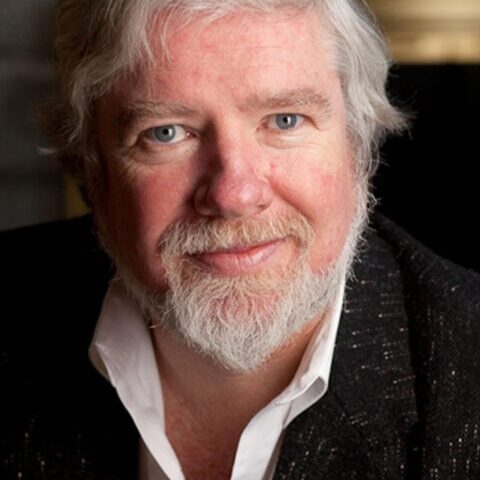
Jeffrey Pfeffer is the Thomas D. Dee II Professor of Organizational Behavior in the Graduate School of Business at Stanford University . He is the author or co-author of 10 books and more than 110 articles and book chapters. His most recent book, co-authored with Robert Sutton, is Hard Facts, Dangerous Half-Truths, and Total Nonsense:Profiting from Evidence-Based Management. Dr. Pfeffer is a member and Fellow of the Academy of Management and a member of the Industrial Relations Research Association. He has won the Richard D. Irwin award for Scholarly Contributions to Management as well as several awards for books and articles.
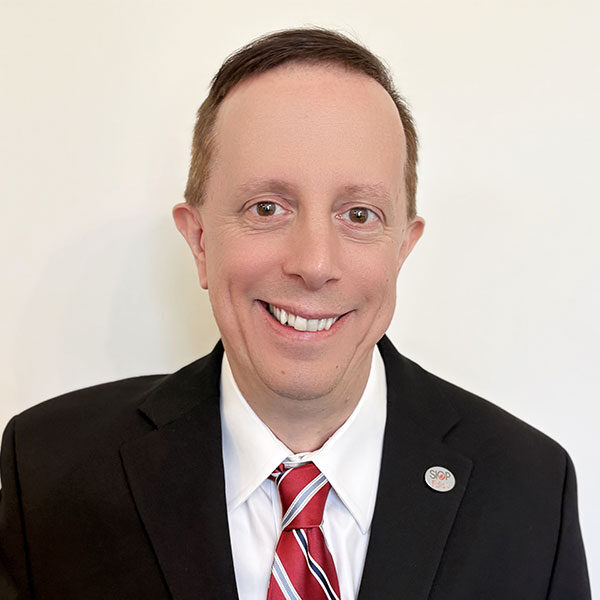
Jeffrey Pfeffer, Stanford University, Speaker
Lois E. Tetrick, George Mason University, Host
Jeffrey J. McHenry, Microsoft Corporation, Chair
2. Symposium: Friday, 10:30–12:20 Gilbert (4th floor)
Work and the Retirement Process: International Perspectives on Older Workers
Current demographic and economic trends are changing the landscape of aging and work. This symposium presents research from the U.S., Australia, and New Zealand regarding the growing population of older workers to examine the impact of work on older workers as well as key issues about the retirement process.
Gwenith G. Fisher, University of Michigan, Chair
Fiona Alpass, Massey University, Christine Stephens, Massey University, Judith Davey, Victoria University of Wellington, Eljon Fitzgerald, Massey University, Brendan Stevenson, Massey University, Helen Pennington, Massey University, Andy Towers, Massey University, Factors Influencing Workforce Participation for 65–70 Year-Olds in New Zealand
Alicia Stachowski, George Mason University, Gwenith G. Fisher, University of Michigan, James W. Grosch, NIOSH/CDC, Jeri Hesson, George Mason University, Lois E. Tetrick, George Mason University, Job Complexity: Prevention of Cognitive Functioning Decline?
Mo Wang, Portland State University, Kenneth S. Shultz, California State University-San Bernardino, Yujie Zhan, Portland State University, Songqi Liu, Portland State University, Antecedents and Health Outcomes of Bridge Employment: A Longitudinal Investigation
Beryl L. Hesketh, University of Western Sydney, Barbara Griffin, University of Sydney, Self-Estimates of Life Expectancy as an Influence on Intended Retirement Age Janet L. Barnes-Farrell, University of Connecticut, Russell A. Matthews, University of Connecticut/IBM, W. Robert Lewis, University of Connecticut, Contemplating the Timing of Retirement: Differential Considerations of Younger and Older Workers
Jeanette N. Cleveland, Pennsylvania State University, Discussant
Submitter: Gwenith G. Fisher, gwenithf@umich.edu
3. Symposium: Friday, 10:30–11:50 Odets (4th floor)
Understanding Dirty Jobs: I-O and OHP Research at Work
Workers occupying necessary but unattractive dirty jobs must handle difficult working conditions and a negative societal image based on society’s ignorance. On-going field research with several unique dirty job samples is presented to help I-O and occupational health psychologists better address the needs of this often ignored population.
Christopher J. L. Cunningham, Bowling Green State University, Chair
Steve M. Jex, Bowling Green State University, Co-Chair
Steven G. Rogelberg, University of North Carolina Charlotte, Natalie DiGiacomo, Spartanburg Humane Society, Charlie L. Reeve, University of North Carolina Charlotte, Euthanizing Society’s Unwanted Animals: The Toll on Employee and Employer
Kara A. Arnold, Memorial University of Newfoundland, Relational Connection and the Meaning of Work for Funeral Directors
L. Jean Whinghter, Harrah’s Entertainment, Christopher J. L. Cunningham, Bowling Green State University, Work–Family Issues Among Petroleum Refinery Shiftworkers
Sarah DeArmond, Colorado State University, The Safety of Certified Nursing Assistants: The Role of Sleepiness
Julian I. Barling, Queen’s University, Discussant
Submitter: Christopher J. L. Cunningham, ccunnin@bgsu.edu
4. Symposium: Friday, 10:30–12:20 Wilder (4th floor)
Launching Organizational Learning at the Frontlines: Evidence From Hospitals
One important way that organizational learning can occur is through engaging front-line employees in problem solving and learning activities. Yet, engaging frontline employees in improvement and learning efforts is often challenging. The research presented in this symposium thus seeks to inform issues on organizational learning at the front lines.
David A. Hofmann, University of North Carolina at Chapel Hill, Chair
Zhike Lei, George Mason University, Co-Chair
Anita L. Tucker, University of Pennsylvania, An Empirical Study of System Improvement by Front Line Employees in Hospital Units
David A. Hofmann, University of North Carolina at Chapel Hill, Zhike Lei, George Mason University, Dealing With Complexity and Learning From Failure in the Frontline: Factors Influencing When Expertise Is Utilized (and When It Is Not)
Timothy J. Vogus, Vanderbilt University, Kathleen M. Sutcliffe, University of Michigan-Ann Arbor, The Impact of Safety Organizing, Trusted Leadership, and Care Pathways on Reported Medication Errors in Hospital Nursing Units
Ranga Ramanujam, Purdue University, Subrahmaniam Tangirala, University of Maryland-College Park, The Effects of Adverse Events on Learning Behaviors: The Moderating Role of Safety Climate
Submitter: Zhike Lei, zlei1@gmu.edu
5. Symposium: Friday, 10:30–12:20 Hart (4th floor)
Positive Psychology and Organizational Stress: Theoretical and Empirical Connections
Presents theoretical models and research showing how positive psychological states and organizational stressors come together to predict well-being and performance among military personnel, health care professionals, and university staff. The 4 presentations illustrate theoretical models where positive states and stressors can either independently or jointly predict outcomes.
Thomas W. Britt, Clemson University, Chair
Debra L. Nelson, Oklahoma State University, Bret L. Simmons, University of Nevada, Reno, The Holistic Stress Model: Balance in the Effects of Work Stress
Thomas W. Britt, Clemson University, Carl A. Castro, Walter Reed Army Institute of Research, Amy B. Adler, U.S. Army Medical Research Unit-Europe, Positive Psychological States and Organizational Stressors as Predictors of Outcomes
Jeffrey L. Thomas, Walter Reed Army Institute of Research, Dave I. Cotting, Army Physical Fitness Research Institute, Dennis McGurk, Walter Reed Army Institute of Research, Carl A. Castro, Walter Reed Army Institute of Research, Hope Is a Method: Positive Psychological States in Combat Veterans
Tiffany M. Greene-Shortridge, Clemson University, Heather N. Odle-Dusseau, Clemson University, Hailey A. Herleman, Clemson University, Eric S. McKibben, Clemson University, Positive States and Organizational Stressors Predicting Well-Being and Performance
Sabine Sonnentag, University of Konstanz–Germany, Discussant
Submitter: Thomas W. Britt, twbritt@clemson.edu
6. Symposium: Friday, 10:30–11:50 O’Neill (4th floor)
Performance Appraisal in the Real World: Bridging the Science–Practice Gap
We present 4 papers detailing recent research examining variables important to performance appraisal as it actually happens in organizations: reactions of ratees/raters, forced distribution rating formats, intentional distortion, purpose of rating, and performance trends. As such, we believe these studies contribute to narrowing the science–practice gap in this area.
Deidra J. Schleicher, Purdue University, Chair
Lisa M. Keeping, Wilfrid Laurier University, Co-Chair
Brian D. Blume, University of Michigan, Flint, Timothy T. Baldwin, Indiana University, Robert S. Rubin, DePaul University, All Forced Distribution Systems Are Not Created Equal: A Policy Capturing Study
Rebecca A. Bull, Purdue University, Deidra J. Schleicher, Purdue University, Stephen G. Green, Purdue University, Rater Reactions to Forced Distribution Rating Systems
Jeff Spence, University of Waterloo, Lisa M. Keeping, Wilfrid Laurier University, Examining the Effect of Nonperformance Information on Performance Ratings
Jochen Reb, Singapore Management University, Gary J. Greguras, Singapore Management University, Dynamic Performance, Ratings, and Attributions: Frequently Discussed but Infrequently Investigated
Paul E. Levy, University of Akron, Discussant
Submitter: Deidra J. Schleicher, deidra@purdue.edu
7. Symposium: Friday, 10:30–12:20 Ziegfeld (4th floor)
New Directions in Emotional Intelligence Research
Emotional intelligence is still one of the most hotly debated constructs in I-O psychology. Five papers are presented that review and integrate the emotional intelligence literature, examine group differences among the subcomponents of EI, and connect emotional intelligence to task and contextual performance, as well as decision making.
Hazel-Anne M. Johnson, University of South Florida, Chair
Paul E. Spector, University of South Florida, Co-Chair
Peter J. Jordan, Griffith University, Vanessa U. Druskat, University of New Hampshire, A Review and Integration of Research on Emotional Intelligence in the Workplace
Daniel S. Whitman, Florida International University, David L. Van Rooy, Marriott International, Chockalingam Viswesvaran, Florida International University, Eyran Kraus, City of Miami, Examining the Narrow Dimensions Underlying Emotional Intelligence: Ethnic and Gender Differences
Peter J. Jordan, Griffith University, Neal M. Ashkanasy, University of Queensland, Sandra A. Lawrence, Griffith University, A Test of the Impact of Job Insecurity on Decision Making and the Moderating Role of Emotional Intelligence
Matthew Scaruto, Xavier University, Mark S. Nagy, Xavier University, Morell E. Mullins, Xavier University, Emotional Intelligence and OCBs: Beyond Mental Ability and Personality
Hazel-Anne M. Johnson, University of South Florida, Paul E. Spector, University of South Florida, Emotional Intelligence as a Predictor of Emotional Labor and Service Performance
Stephane Cote, University of Toronto, Discussant
Submitter: Hazel-Anne M. Johnson, hazel_anne_m_johnson@yahoo.com
8. Interactive Session: Friday, 10:30–11:50 Brecht (4th floor)
The Great Bear Wilderness Disaster: Lessons in Team Learning
Using the “staff ride” model developed in the military, participants will move through episodes of a wilderness plane crash and the efforts of the work crew to stay alive. A timeline and video-based recreation of the incident will aid a discussion of how team learning, regulatory processes, and decision making unfolded.
Wendy S. Becker, University at Albany-SUNY, Host
Michael J. Burke, Tulane University, Co-Host
Submitter: Wendy S. Becker, w.becker@albany.edu
9. Poster Session: Friday, 10:30–11:20 Westside (5th floor)
Absenteeism & Performance
9-1. Institutional Racial Environment and Racial Differences in Law School Performance
Analyzing data from the National Longitudinal Bar Passage Study (N = 1,100), the authors found that African American–Caucasian mean differences in law school grade point average beyond prior academic preparation, and support for a race x institutional commitment to diversity x faculty expectations interaction on law school grade point average.
Patrick F. McKay, University of Wisconsin-Milwaukee
James L. Outtz, Outtz and Associates
Submitter: Patrick F. McKay, pmckay@uwm.edu
9-2. Productivity and Satisfaction: Exploring the Relationship at the National Level
Is the happy nation the productive nation? Archival data from national surveys of job satisfaction and several indexes of individual worker productivity as well as international job satisfaction data and an index of the corresponding country’s productivity revealed that these 2 factors are not consistently related.
Stacey Kessler, University of South Florida
Eileen Taylor, North Carolina State University
Edward L. Levine, University of South Florida
Jack W. Wiley, Kenexa Research Institute
Larry Kessler, University of South Florida
Submitter: Stacey Kessler, stacey9815@aol.com
9-3. Views of Managerial Derailment From Above and Below
Managerial derailment can harm managers, coworkers, and organizations. We used data from 2,050 managers and bosses and direct report ratings of characteristics that lead to derailment. Managers working effectively with higher management related positively to their warmth exhibited to direct reports, resulting in lessened boss and direct report ratings of derailment.
William A. Gentry, Center for Creative Leadership
Linda R. Shanock, University at Albany, SUNY
Submitter: William A. Gentry, gentryb@leaders.ccl.org
9-4. A Multilevel Examination of Corporate Identity Promotion
This research examines the cross-level relationship between management–employee relations and intentions to promote one’s corporate identity and the mediating role of employee attitudes. Results supported our hypotheses in that management–employee relations positively relates to individual intentions to promote corporate identity, and this effect is mediated by employee attitudes.
J. Craig Wallace, Oklahoma State University
Scott Mondore, Maersk, Inc
Submitter: J. Craig Wallace, craig.wallace@okstate.edu
9-5. Implicit Theories Go Applied: Conception of Ability at Work
This study proposed a measure designed to measure implicit theories about work, assessed its relationship to other implicit theory measures, and explored potential relationships with work domain antecedents. Analyses demonstrated significant relationships between conception of ability at work and perceptions of effort at work and competence demonstration goal focus.
Charles N. Thompson, Wright State University
Corey E. Miller, Wright State University
Submitter: Charles N. Thompson, thompsonchad1@gmail.com
9-6. Effects of Task Performance and OCB on Managerial Appraisals
We report the results of 2 experimental studies investigating the impact of task performance and organizational citizenship behaviors (OCBs) on managerial appraisals and reward recommendations. Results support the conclusion that task, helping, employee voice, and organizational loyalty are causal determinants of performance appraisals and reward recommendations.
Steven W. Whiting, Georgia State University
Philip M. Podsakoff, Indiana University
Jason R. Pierce, Indiana University
Submitter: Steven W. Whiting, whiting@gsu.edu
9-7. A Multilevel Analysis of Pilots’ Situation Awareness During Weather Threats
Researchers examined pilots’ situation awareness as they approached simulated weather threats, considering the distance to the weather cell, mental workload, and rank as captains or FOs. A multilevel analysis revealed that, consistent with prior research, SA decreased as pilots approached weather and as mental workload levels increased, particularly for captains.
Ernesto A. Bustamante, Old Dominion University
Submitter: Ernesto A. Bustamante, ebustama@odu.edu
9-8. Person-Situation Predictors of Work Competence and Typical Performance
We examined the effects of general mental ability (GMA) and perceived organizational support (POS) on typical performance and work competence. Data from 2 field samples supported that GMA related to work competence, and POS was related to typical performance. Interactive effects of GMA and POS were detected for work competence.
L. A. Witt, University of Houston
Christiane Spitzmueller, University of Frankfurt/University of Houston
Submitter: L. A. Witt, witt@uh.edu
9-9. Impact of HR Influence on Agency Financial Performance in Australian Public Sector
Analysis of path model showed that both HR department’s perceived influence and extent of alignment between HR and organizational strategy lead to the perceived performance of HR department, reduction of HR expenses, and increase HR productivity and the average profitability per employee of a sample of Australian public-sector agencies.
Stephen T. Teo, University of Technology, Sydney
John J. Rodwell, Macquarie University
Submitter: Stephen T. Teo, stephen.teo@uts.edu.au
Analysis of path model showed that both HR department’s perceived influence and extent of alignment between HR and organizational strategy lead to the perceived performance of HR department, reduction of HR expenses, and increase HR productivity and the average profitability per employee of a sample of Australian public-sector agencies.Stephen T. Teo, University of Technology, SydneyJohn J. Rodwell, Macquarie UniversitySubmitter: Stephen T. Teo,
9-10. OCB and the Interplay of Organizational and Managerial Values
We investigated the extent to which managerial values and organizational values influenced the expression of organizational citizenship behaviors by employees. Results indicated that although both value sets are related to OCB, organizational values exert a stronger influence. Implications for theory and future research are presented.
Christie H. Burton, Clayton State University
Submitter: Christie H. Burton, christieburton@clayton.edu
9-11. Turnover, OCB, and Counterproductivity: Affective Events Theory and Part-Time Employees
Affective events theory (AET) predicts organizational citizenship behaviors, counterproductive behaviors, and turnover as a function of employees’ judgments and affective states. The current study assesses the usefulness of AET for part-time employees. Results from structural equation modeling support the value of modifications to AET when predicting behavior among part-time employees.
Douglas R. Lindsay, Penn State University
Michael R. Baumann, University of Texas at San Antonio
Submitter: Douglas R. Lindsay, drl192@psu.edu
9-12. Perceptions of Politics and Organizational Citizenship Behaviors: Identifying Mediating Variables
Potential mediators of the relationship between politics perceptions and organizational citizenship behavior (OCB) were examined, including justice perceptions, perceived organizational support, organizational concern, prosocial values, and impression management motives. Measures of OCB included self-, coworker, and supervisor ratings. Results suggest perceived organizational support mediates the politics perceptions–OCB relationship.
Larissa Linton, PDRI
Stephen H. Wagner, Central Michigan University
Submitter: Larissa Linton, larissa.linton@pdri.com
9-13. Investigating Absenteeism From a Social Perspective: A Multilevel Examination
Ninety-three dyads participated in a study that examined the effects of leader–member exchange and attendance climate on employee absenteeism. As hypothesized, subordinates in good quality relationships were absent less frequently than those in poor quality relationships. In poor quality relationships, absenteeism was much higher in negative/weak attendance climates than in positive/strong attendance climates.
Jennifer L. Roberts, AT&T
Roya Ayman, Illinois Institute of Technology
Submitter: Jennifer L. Roberts, jl1279@att.com
9-14. Big Halo, Little Horns: Reexamining Halo Error in Performance Ratings
It is assumed that halo (a tendency to rate performance dimensions based on a global impression) is a source of systematic error in managerial ratings. However, we found that global positive impressions (halos) and global negative impressions (horns) have differential relationships to real-world outcomes like rehire intentions and performance ratings.
Aarti Shyamsunder, Kronos Talent Management Division
Clayton A. Yonce, Kronos TMD/Portland State University
Donald S. Currier, Kronos Talent Management Division
Submitter: Aarti Shyamsunder, ashyamsunder@kronos.com
9-15. The Impact of Environment and Individual Differences on Performance Determinants
Research has not comprehensively assessed the influence of individual difference and environmental performance antecedents within the context of an overarching model of performance. Using the Army Project A dataset, it was demonstrated that performance antecedents, both environmental and individual differences, relate to performance determinants in complex but theoretically reasonable patterns.
Michael R. Bashshur, Universitat Pompeu Fabra
Submitter: Michael R. Bashshur, michael.bashshur@upf.edu
9-16. The Effects of Self-Concept on Foci of Commitment and Performance
This study examined the effects of self-concept on foci of commitment and job performance. Relational self-concept was related to supervisor and workgroup commitment, and collective self-concept was associated with organizational commitment. The different self-concepts and foci of commitment were also found to be differentially related task performance, OCBIs, and OCBOs.
Samantha Le Chau, University of Akron
Hsien-Yao Swee, University of Akron
Paul E. Levy, University of Akron
Submitter: Samantha Le Chau, slc17@uakron.edu
9-17. Situational Judgments as Proximal Predictors of Personal Initiative
We examined if situational judgment tests can be used for the measurement of constructs. We used respondents’ judgments in different scenarios as causal indicators of their overall level of personal initiative in the workplace. The Situational Judgment Test of Personal Initiative (SJT-PI) had adequate criterion and construct validity.
Ronald Bledow, University of Giessen
Michael Frese, University of Giessen
Submitter: Ronald Bledow, ronald.bledow@psychol.uni-giessen.de
9-18. Achievement Goal Dimensionality: Should Mastery-Avoidance Be Included?
We demonstrate that the most recently conceived achievement goal, mastery-avoidance, may play an important role in understanding feedback-seeking behavior and job performance. Our results support the use of the 4-factor model of achievement goals to best understand work-related behaviors, rather than the more traditional 2-factor and 3-factor models.
Lisa Baranik, University of Georgia
Laura J. Stanley, University of Georgia
Abigail R. Lau, James Madison University
Kenneth E. Barron, James Madison University
Submitter: Lisa Baranik, lbaranik@gmail.com
9-19. Race and Competency-Based Job Performance
Drawing upon a cross-organizational sample of approximately 8,500 incumbents, we investigated differences in competency-based job performance among White, Black, Hispanic, and Asian employees. We discuss our results within the context of prior research and the increasing use of competency frameworks to define work requirements.
Lilly Lin, Development Dimensions International
Evan F. Sinar, Development Dimensions International
Submitter: Lilly Lin, lilly.lin@ddiworld.com
9-20. How Modeling Voluntary Turnover Decisions Increases Ability to Predict Turnover
We examined whether voluntary turnover decisions could be modeled, groups with homogeneous turnover decision processes could be identified, and whether the decision simulation predicted actual turnover. Results suggest simulation-based turnover estimates were strongly related to subsequent turnover and significantly more correlated with turnover than traditional intention-to-quit scale scores.
Craig J. Russell, University of Oklahoma
Submitter: Craig J. Russell, cruss@ou.edu
9-21. The Impact of Political Skill and Fairness on Interpersonal Facilitation
We evaluated the impact of political skill as a moderator of the relationship between interactional justice and interpersonal facilitation. Results indicated that interactional justice was more strongly related to interpersonal facilitation among employees who possessed high rather than low levels of political skill.
Darren C. Treadway, University of Mississippi
L. A. Witt, University of Houston
Submitter: L. A. Witt, witt@uh.edu
We evaluated the impact of political skill as a moderator of the relationship between interactional justice and interpersonal facilitation. Results indicated that interactional justice was more strongly related to interpersonal facilitation among employees who possessed high rather than low levels of political skill.Darren C. Treadway, University of MississippiL. A. Witt, University of HoustonSubmitter: L. A. Witt,
9-22. Effectively Supporting Your Coworkers: Conscientiousness Is Not Enough
We investigated the joint effects of Conscientiousness and unrealistic perceived control on task-focused and person-focused interpersonal citizenship behavior (ICB). Conscientiousness had main effects on both forms of ICB, but unrealistic perceived control was related to neither. Conscientiousness was related to person-focused ICB only among workers low in unrealistic perceived control.
Suzanne Kieffer, University of Houston
L. A. Witt, University of Houston
Sara J. Perry, University of Houston
Submitter: L. A. Witt, witt@uh.edu
9-23. Gender and Competency-Based Job Performance
Drawing upon a cross-organizational sample of approximately 8,560 incumbents, we investigated differences in competency-based job performance among male and female employees. We discuss our results within the context of prior personality research and the increasing use of competency frameworks to define work requirements.
Lisa Schultz-Teeter, Development Dimensions International
Evan F. Sinar, Development Dimensions International
Submitter: Lisa Schultz-Teeter, lisa.teeter@ddiworld.com
9-24. Work Ethic and Job Performance: A Multidimensional Perspective
An understanding of predictors of both task and contextual performance is vital, as each is essential to organizational effectiveness. We proposed work ethic would predict performance and that personality could explain this relationship. Results suggest dimensions of work ethic are related to performance, and these relationships are mediated by Conscientiousness.
Stefanie Plemmons, Purdue University
Ann H. Huffman, Northern Arizona University
Jaime B. Henning, Texas A&M University
Satoris S. Youngcourt, University of Wisconsin-River Falls
Submitter: Ann H. Huffman, ann.huffman@nau.edu
9-25. Predicting Job Performance: Does the Work Context Matter?
It is widely accepted that behavior is determined by person and situation characteristics. However, research in the domain of job performance often excludes work context. This study demonstrates the incremental validity of work context in the prediction of performance. Work context should be further examined as a predictor of performance.
Reanna M. Poncheri, North Carolina State/Surface, Ward, & Associates
Mark A. Wilson, North Carolina State University
Submitter: Reanna M. Poncheri, rmponche@ncsu.edu
9-26. Negative Implications for the Inclusion of Citizenship Performance in Ratings
Numerous researchers have demonstrated performance ratings include both task and citizenship performance, however the implications of this for the performance rating, employee, and organization have not yet been investigated. The purpose of this paper is to conceptually explore the potential negative consequences of including citizenship performance in formal performance appraisals.
Satoris S. Youngcourt, University of Wisconsin-River Falls
Jaime B. Henning, Texas A&M University
Submitter: Satoris S. Youngcourt, syoungcourt@gmail.com
9-27. Doing the Job I’m Paid For and Nothing More!
Findings indicate that (a) accountability was positively related to OCBs; (b) organizational cynicism was negatively related to OCBs and positively related to CWBs; and (c) an interaction effect was found for OCBs but not for CWBs.
Joseph M. Goodman, James Madison University
William R. Evans, University of Arkansas-Little Rock
Dwight D. Frink, University of Mississippi
Walter D. Davis, University of Mississippi
Submitter: Joseph M. Goodman, goodmajm@jmu.edu
9-28. Identification, the Formation of Group Affect, and Organizational Citizenship Behavior
We propose that identification, the perception of belongingness to a group, is a key-determinant in the formation of group affect, a collectively shared pattern of homogeneous affective states among group members, and its influence on organizational citizenship behavior. We present and discuss 2 studies that clearly support our hypotheses.
Jacqueline A. L. Tanghe, Vrije Universiteit Amsterdam
Barbara van Knippenberg, Vrije Universiteit
Henk van der Flier, Vrije Universiteit Amsterdam
Submitter: Annebel H. B. de Hoogh, ahb.de.hoogh@psy.vu.nl
9-29. Elucidating Hope’s Role at Work: Results From a Scenario Study
Past research has linked hope and job performance but has failed to explain why such a relationship exists. Using a scenario study, we examined how hopeful employees think differently about work-related problems than do those with less hope. Higher hope executives produced more high-quality solutions to a work-related problem.
Kristin Byron, Syracuse University
Suzanne J. Peterson, Arizona State University
Submitter: Kristin Byron, klbyron@syr.edu
9-30. Moderated and Mediated Relationships Between Pay-for-Performance, Job Satisfaction and Performance
We analyzed differences in personality and organizational justice perceptions, job satisfaction, and performance between sales people working under different pay-for-performance systems. We found locus of control and risk preference moderated the relationship between pay for performance and job satisfaction. We found organizational justice mediated the relationship between pay for performance and job satisfaction.
Heather Kchodl, Central Michigan University
Carl M. Johnson, Central Michigan University
Terry A. Beehr, Central Michigan University
Neil D. Christiansen, Central Michigan University
Submitter: Heather Kchodl, kchod1hm@cmich.edu
10. Special Event: Friday, 10:30–12:20 Broadway S (6th floor)
Special Invited Event Sponsored by the SIOP Program Committee: Checking in With the Scientist–Practitioner Model: How Are We Doing?
SIOP is founded on the scientist–practitioner model, promoting both the generation of knowledge and the application of knowledge in practice. This panel brings together influential I-O psychologists representing differing backgrounds and viewpoints to discuss the success of the model, implications for graduate curricula, and the future of our field.
Daniel J. Beal, Rice University, Co-Chair
Deborah E. Rupp, University of Illinois at Urbana-Champaign, Co-Chair
Rosemary Hays-Thomas, University of West Florida, Panelist
Leaetta M. Hough, Dunnette Group, Ltd., Panelist
Daniel R. Ilgen, Michigan State University, Panelist
Gary P. Latham, University of Toronto, Panelist
Edwin A. Locke, University of Maryland, Panelist
Kevin R. Murphy, Pennsylvania State University, Panelist
Nancy T. Tippins, Valtera, Panelist
Howard M. Weiss, Purdue University, Panelist
11. Symposium: Friday, 10:30–11:50 Broadway N (6th floor)
The Employment Interview: Constructs, Questions, and Directions for Improvement
This symposium will examine the constructs captured by the interview, along with challenges to status quo thinking concerning its incremental validity and utility and the natural superiority associated with adding structure to the interview process. In addition, directions for improving the employment interview will be addressed.
Ronald F. Piccolo, University of Central Florida, Co-Chair
Ryan L. Klinger, University of Florida, Co-Chair
Allen I. Huffcutt, Bradley University, Chad H. Van Iddekinge, Florida State University, Philip L. Roth, Clemson University, A Comprehensive Review of the Constructs Captured by Employment Interview Ratings
Ryan L. Klinger, University of Florida, Timothy A. Judge, University of Florida, Examining the Incremental Validity of the Employment Interview: Beyond Conscientiousness and Cognitive Ability
In-Sue Oh, University of Iowa, Bennett E. Postlethwaite, University of Iowa, Frank L. Schmidt, University of Iowa, Michael A. McDaniel, Virginia Commonwealth University, Do Structured and Unstructured Interviews Have Near Equal Validity?
Aino Salimaki, Helsinki University of Technology, Jerald Greenberg, The Ohio State University, Attracting Applicants and Retaining Employees by Training Employment Interviewers in Interactional Justice
Todd J. Maurer, Georgia State University, Discussant
Submitter: Ryan L. Klinger, ryan.klinger@cba.ufl.edu
12. Community of Interest: Friday, 10:30–11:20 Uris (6th floor)
Issues in IRT
Oleksandr Chernyshenko, University of Canterbury, Facilitator
Stephen Stark, University of South Florida, Facilitator
13. Special Event: Friday, 10:30–11:20 Plymouth (6th floor)
SIOP Organizational Frontiers Volume: Conflict in Organizations
Workplace conflict and how it is managed impacts individual health and well-being, team functioning and performance, and organizational effectiveness. This forthcoming SIOP Frontiers volume brings together work on conflict at the individual, the group, and the organizational level of analysis. Panelists will discuss their work and interact with the audience.
Carsten K. W. De Dreu, University of Amsterdam, Co-Chair
Michele J. Gelfand, University of Maryland, Co-Chair
Robert D. Pritchard, University of Central Florida, Co-Chair
Bianca Beersma, University of Amsterdam, Panelist
Katerina Bezrukova, Rutgers University, Panelist
Ray Friedman, Vanderbilt University, Panelist
Barry M. Goldman, University of Maryland, Panelist
Valentina Bruk Lee, PreVisor, Panelist
Kirsten Keller, University of Maryland, Panelist
Lisa M. Leslie, University of Maryland, Panelist
Julie B. Olson-Buchanan, California State University-Fresno, Panelist
Jana L. Raver, Queen’s University, Panelist
Laurie R. Weingart, Carnegie Mellon University, Panelist
14. Symposium: Friday, 10:30–11:50 Majestic (6th floor)
Leadership Influences on Employee Voice
In recent years researchers have begun investigating the antecedents of employee voice. This symposium presents 4 empirical papers that (a) increase understanding of leadership as a key contextual antecedent of voice and (b) extend previous research by considering new mediators and moderators of leadership–voice relationships.
Ethan Burris, University of Texas-Austin, Chair
James R. Detert, Pennsylvania State University, Co-Chair
Isabel Cristina Botero, Illinois State University, Linn Van Dyne, Michigan State University, Predicting Voice Across Culture: Interactive Effects of LMX and Power Distance
Subrahmaniam Tangirala, University of Maryland-College Park, Ranga Ramanujam, Purdue University, How Leaders Model Employee Voice
Ethan Burris, University of Texas-Austin, James R. Detert, Pennsylvania State University, Dan S. Chiaburu, Pennsylvania State University, Quitting Before Leaving: The Mediating Effects Psychological Investment and Detachment on Voice
Susan J. Ashford, University of Michigan, Kathleen M. Sutcliffe, University of Michigan-Ann Arbor, Elizabeth W. Morrison, New York University, James R. Detert, Pennsylvania State University, Ethan Burris, University of Texas-Austin, The Good Voice Manager: Understanding Why Leaders Are Open to Input From Below
Michael Frese, University of Giessen, Discussant
Submitter: James R. Detert, jdetert@psu.edu
15. Panel Discussion: Friday, 10:30–11:50 Winter Garden (6th floor)
How Best to Prepare Students to be Effective I-O Practitioners
This panel will explore the changing needs of HR and if we are appropriately educating and training our students to make a difference in applied settings. We will discuss perceived skill gaps and what the student, educator, and SIOP can do to bridge those gaps. Audience participation will be encouraged.
Eric D. Heggestad, University of North Carolina Charlotte, Chair
Irwin L. Goldstein, University System of Maryland, Panelist
Edie L. Goldberg, E. L. Goldberg & Associates, Panelist
Michelle A. Donovan, Google, Panelist
Linda S. Carr, Sun Microsystems, Panelist
Submitter: Edie L. Goldberg, edie@ELGoldberg.com
16. Symposium: Friday, 10:30–12:20 Soho (7th floor)
Workplace Stereotypes and Legal Defensibility
Academics and practitioners, psychologists and attorneys will present relevant theory, discussions of court cases, and empirical findings that provide contrasting perspectives on the research related to workplace stereotypes (e.g., age, sex, weight, and physical appearance) and the legal defensibility of selection procedures. Implications for researchers and practitioners will be discussed.
Michael A. Campion, Purdue University, Chair
Richard A. Posthuma, University of Texas-El Paso, Co-Chair
Michael A. Campion, Purdue University, Richard A. Posthuma, University of Texas-El Paso, Research on Age Stereotypes in the Workplace
Stan Malos, San Jose State University, Gender Stereotype and Appearance Discrimination Litigation
Mark V. Roehling, Michigan State University, Patricia V. Roehling, Hope College, Richard A. Posthuma, University of Texas-El Paso, Weight-Based Stereotypes in Employment Decision Making “in the Eyes of the Law”
Frank J. Landy, Landy Litigation Support Group, Stereotypes in Personnel Decisions: A Moth in the Flame
Richard A. Posthuma, University of Texas-El Paso, Mark V. Roehling, Michigan State University, Michael A. Campion, Purdue University, Legal Risks and Defensibility Factors for Employee Selection Procedures
Submitter: Richard A. Posthuma, rposthuma@utep.edu
17. Panel Discussion: Friday, 10:30–11:50 Gramercy (7th floor)
Is the “The Great Debate” Over? Uses of 360° Feedback
Using a model of 360° feedback processes, 4 practitioners of major 360 systems currently being used for decision making will share their guidance, recommendations, and warnings for others desiring to do the same.
David W. Bracken, Kenexa Corporation, Chair
Allan H. Church, PepsiCo, Panelist
Laura Ann Preston, Personnel Decisions International, Panelist
Lise M. Saari, IBM, Panelist
Janine Waclawski, Pepsi-Cola Company, Panelist
Manuel London, SUNY-Stony Brook, Discussant
Submitter: David W. Bracken, david.bracken@kenexa.com
18. Symposium: Friday, 10:30–11:50 Empire (7th floor)
The Daily Affective Experience: Its Antecedents and Consequences
Results from experience sampling studies of affect are reported. Daily or momentary affect is shown to be influenced by mechanisms such as work stressors, unfair treatment, cognitive appraisals, and emotion contagion. Affect is also shown to impact satisfaction and behavior. Dispositional variables (motivation, affectivity, and self-efficacy) moderate the effects.
Zhaoli Song, National University of Singapore, Chair
Jane Yang, City University of Hong Kong, Co-Chair
Jane Yang, City University of Hong Kong, James M. Diefendorff, University of Akron, Dora M. Luk, City University of Hong Kong, The Relations of Daily Counterproductive Workplace Behavior With Emotions and Situational Antecedents: A Diary Study in Hong Kong
John P. Trougakos, University of Toronto, Reeshad S. Dalal, Purdue University, Daniel J. Beal, Rice University, Howard M. Weiss, Purdue University, Affective Events and Affective Outcomes: A Test of Affective Event Theory Using Restaurant Servers
Maw-Der Foo, University of Colorado at Boulder, Zhaoli Song, National University of Singapore, Marilyn A. Uy, National University of Singapore, Affect Crossover Among Dual-Earner Couples: An Event Sampling Study
Angeline Lim, National University of Singapore, Zhaoli Song, National University of Singapore, Maw-Der Foo, University of Colorado at Boulder, Marilyn A. Uy, National University of Singapore, Is it Me or Is it You: The Impact of Relationship Self-Efficacy on Affective Responses to Social Interactions
Richard D. Arvey, National University of Singapore, Discussant
Submitter: Zhaoli Song, bizszl@nus.edu.sg
19. Symposium: Friday, 10:30–11:50 Chelsea (7th floor)
Employment Discrimination Against Immigrants: Antecedents and the Complexity of Remediation
In the United States, Germany, and Canada, immigrant participation in the labor force remains central for maintaining the global competitiveness of these economies. Surprisingly, however, immigrants often experience discrimination, especially in the employment process. This symposium presents 4 papers that examine the employment discrimination faced by immigrants in these countries.
Joerg Dietz, University of Western Ontario, Chair
Chetan Joshi, University of Western Ontario, Co-Chair
Dianna L. Stone, University of Texas, San Antonio, Co-Chair
Dianna L. Stone, University of Texas, San Antonio, Eugene F. Stone-Romero, University of Texas, San Antonio, Jason Padilla, University of Central Florida, Mary A Davis, University of Central Florida, The Effects of Immigrant Status and Ethnicity on Job Suitability Ratings
Boris B. Baltes, Wayne State University, Examining the Effect of Negative Stereotypes on Workplace Outcomes
Caroline Bennett-AbuAyyash , University of Western Ontario, Victoria Esses, University of Western Ontario, The Role of Religious Prejudice in the Evaluation of Foreign-Trained Job Applicants
Chetan Joshi, University of Western Ontario, Joerg Dietz, University of Western Ontario, Victoria Esses, University of Western Ontario, Reducing Employment Discrimination Against Immigrants: An Interactionist Approach
Adrienne J. Colella, Tulane University, Discussant
Submitter: Chetan Joshi, cjoshi@ivey.uwo.ca
20. Symposium: Friday, 10:30–11:50 Duffy (7th floor)
Towards a Relational Model of Workplace Aggression
This symposium features emerging theoretical and empirical perspectives on workplace aggression. In particular, the studies variously investigate how the relationship between the target and source of workplace aggression influences the causes of aggressive behavior, target perceptions and reactions to such behavior, and how these perceptions and reactions occur.
Aaron C. H. Schat, McMaster University, Chair
M. Sandy Hershcovis, University of Manitoba, Co-Chair
M. Sandy Hershcovis, University of Manitoba, Julian I. Barling, Queen’s University, Towards a Relational Model of Workplace Aggression: Some Meta-analytic Evidence
Joel H. Neuman, SUNY-New Paltz, Loraleigh Keashly, Wayne State University, Differential Attributions for, and Reactions to, Workplace Aggression From Coworkers, Supervisors, and Clients
Bennett J. Tepper, Georgia State University, Chris A. Henle, University of North Carolina Charlotte, Lisa Schurer Lambert, Georgia State University, Robert A. Giacalone, Temple University, Michelle K. Duffy, University of Minnesota, Abusive Supervision and Organization-Directed Deviance
Camilla M. Holmvall, Saint Mary’s University, Aaron C. H. Schat, McMaster University, Krystle Chafe, Saint Mary’s University, Antecedents and Employee Perceptions of Customer Aggression in Service Settings
E. Kevin Kelloway, Saint Mary’s University, Discussant
Submitter: Aaron C. H. Schat, schata@mcmaster.ca
21. Interactive Posters: Friday, 10:30–11:20 Harlem (7th floor)
Losing Bench: Turnover
Richard G. Best, Lockheed Martin, Facilitator
21-1. Moderating and Mediating the HRM Effectiveness–Intent to Turnover Relationship: The Roles of Supervisors and Job Embeddedness
We hypothesized that LMX moderated the relationship between HRM effectiveness and job embeddedness (JE). We also hypothesized that JE mediated the HRM effectiveness–employee intent to turnover relationship. We suggest that value is added to organizations in so far as supervisors support HRM practices that develop job embeddedness.
Anthony R. Wheeler, Bradley University
Kenneth J. Harris, Indiana University Southeast
Paul Harvey, Florida State University
Submitter: Paul Harvey, nph02@fsu.edu
21-2. Occupational Turnover: Understanding Nurses’ Intent to Leave the Nursing Profession
This longitudinal study among 1,187 nurses examined the importance of nurses’ social work environment and work–home interference for nurses’ intent to leave nursing. Our outcomes indicated that an unsupportive environment and high work-home interference resulted in lower occupational commitment and job satisfaction, and predicted nurses’ intention to leave the profession.
Beatrice I. J. M. van der Heijden, Maastricht School of Management
Karen Van Dam, Tilburg University
Hans-Martin Hasselhorn, University of Wuppertal
Submitter: Karen Van Dam, K.vanDam@uvt.nl
21-3. Turnover Among Knowledge Workers in High-Tech and Low-Tech Industries
The present study examined the effect of a structural variable, sector affiliation (high tech vs. low tech), as a moderator of attitudinal antecedents–turnover intentions relationships. In particular, 2 interactions, 1 between sector and ease of movement and another between sector and performance, were found to be significant.
Jacob Weisberg, Bar-Ilan University
Idit Zaitman, Bar-Ilan University
Submitter: Meni Koslowsky, koslow@mail.biu.ac.il
21-4. Why Top Talent Leaves: Performance Effects on Reasons for Quitting
Voluntary turnover is expensive and the problem is exacerbated when highly valued employees leave the organization. Working with a sample of nearly 3,000 employees in the gaming industry, we show that certain reasons for leaving are much more important for high performers, whereas others carry more weight for low performers.
Charlie O. Trevor, University of Wisconsin-Madison
John P. Hausknecht, Cornell University
Michael J. Howard, Harrah’s Entertainment
Submitter: John P. Hausknecht, jph42@cornell.edu
22. Symposium: Friday, 10:30–11:50 Marquis C (9th floor)
Flipping the Coin: Considering Children in Work–Family Research
Given the increasing prevalence of dual-income families, it is imperative to expand our understanding of the complex interplay between work and family. The majority of work–family research tends to focus on work-related outcomes. This symposium specifically addresses family-related variables, with an emphasis on considering issues related to children.
Louis C. Buffardi, George Mason University, Chair
Laura Wheeler Poms, George Mason University, Co-Chair
Whitney E. Botsford, George Mason University, Co-Chair
Laura Wheeler Poms, George Mason University, Whitney E. Botsford, George Mason University, Louis C. Buffardi, George Mason University, Alison S. O’Brien, George Mason University, Measuring Childcare Satisfaction: Confirmatory Evidence for a Four-Factor Scale
Michelle (Mikki) Hebl, Rice University, Eden B. King, George Mason University, How Organizations Can Help Childcare Work: Reducing Consequences of Childcare Disruptions
Christine Dickson, Center for WorkLife Management, Effects of Employer-Sponsored Dependent Care Supports on Family Responsibilities Discrimination and Work-Related Attitudes
Tammy D. Allen, University of South Florida, Kristen M. Shockley, University of South Florida, Laura Poteat, University of South Florida, Family Supportive Policies, Work–Family Conflict, and the Family Dinner
Ellen E. Kossek, Michigan State University, Discussant
Submitter: Laura Wheeler Poms, lpoms@gmu.edu
23. Symposium: Friday, 10:30–11:50 Marquis B (9th floor)
The Multirole Individual: Boundary Maintenance and Individual Differences Across Roles
Individuals occupy different roles in life (e.g., parent, spouse, supervisor), and researchers have begun to focus on the implications of multiple roles for psychological functioning. The purpose of the current symposium is to highlight advances in our understanding of how individuals behave in, and manage the boundaries between, different roles.
Lance Ferris, University of Waterloo, Chair Douglas J. Brown, University of Waterloo, Co-Chair
Elizabeth A. McCune, Portland State University, Deborah K. Ford, Portland State University, Talya N. Bauer, Portland State University, Donald M. Truxillo, Portland State University, Todd Bodner, Portland State University, Frame-of-Reference Effects and Self-Monitoring as Moderators of the Personality–Performance Relationship
Daniel Heller, Tel Aviv University, Lance Ferris, University of Waterloo, Douglas J. Brown, University of Waterloo, Fathmath Ibrahim, University of Waterloo, The Mediating Role of Contextual Personality on the Dispositional Source of Job Satisfaction
Glen E Kreiner, University of Cincinnati, Elaine C. Hollensbe, University of Cincinnati, Mathew L. Sheep, Illinois State University, Dimensions of Fit for Work and Home Boundary Preferences
Dustin Wood, University of Illinois, Urbana-Champaign, Brent W. Roberts, University of Illinois, Urbana-Champaign, Peter D. Harms, University of Illinois, Urbana-Champaign, Comparative Merits of General and Contextualized Trait Measures in Predicting Contextual Behavior
Ann Marie Ryan, Michigan State University, Discussant
Submitter: Lance Ferris, dlferris@watarts.uwaterloo.ca
24. Panel Discussion: Friday, 10:30–11:50 Cantor (9th floor)
What’s REALLY New in Employee Surveys
For years, employee surveys have been a standard tool of I-O practitioners. Although surveys have evolved, significant developments have the potential to alter dramatically their role and implementation. This panel addresses whether and how these developments have changed employee surveys, plus implications and challenges. Panelists have perspectives across multiple organizations.
John K. Kennedy, Half Moon Consulting, Chair
Paul M. Connolly, Performance Programs, Inc., Panelist
Douglas A. Klein, Sirota Survey Intelligence, Panelist
William H. Macey, Valtera, Panelist
Jack W. Wiley, Kenexa Research Institute, Panelist
Submitter: John K. Kennedy, JackKennedy@Half-MoonConsulting.com
25. Symposium: Friday, 10:30–11:50 Barrymore (9th floor)
Developments in Applicant Perception Research for Better Predicting Individual/Organizational Outcomes
Understanding the individual and organizational importance of applicant perceptions requires drawing on strong theoretical models and rigorously developed instruments that are administered to real test takers. Four studies, from the United States and Europe, empirically investigate new conceptualizations (behavioral intention models), measures (test-anxiety/motivation), and settings (promotion) to our advance knowledge.
Eva Derous, Erasmus University Rotterdam, Chair
Bert Schreurs, University of Leuven, Eva Derous, Erasmus University Rotterdam, Edwin A. J. Van Hooft, Erasmus University Rotterdam, Karin Proost, University of Leuven, Karel De Witte, University of Leuven, Predicting Applicants’ Job Pursuit From Selection Expectations and the Theory of Planned Behavior
Kathleen M. Meckley, Wright State University, David M. LaHuis, Wright State University, Effect of Explanations on Applicants’ Test-Taking Motivation and Test Performance
Karin Proost, University of Leuven, Eva Derous, Erasmus University Rotterdam, Bert Schreurs, University of Leuven, Karel De Witte, University of Leuven, Fearing the Evaluative Context of Personnel Selection: The Differential Effect of Applicants’ Self- Versus Other-Referenced Anxiety on Test Performance
Wendy J. Casper, University of Texas-Arlington, Deidra J. Schleicher, Purdue University, Traci Sitzmann, Advanced Distributed Learning Co-Laboratory, Kevin E. Fox, St. Louis University, Marguerite Lazzarini, Arlington County VA Government, Robert P. Tett, University of Tulsa, Perceptions of Fairness in Promotion Assessments: The Role of Test Characteristics and Performance
Talya N. Bauer, Portland State University, Discussant
Submitter: Eva Derous, derous@fsw.eur.nl
26. Interactive Session: Friday, 10:30–12:20 Sun Roof (16th floor)
Expanding the Horizons of Mentoring Theory, Research and Practice
This interactive “knowledge incubator” session will offer a stimulating space in which mentoring scholars and practitioners can work together to consolidate what we have learned, bring new theoretical lenses to the discourse on mentoring, and develop new strategies that foster effective action related to the practice of mentoring.
Belle Rose Ragins, University of Wisconsin-Milwaukee, Host
Kathy E. Kram, Boston University School of Management, Co-Host
Gayle Baugh, University of West Florida, Panelist
Stacy Blake-Beard, Simmons School of Management, Panelist
David Clutterbuck, Clutterbuck Associates, Panelist
Lillian T. Eby, University of Georgia, Panelist
Jeffrey H. Greenhaus, Drexel University, Panelist
Robert Kegan, Harvard University, Panelist
Regina O’Neill, Suffolk University, Panelist
Eileen McGowan, Harvard University, Panelist
Audrey J. Murrell, University of Pittsburgh, Panelist
David Thomas, Harvard University, Panelist
Romila Singh, University of Wisconsin-Milwaukee, Panelist
Eric Stone, University of Pennsylvania, Panelist
Amy Klemm Verbos, University of Wisconsin-Milwaukee, Panelist
Submitter: Belle Rose Ragins, ragins@uwm.edu
27. Poster Session: Friday, 11:30–12:20 Westside (5th floor)
Work Groups & Training
27-1. Firm Performance and Top Management Team Age, Tenure, and Education
A meta-analysis (29 studies, 6,298 teams) of the relationship between firm performance and top management team (TMT) demographics (age and tenure) revealed an overall nonexistent relationship. TMT education had a weak relationship with firm performance. Time period of data collection and industry focus had a moderating effect.
Abhishek Srivastava, West Virginia University
Hun Lee, George Mason University
Submitter: Abhishek Srivastava, abhishek.srivastava@mail.wvu.edu
27-2. Methodologies Employed in Measuring Shared Cognition: What Do We Know?
The need for teams in organizations is increasing and so is the need for understanding the phenomena of shared cognition. To date, there has been no comprehensive examination of how aspects of shared cognition are being measured. Therefore, the current paper examines the literature to identify methods of measurement.
Heather Priest, University of Central Florida
Brandy Burke, University of Central Florida
C. Shawn Burke, University of Central Florida
Eduardo Salas, University of Central Florida
Submitter: C. Shawn Burke, sburke@ist.ucf.edu
27-3. Knowledge Structures and Skill Acquisition: Having an Expert Referent Matters
Across 3 laboratory samples, this study demonstrated that the accuracy of knowledge structures in reference to an expert structure accounted for more variance in skill-based training outcomes over an index of coherence. Using coherence in addition to accuracy did not account for more variance in training outcomes over accuracy alone.
Eric A. Day, University of Oklahoma
Matthew J. Schuelke, University of Oklahoma
Jazmine Espejo, Development Dimensions International, Inc.
Paul R. Boatman, University of Oklahoma
Vanessa Kowollik, University of Oklahoma
Lauren E. McEntire, University of Oklahoma
Xiaoqian Wang, University of Oklahoma
Submitter: Matthew J. Schuelke, mschuelke@psychology.ou.edu
27-4. Self-Esteem and Consistency in Group Evaluations: The Role of Implicit Self-Theories
We explore the relationship between self-evaluations and in-group evaluations. We compare predictions from cognitive consistency theories to social identity theory. Overall, we support a consistency approach to understanding in-group evaluations, but show predictions of cognitive consistency theories are moderated by whether people think they can change (i.e., their implicit self-theories).
Michael J. Zyphur, National University of Singapore
Gazi Islam, IBMEC, Sao Paulo
Submitter: Michael J. Zyphur, bizmjz@nus.edu.sg
27-5. On the Perils of Polychronicity: Multitasking Effects in Nuclear Crews
In situations requiring intense monotask concentration, teams whose members prefer not to multitask—that is, members who are less polychronic—should outperform teams populated by more polychronic members. A study of 17 nuclear power plant crews supported this suggestion, as the polychronicity of team members negatively predicted performance.
Seth A. Kaplan, George Mason University
Mary J. Waller, University of Maastricht
Submitter: Seth A. Kaplan, sethakap@yahoo.com
27-6. The Affective Bases of Team Performance During Nonroutine Events
This paper outlines a theoretical model emphasizing the affective nature of team nonroutine performance. In this model, trait affect’s influence on performance outcomes is predicted to vary depending on the nature of the task, the barriers to effective performance, the level of analysis, and the timing of adaptive behaviors.
Seth A. Kaplan, George Mason University
Submitter: Seth A. Kaplan, sethakap@yahoo.com
27-7. A Multilevel Analysis of the Determinants of Teamwork Behavior
We examined a multilevel model linking individual- and team-level factors to individual teamwork behaviors and team outcomes. Both individual-level (i.e., core self-evaluation, task-relevant knowledge, Extraversion, and Conscientiousness) and team-level (i.e., relationship conflict and collective efficacy) variables predicted individual teamwork behaviors, which, when aggregated, predicted team performance and team viability.
Kevin Tasa, McMaster University
Greg Sears, Carleton University
Aaron C. H. Schat, McMaster University
Submitter: Kevin Tasa, tasa@mcmaster.ca
27-8. Sleep Deprivation and Decision-Making Teams: A Contingent Effect
We develop a theory of sleep deprivation in teams and suggest a series of testable propositions regarding the effects of sleep deprivation in work teams. We propose that the general negative impact of sleep deprivation on team performance is attenuated and exacerbated by several different team characteristics and task characteristics.
Christopher M. Barnes, Michigan State University
John R. Hollenbeck, Michigan State University
Submitter: Christopher M. Barnes, barnes@bus.msu.edu
27-9. Using Guidance and Elaboration to Enhance Performance in Web-Based Environments
There has been a lack of empirical guidelines for developing “e-learning” applications in organizations. The present study examined 2 instructional strategies, guidance and elaboration, for improving performance on a Web-based task. Findings suggest that structured guidance in combination with elaboration techniques may help employees enhance their performance in Web-based environments.
Frederik Anseel, Ghent University
Filip Lievens, Ghent University
Eveline Schollaert, Ghent University
Submitter: Frederik Anseel, Frederik.Anseel@ugent.be
27-10. Transactive Memory in Virtual Teams: Noncontribution and Team Response
This paper examines the actions taken by virtual teams in response to members not contributing to team transactive memory and considers both an efficiency and attribution-affect based response. Results of a laboratory study with student teams support the former—teams respond with actions that are efficient.
Naina Gupta, Nanyang Business School
Submitter: Naina Gupta, Naina@ntu.edu.sg
27-11. An Exploratory Meta-Analysis of Cohesion and Performance in Project Teams
Determinants of team effectiveness, such as cohesion, depend on the type of teams. Yet, studies comparing types of teams on cohesion are scarce. Meta-analytic integration revealed that the cohesion-behavioral performance correlation is higher for project teams compared to work teams, whereas the reverse occurs for the cohesion–outcome performance correlation.
Francois Chiocchio, Université de Montréal
Hélène Essiembre, Université de Montréal
Submitter: Francois Chiocchio, f.chiocchio@umontreal.ca
27-12. Conscientiousness, Potency, and Performance in Teams: A Longitudinal Study
We examined whether team potency was a significant mediator of the relationship between team composition on the personality variable Conscientiousness and the quality of the teams’ performance over 3 time periods. Data from 53 teams confirmed potency as a mediator of the Consci-entiousness–team performance relationship over time.
Marieke C. Schilpzand, Georgia Institute of Technology
Wendy J. Walker, Georgia Institute of Technology
Christina E. Shalley, Georgia Institute of Technology
David M. Herold, Georgia Institute of Technology
Submitter: Wendy J. Walker, wendy.walker@mgt.gatech.edu
27-13. A Comparison of Assessment Center Practices in Western Europe and North America
Despite the popularity of assessment centers, no recent study exists which describes AC practices in different countries. Our purpose was therefore to describe and compare the current AC use in countries in North America and Western Europe. Furthermore, we evaluated these AC practices and identified recent changes in AC use.
Diana E. Krause, University of Western Ontario
George C. Thornton III, Colorado State University
Submitter: Diana E. Krause, dkrause2@uwo.ca
27-14. Team Climate Configurations: Effects on Team Processes and Effectiveness
Studies of team climate have focused on either the unit average to operationalize climate or on dispersion within the unit to capture climate strength. This study shows how another dimension of dispersion, within group clustering, also plays a role in relationships of work-team climate and team processes and outcomes.
Ana M. Hernandez, University of Valencia
Vicente González-Romá, University of Valencia
José M. Peiró, University of Valencia
Nuria Gamero, Ciemat
Lina Fortes-Ferreira, University of Valencia
Submitter: Ana M. Hernandez, Ana.Hernandez@uv.es
27-15. Dementia Education and Nurse Assistant Satisfaction: A Demonstration Study
Training programs in health care have long been thought to increase satisfaction or positively impact patient care. This program, designed to educate nurse assistants in the diagnosis of dementia, not only significantly increased knowledge and job satisfaction but also showed increases in patient care as the occurrence of behavioral disturbances decreased.
Lorraine Breuer, Parker Jewish Institute
Nicole A. Andreoli, Parker Jewish Institute
Sylvia Williams, Parker Jewish Institute
Samba Silla, Parker Jewish Institute
Michael Rosenblut, Parker Jewish Institute
Submitter: Nicole A. Andreoli, nandreoli@parkerinstitute.org
27-16. Assessing the Predictive Validity of Peer Ratings of Goal Orientation
We examined the contribution of peer ratings of goal orientation above and beyond self-ratings in the context of collaborative training. Although results showed that self- and peer ratings had little convergence, peer ratings provided incremental validity beyond self-ratings and prior performance in predicting skill acquisition and self-efficacy. Jazmine Espejo, Development Dimensions International, Inc.
Eric A. Day, University of Oklahoma
Paul R. Boatman, University of Oklahoma
Vanessa Kowollik, University of Oklahoma
Lauren E. McEntire, University of Oklahoma
Submitter: Jazmine Espejo, Jazmine.Espejo@ddiworld.com
27-17. Situational Judgment Tests and Training Evaluation
This study describes the ongoing development and implementation of a situational judgment test (SJT) for the purpose of training evaluation. Data are presented from 2 different training cohorts where a SJT was utilized for training evaluation. Trainee responses to the SJT demonstrated positive training effects.
Neil M. A. Hauenstein, Virginia Tech
Rolanda Findlay, Virginia Tech
Julie L. Kalanick, Virginia Tech
Patrice L. Esson, Virginia Tech
Submitter: Neil M. A. Hauenstein, nhauen@vt.edu
27-18. Team Cognition in the Intensive Care Unit
Shared cognition is an essential safety feature in intensive care unit (ICU) teams. A study measuring team situation models during the ICU patient review process showed that the convergence of perceptions between trainee and senior medics for likely patient developments was related to junior team member involvement in the task.
Thomas W. Reader, University of Aberdeen
Rhona H. Flin, University of Aberdeen
Kathryn J. Mearns, University of Aberdeen
Brian H. Cuthbertson, Health Services Research Unit
Submitter: Thomas W. Reader, tom.reader@abdn.ac.uk
27-19. Person Attributes in Error Training: Who Learns From Their Mistakes?
This research investigated whether and when people can learn from their mistakes in a dynamic decision-making task. Training outcomes were best predicted by cognitive ability, Extraversion, and avoidant goal orientation. In general, error-encouragement training was more effective than error-avoidance training but was not the best training for everyone.
Vanessa Loh, University of Sydney
Sally Andrews, University of Sydney
Beryl Hesketh, University of Western Sydney
Barbara Griffin, University of Western Sydney
Submitter: Vanessa Loh, vloh2904@yahoo.com.au
27-20. Group Structure and Task Type: Expanding the Stepladder Technique
This research explored alternative situations for use of the stepladder technique for group problem solving. The present study expanded stepladder technique from intellective to decision-making tasks requiring open-ended response. Stepladder groups did not produce higher quality decisions than conventional; furthermore, stepladder group participants failed to demonstrate higher perceptions of satisfaction.
Erin E. Block, Saint Louis University
Matthew J. Grawitch, Saint Louis University
Edward J. Sabin, Saint Louis University
Submitter: Erin E. Block, chernake@slu.edu
27-21. Effect of Individual Counterproductive Behaviors on Team Performance Over Time
This research examined individual counterproductive behaviors as a source of process loss in teams. Teams (n = 19) working over 9 weeks, team performance was stable for groups comprised entirely of members with low levels of CP. In teams where a group member demonstrated high levels of counterproductive behaviors, group performance decreased.
Marie-Helene Budworth, York University
Sara L. Mann, McMaster University
Submitter: Marie-Helene Budworth, budworth@yorku.ca
27-22. Revisiting the Team Demographic Diversity and Performance Relationship: A Meta-Analysis
We conducted a meta-analysis of the relationship between team demographic diversity and team performance. Results were different from previous meta-analyses on the topic and indicated that when moderators (i.e., team tenure, performance type, team type, specific type of diversity) were considered, several team demographic diversity and team performance relationships emerged.
Suzanne T. Bell, DePaul University
Anton J. Villado, Texas A&M University
Bethany Lynn Denning, DePaul University
Cort Rudolph, Wayne State University
Submitter: Suzanne T. Bell, sbell11@depaul.edu
27-23. Influence of External Feedback Propensity on Feedback Perceptions and Motivation
This study’s purpose was to construct and validate a revised measure to assess external feedback propensity and to test a path model linking external feedback propensity to feedback perceptions, intrinsic motivation, and performance. Results revealed that external feedback propensity was associated with feedback trustworthiness but not accuracy or usefulness.
Kristin M. Delgado, Wright State University
Debra Steele-Johnson, Wright State University
Anupama Narayan, Wright State University
Submitter: Kristin M. Delgado, delgado.4@wright.edu
27-24. Leader Behavior and Group Potency: Effects of Subordinate Agreement
This study examined the relationship between behaviors of leaders and group potency. In addition to demonstrating the influence of initiating structure and consideration on a group’s potency, this study demonstrated the moderating effect of team member agreement on this relationship.
Catherine R. Bush, Central Michigan University
Stephen H. Wagner, Central Michigan University
Submitter: Catherine R. Bush, CathyBush95@aol.com
27-25. Linking Individual-Level Technical, Contextual, and Adaptive Performance to Team Processes
Current models of job performance differentiate between task performance and contextual performance. This study finds support for a third latent component of job performance, adaptive performance, in a work environment that requires proficiency in handling change. In addition, individual-level performance on the 3 components is related to team-level process-oriented performance.
Meredith L. Cracraft, Personnel Decisions Research Institutes
Gonzalo Ferro, Personnel Decisions Research Institutes
David W. Dorsey, Personnel Decisions Research Institutes
Johnathan Nelson, George Mason University
Submitter: Meredith L. Cracraft, mcracraf@gmu.edu
27-26. Personality and Teamwork: Cognitive Motivation as a Multilevel Linking Mechanism
This paper examined cognitive motivation as a multilevel linking mechanism. Relationships between individual personality and values with (a) teamwork behaviors at the individual level and (b) team processes and performance were examined. Using path analyses, communion striving motivation was found to be important at individual and team levels.
Kenneth Randall, Florida International University
Toshio Murase, Florida International University
Christian J. Resick, Florida International University
Leslie A. DeChurch, Florida International University
Submitter: Christian J. Resick, resickc@fiu.edu
27-27. The Influence of Experience and Planning on Team Mental Models
The effect of experience and planning on team mental models was tested with 172 3-person teams in a lab setting. The results showed that, even though experience did not influence team members’ preplanning mental model (MM) similarity, it interacted with planning and preplanning MM similarity to influence postplanning MM similarity.
Pedro Ignacio Leiva, P. Universidad Catolica de Valparaiso
Submitter: Pedro Ignacio Leiva, pedro.leiva@ucv.cl
27-28. Beyond the Technology: Research-Based Guidelines for Designing Blended Learning
Organizations exist in an ever-changing, global, knowledge-based environment and expect employees to rapidly gain new knowledge, skills, and abilities (KSAs) to ensure the organizations’ viability. We offer 10 research-based guidelines to aid in the development blended learning courses that are theoretically sound, engage trainees, and lead to effective learning outcomes.
Dana E. Sims, University of Central Florida
C. Shawn Burke, University of Central Florida
David S. Metcalf, Institute for Simulation and Training
Eduardo Salas, University of Central Florida
Submitter: Dana E. Sims, dana.e.sims@gmail.com
27-29. The Relationship Between Team Personality and Team Performance: A Meta-Analysis
This study provided an in-depth meta-analysis on the relationship between the Big 5 personality traits and team performance. Results indicate that team Conscientiousness and Agreeableness hold significant relationships with team performance. These relationships were stronger when using behavioral criteria, when assessing field studies, and when using planning and psychomotor tasks.
Matthew S. Prewett, University of South Florida
Michael E. Rossi, University of South Florida
Frederick R. B. Stilson, University of South Florida
Ashley A. Gray, University of South Florida
Matthew D. Tuttle, University of South Florida
Submitter: Matthew S. Prewett, mprewett@mail.usf.edu
28. Community of Interest: Friday, 11:30–12:20 Uris (6th floor)
Issues in Multilevel Research
Gilad Chen, University of Maryland, Facilitator
Robert E. Ployhart, University of South Carolina, Facilitator
29. Special Event: Friday, 11:30–12:20 Plymouth (6th floor)
SIOP Organizational Frontiers Volume: The Psychology of Entrepreneurship
How central are entrepreneurs to new venture creation? One researcher put it this way: “Trying to understand entrepreneurship without considering entrepreneurs is like trying to bake bread without yeast.” This book views entrepreneurs as the active ingredient in entrepreneurship and examines important ways in which they shape the entire process.
Robert D. Pritchard, University of Central Florida, Co-Chair
Robert A. Baron, Rensselaer Polytechnic Inst, Co-Chair
Michael Frese, University of Giessen, Co-Chair
Edwin A. Locke, University of Maryland, Panelist
Andreas Rauch, Erasmus University, Panelist
Kelly G. Shaver, College of William & Mary, Panelist
30. Interactive Posters: Friday, 11:30–12:20 Harlem (7th floor)
Ethics
Elizabeth L. Shoenfelt, Western Kentucky University, Facilitator
30-1. Academic Integrity and the HPI Employee Reliability Scale
Research by McCabe has focused on the role of integrity culture in academic misconduct. The combined effects of academic culture and personality were examined using a sample of approximately 275 business students. Results revealed a significant interaction between personality and culture for reporting cheating but not for intention to cheat.
Jennifer L. Kisamore, University of Oklahoma
I. M. Jawahar, Illinois State University
Thomas H. Stone, Oklahoma State University
Submitter: Jennifer L. Kisamore, jkisamore@ou.edu
30-2. The Effect of Supplier Ethics on Buyer Trust and Commitment
We suggest that suppliers’ ethical reputations influence buyers’ trust in suppliers, which, in turn, generates commitment to suppliers. We draw on side-bet theory to suggest that switching costs moderate these relationships and also determine when ethical reputation factors into buyers’ decisions to commit to suppliers.
Scott R. Colwell, University of Guelph
Michael J. Zyphur, National University of Singapore
Submitter: Michael J. Zyphur, bizmjz@nus.edu.sg
30-3. Unethical Performance Appraisal: Effects of Political Motives on Performance Ratings
An experimental study investigated the effects of political motives on performance appraisal ratings. Participants rated a “subordinate’s” performance subsequent to receiving lenient or harsh goals, and normative performance information (present or absent). Lenient goals resulted in higher performance ratings than harsh goals; normative information had no effect on performance ratings.
Ted H. Shore, California State University, San Marcos
Judy P. Strauss, California State University-Long Beach
Submitter: Judy P. Strauss, jstrauss@csulb.edu
30-4. Unethical Acts in Organizations: What’s the Cost?
This study attempts to place perceived financial costs on unethical behaviors by using conjoint analysis. Unethical behaviors are compared across different levels of severity and losses in revenue. The results provide a deeper understanding of how individuals’ judge unethical acts. Benefits of this research and conjoint analysis are discussed.
Rebecca L. Greenbaum, University of Central Florida
Robert G. Folger, University of Central Florida
Robert D. Pritchard, University of Central Florida
Deborah DiazGranados, University of Central Florida
Kaoruko M. Nakano, University of Central Florida
Heiko Grossmann, Queen Mary, University of London
Submitter: Rebecca L. Greenbaum, rgray@bus.ucf.edu
Program Table of Contents |