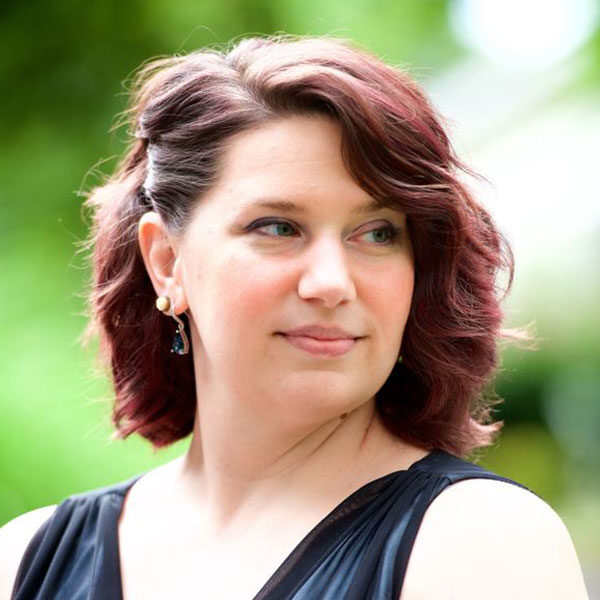
Meet SIOP Member Margaret Breakiron
Name
Margaret Breakiron
Position/Employer
Principal I-O Psychology Practitioner and Psychometrician for Kaizen Approach Inc.
How many years have you been a member of SIOP?
15 years
What roles have you had within SIOP?
- SIOP Conference Presentation Reviewer
- Committee Volunteer: Military and Veterans Inclusion
- Committee Chair: Military and Veterans Inclusion
- Subcommittee Lead: Military and Veterans Inclusion
Interest Area(s)
Advocacy, Diversity Equity Inclusion and Belonging, Leadership, Organizational Culture/Change/Development, Psychological Safety, Testing/Assessment, Worker Mental Health and Well-Being
What sparked your interest in I-O psychology?
My path to I-O psychology was anything but traditional. Early experiences taught me to look at people, environments, and systems from different perspectives. In grade school, I was drawn to both art and psychology, and in high school I served as a peer mediator and mentor. In college, I initially pursued interior architecture before shifting to clinical psychology. While I enjoyed studying human behavior and how environments influence people, my advisor eventually recognized that clinical psychology might not be the best fit for me. He encouraged me to explore general psychology, take a job analysis course, and learn more about I-O psychology.
I had never heard of I-O psychology before that course, but I was hooked. I was drawn to the combination of psychology, research, and practical problem-solving, as well as the opportunity to apply those principles beyond the individual to jobs, organizations, and systems. Looking back, I realize I didn’t need to leave my previous experiences behind. Peer mediation taught me perspective-taking and navigating differences; interior architecture taught me about structure, design, and how people interact with environments; and clinical psychology taught me to think about people in context and appreciate how individual experiences and environments shape behavior.
Each of these experiences continues to influence how I practice I-O psychology today. My path may have been unconventional, but I believe that has become one of my greatest strengths as a practitioner: the ability to bring a variety of perspectives into my work and translate research into practical solutions that help organizations make evidence-based decisions about their workforce.
What role do you see I-O psychology playing in the future of work?
I-O psychology will make a real difference in the future of work through the combination of science, practical application, and attention to the human side of systems.
I think I-O psychology has an increasingly important role to play in helping organizations navigate change without losing sight of the people who work within those systems. Technology, AI, remote and hybrid work, changing skill requirements, demographic shifts, and new approaches to credentials and career development are changing how work gets done—but change does not automatically mean that existing work or the people doing it are no longer needed. I-O psychology can help organizations distinguish between what is simply new and what is actually effective by bringing evidence-based approaches to questions about job design, skills, selection, assessment, learning, performance, well-being, inclusion, and organizational change.
I also think I-O psychology has a responsibility to help organizations implement new technologies and practices thoughtfully. AI or a new assessment technology may be available, but that does not necessarily mean it is valid, useful, ethical, accessible, or appropriate for a particular workforce. Ultimately, I see I-O psychology as helping organizations ask better questions before rushing toward solutions, such as: 1) What problem are we trying to solve? 2) What does successful performance require? 3) How will we know if a new approach works? 4) Who needs to be included in the decision-making process? 5) Who might be unintentionally excluded by these changes?
What is one of your favorite SIOP Annual Conference memories/highlights?
One of my favorite things about the SIOP Annual Conference has always been seeing how broad the field really is and how many different ways I-O psychology can be applied. The 2026 conference in New Orleans was particularly meaningful because it was my first conference as part of SIOP’s leadership team, serving as Chair of the Military and Veterans Inclusion Committee, which is now a subcommittee under SIOP’s reorganized leadership structure.
Being involved in leadership changed the conference experience for me. I was able to see not only the breadth of the research and practice being presented, but also the work that goes into building a professional community and creating opportunities for people to contribute to the field.
During this year’s conference, I was especially encouraged by the attention being given to neuroinclusive workplaces, military and veteran workers, overlooked segments of the workforce, and ethical approaches to integrating AI into career and performance practices. For me, it was a highlight to experience a variety of sessions and networking opportunities that connected strongly with my own interests, reminding me why I value being part of the I-O community. I appreciate each opportunity we have to connect and support each other in our work and personal interests.
Please share one non-I-O-related bit of information about yourself.
Some people may not know that I genuinely enjoy creating things that make everyday life a little more beautiful for those closest to me. So, not only am I the type of person who gets oddly excited about a well-designed spreadsheet – I also enjoy creating things for my family and friends to help celebrate their interest and milestones.
Sometimes these projects are more practical and useful; while others really just let me explore my more artistic side. I have created gifts, such as: custom baby books that allow the parents-to-be to track milestones and impressions they have along the way on pages that I’ve added embellishments and drawings in the margins with personal meaning for them, coloring books and pages for my nieces that incorporate their favorite animals in place of the main character (e.g., sleeping beauty as a bunny); and a caged dragon for my sister-in-law (mainly because that’s what she asked for, thinking I couldn’t deliver). I have also created decorations for family celebrations and company events, such as: Lord of the Ring inspired banners for my brother’s wedding, signs for baby showers, and name tags for company holiday parties. I am currently working on a bunting banner for my youngest niece, with her name that will match the theme in her nursery and for use during future celebrations, like her first birthday.
Is there anything you would like to add?
One of the things I value most about I-O psychology is the opportunity to give back to the profession and to the people we serve. Throughout my career, mentors, colleagues, organizations, and individuals have shared their knowledge with me and opened doors that helped me grow. I try to pay that forward by creating accessible systems; mentoring students, transitioning service members, veterans, and early-career professionals; and by connecting people with others in my network when I can.
My own career has also reinforced the breadth of I-O and how it can be applied across industries. I’ve worked in job analysis and survey design for a transit agency; affirmative action planning and auditing with an I-O consulting firm; HR and training management for a landscaping company; assessment center research for a university; and eventually training evaluation, workforce development, assessment, psychometrics, and certification development as a government contractor.
Reflecting on my experiences has reinforced for me that I-O psychology isn’t one job or one career path. It is a toolkit. The same principles can be applied to very different problems, organizations, and industries. Being able to apply the principles to a variety of different situations is one of the things I appreciate most about the field. It’s our biggest superpower. As I-Os we are exceptionally poised to be asking the correct questions and advocating for diverse perspectives, especially for those often a part of the overlooked segments of the workforce (e.g., Military and Veteran community team-members).
I would also encourage people entering I-O psychology to: 1) think broadly about where their skills can take them, 2) not limit themselves to traditional I-O or HR pathways, and 3) always feel free to reach out to myself, other SIOP members, and/or volunteers who share your interests with any questions or to find ways to get more involved with SIOP.
If you would like to be considered for a Membership Spotlight, please fill out this form.