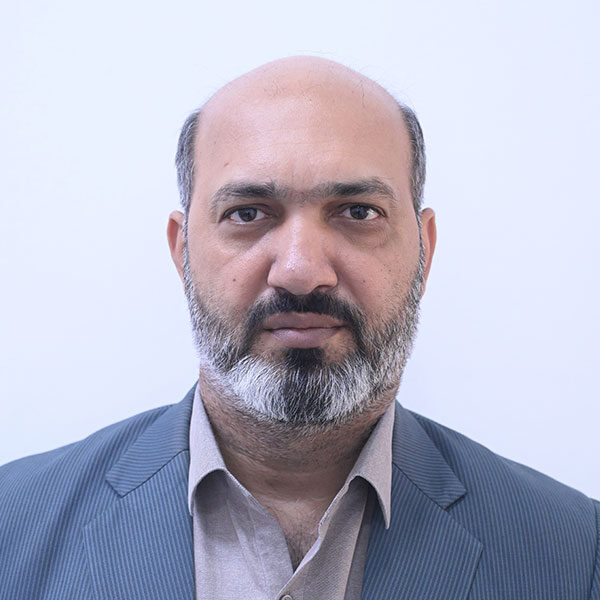
Mr. Mushtaque Ali Channa is an organizational psychology and human capital development practitioner with more than 23 years of professional experience across the public, private, development, and NGO sectors. His career reflects a sustained commitment to applying psychological science, people analytics, leadership development, and evidence-based workforce systems to improve organizational effectiveness, employee capability, and institutional performance.
He is currently serving as Senior Manager – Talent Resourcing and Development at Pakistan Security Printing Corporation (PSPC), where he has been working since 2018. In this role, he contributes to strategic workforce planning, talent development, capability enhancement, leadership development, and evidence-based human capital transformation within a high-reliability public-sector manufacturing environment.
Mr. Channa’s professional background includes significant practitioner experience as a psychologist in major national and development-sector initiatives, including the FALAH Project supported by USAID, the Behtar Kal Project VCT Center supported by DFID, and the Federal Public Service Commission, Islamabad, Pakistan, where he served as a psychologist. These roles strengthened his expertise in psychological assessment, human behavior, organizational diagnostics, workforce development, and public-sector selection systems.
A member of the Society for Industrial and Organizational Psychology (SIOP) since 2018, Mr. Channa is currently pursuing a PhD in Management Science at Bahria Business School, Bahria University Karachi Campus, Pakistan, under the supervision of Prof. Dr. Mustaghis Ur Rahman. His doctoral research examines psychological safety, leadership mechanisms, and team effectiveness in manufacturing organizations.
He holds an M.Sc. (Hons.) in Industrial/Organizational Psychology, a Post-Magisterial Diploma in Organizational Psychology, an LL.M. in Business and Commercial Laws, and a Diploma in Employment Laws and Industrial Relations from IBA Karachi, Pakistan. His applied and academic work integrates organizational psychology, employment law, people analytics, predictive workforce insight, and experimentation-based learning to support evidence-based leadership, adaptive organizations, and the future of work.