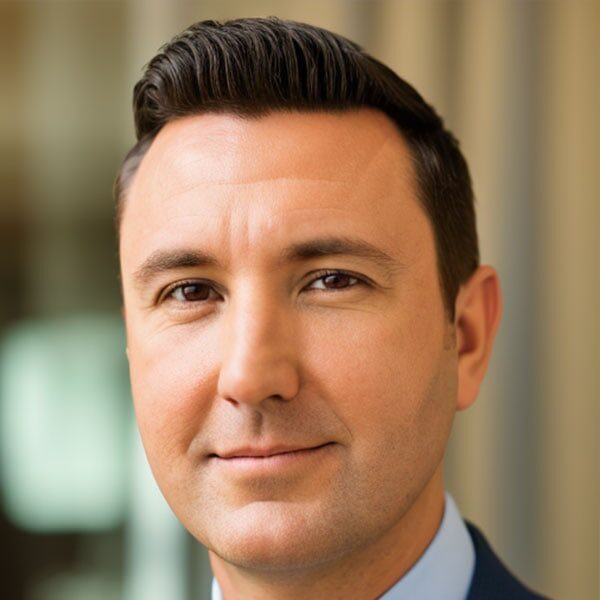
Meet SIOP Fellow Peter Reiley
Name
Peter Reiley
Position/Employer
Principal Consultant, Leadership Arts & Sciences | Adjunct Professor, Penn State
How many years have you been a member of SIOP?
16 years
What roles have you had within SIOP?
- Chair, Doctoral Consortium
- Founding Member, Military and Veterans Initiative Task Force (appointed by the Executive Board)
- Member, Military and Veterans Inclusion Committee
- Member, Government Relations Advocacy Team
- Member, Visibility Committee, Pro-Social Activities Subcommittee
- Member, Professional Practice Committee
- Member, Conference Committee, Engagement Subcommittee
- Member, Awards Committee
- SIOP Ambassador since 2016
Interest Area(s)
- Advocacy
- Consulting
- Groups/Teams
- Leadership
What sparked your interest in I-O psychology?
I came to I-O psychology indirectly through my curiosity about how leadership worked. I enlisted in the Air Force right out of high school and served as an aircraft mechanic. That experience showed me what a difference leadership can make. Three years in, the Air Force selected me for a commissioning program, where I earned a business management degree and became an officer. My own abilities got tested immediately as a project manager supporting space launch programs, then developed across two decades of leading military personnel, government civilians, and contractors. I always felt I owed the people I worked with the best leadership I could manage, so I went looking for methods that actually worked instead of what gets repeated. That search ran through a master’s degree in HR and organizational leadership, teaching behavioral sciences and leadership at the U.S. Air Force Academy, and a PhD in I-O psychology. The curiosity, and sense of responsibility, both carried into the consulting work I do now and the psychology of leadership I teach at Penn State.
What role do you see I-O psychology playing in the future of work?
Translation. Leaders are making decisions about hiring, team design, and AI adoption right now, and they’re mostly drawing on intuition and whatever leadership book was in the airport. Our role is to get evidence into those rooms in a form they can actually use, which means being fluent in the language of the people we advise rather than asking them to become fluent in ours. I’ve spent most of my career applying I-O psychology where nobody expected to find a psychologist, like space launch programs, nonprofit boards, and influence operations with Special Operations Forces. The job is the same every time. Take what the research knows and make it usable to someone who didn’t arrive through psychology.
What work trends are you seeing and hearing about and how can I-O psychology practitioners, researchers, educators, and students impact these trends?
Two trends show how expert work is reorganizing itself. The first is the consulting collective. This is where a small group of independent consultants keep their own practices but assemble as a single entity to bid on work none of them could take on alone. They package multidisciplinary services, share resources, clients, and revenue on those assignments, then go back to their separate shops afterward. Basically, it’s the Avengers model. It helps solve a real challenge. Solo practice means you are your own marketing department, contracts office, and delivery team, with nobody covering you when you get the flu. But joining a traditional firm means climbing a corporate ladder and handing back freedom. Collectives sit in between.
The second is the portfolio career, which is where I’ve landed. You stop depending on one employer and build across consulting, advisory work, teaching, writing, speaking, and board service. It’s not for everyone, but you get to “choose your own adventure” and tackle challenges most psychologists never get to see.
These hit elements across I-O psychology domains. Practice is out ahead of the science on both trends. A collective is a multi-team system with no HR department. A portfolio career is career self-management with no organization underneath it. We know how to study team composition, role clarity, shared leadership, and career success. Nobody has really pointed that to these structures yet, and the people living inside them could use the help.
What advice would you give to students or early practitioners?
Don’t try to be everything, everywhere, all at once. Figure out one or two in-demand skills you’re good at, whether that’s survey design, statistics, data visualization, or facilitation, and get known for them. A focused reputation earns you credibility on a new team much faster than trying to do it all. Then, once people can rely on you for the skill or focused role they need, they’ll usually start inviting you into everything else. That’s where jobs start finding you.
What is one of your favorite SIOP Annual Conference memories/highlights?
Being inducted as a SIOP Fellow this year is one I won’t forget. But the highlight I’m proudest of is slower and much less ceremonial. When I joined SIOP, military and veteran topics barely registered on the conference program. Over the past 15 years a group of us worked to change that, first through the Military and Veterans Initiative Task Force and now through the Military and Veterans Inclusion Subcommittee, and the number of sessions on those topics has more than doubled. Watching that part of the program fill out, year over year, beats any single moment.
For pure conference enjoyment, catch the SIOP talent show. Our field has range.
Please share one non-I-O-related bit of information about yourself.
My first experience with teaching came from martial arts. I earned my black belt by the time I was 16, and in hindsight, the time I spent leading those classes, especially for adults twice my age, was an education that keeps paying off.
Is there anything you would like to add?
Most of my projects these days come down to science communication. Our I-O psychology research explains a lot about leadership, but it rarely reaches the people making leadership decisions, so I’ve been using pop culture to connect with different audiences. That’s led to some fun opportunities, like speaking on panels at comic conventions.
I’m really excited for my forthcoming book, Prime Leadership: The Science and Practice of Leadership in Transformers. It’s part of Emerald Publishing’s Exploring Effective Leadership Practices Through Popular Culture series. The book uses stories from films, animated series, and comics to tackle leadership myths and share evidence-based approaches with characters and situations from across the franchise. It examines established theory and the latest research in an accessible way, from destructive leadership and toxic personalities to followership, mentorship, and building high-performance teams.
I wrote it for leaders, educators, students, and Transformers fans. It’s been a labor of love, and I can’t wait for it to come out. I’ll post release updates at peterreiley.com.
What one piece of advice would you give to someone who is looking to secure their first role in field of I-O psychology?
Make it easy to believe you can do the work. Hiring someone with no track record is a bet, and your job is to give them reasons to take it. Coursework alone won’t. An internship, a practicum, a short-term client, or one real project with a deadline and somebody counting on the result will, especially if you can show what you built and walk someone through the decisions you made.
Did you start a career in I-O psychology after a different career? If you’re open to it, please share your career tips for anyone wanting to move from their current role into one in the field of I-O psychology.
The advice I’d give anyone moving from one field to another is about professional identity. The military-to-civilian transition is one of the hardest, since much of who you were, came with a rank and role attached.
Most people in transition introduce themselves by what they used to be. A job title only means something inside the organization that issued it, so everyone outside is guessing at what you actually did. It also points the focus in the wrong direction. You end up a former something instead of a candidate for something. So, own transition was easier because my work kept putting me in front of all kinds of audiences, from military and corporate to academic and nonprofit, so I’d had years of practice explaining myself in whatever terms the room used.
So work backward from where you’re going. Decide what role you’re after, get specific about the competencies it takes, then go through your history and find where you already showed them. Managing a budget under scrutiny, making calls with real consequences and not enough information, none of that belongs to the industry you happened to do it in. You’ll have to describe yourself as something you haven’t officially been yet. That feels presumptuous, and it isn’t. Do it well enough and an unconventional path stops looking like a detour.
Are there any skills you would recommend someone highlight or enhance to help them secure a role in I-O psychology?
Writing and speaking, well ahead of anything else. If you can turn data into a story or make a complicated finding into something a busy leader can reliably act on, you’ll earn more than a job. You’ll earn their trust. After that, data fluency, meaning you can run and defend an analysis rather than only interpret someone else’s output. The skill that’s hardest to put on a resume is comfort in rooms where you’re the only psychologist present. That one’s mostly reps. You earn it by paying attention to what makes people lean in or tune out.
What tip can you share with someone who might not know how to network in the field of I-O psychology?
The connections that move your career are usually the people a step or two outside your circle. Not close friends, not strangers. Your advisor’s former student. Someone whose session you liked and went up to afterward. Maybe someone you put a conference submission together with.
People tend to think of networking as a personality contest. It’s mostly staying in touch with people you already sort of know. At SIOP, the most useful thing you can do is volunteer for a committee. You build those ties by working alongside people, which is a lot easier than building them at a reception or coffee break.
Is there any guidance you would provide to a job seeker given the current challenging state of the job market?
In a tough market, sending out more applications feels like the only move you have. Almost every early-career I-O psychology I talk to is doing it right now. Sending more does get you more interviews. It barely moves the number of offers, and it makes no difference to whether the job you land is a good one. What matters is how the search is run. Know specifically what you want, plan when and where you’ll look, stick with it through rejection, and look back at each attempt before starting the next.
That last one is what almost nobody does, especially when the pressure is on. Planning gets you there faster, but reviewing is what decides whether it was worth getting to. Reflection needs something to compare, and identical applications don’t give you much to work with. You’re already tailoring each one, so make part of that deliberate. Which project you lead with, which skill you emphasize, whether you follow up. Write down which choice went where. A single no tells you very little, since the market alone explains that. Once a few come in, look at what they have in common. It costs nothing beyond attention, and it turns scattered rejections into one dataset instead of a string of separate verdicts on you.
If you would like to be considered for a Membership Spotlight, please fill out this form.