Work-related flow (WRF) refers to a state of deep absorption, enjoyment, and motivation in a work activity (Bakker et al., 2008). During flow, people are optimally challenged, possess clear goals, receive unambiguous feedback, merge action and awareness, feel concentrated and in control, lose self-consciousness, experience time transformation, and act for intrinsic task enjoyment rather than external rewards (Nakamura & Csikszentmihalyi, 2002). As a musician, I (Ryan) often experience deep flow during music making; time slips away, and the activity increases in meaning. Upon entering graduate school, I wanted to learn how to apply this flow experience as it relates to workers and workplaces.
Although the concept of flow has gained increased attention through daily conversation and social media, its scientific foundations are often overlooked. Modern research demonstrates positive connections between flow and worker well-being, yet the construct remains rarely emphasized within occupational health psychology (OHP) contexts. This gap limits the utility of flow in both research and practice, stifling its potential as a valuable construct in the field.
Drawing from a recent meta-analysis on the nomological net of WRF (Liu et al., 2023), we developed a multiple‑choice survey to assess WRF knowledge in the OHP community. These items cover core theory in I‑O psychology, relationships to commonly studied constructs such as work engagement, and OHP topics such as burnout and workplace safety. With this project, we hope to bring greater attention to the value of flow in the workplace and inspire the study and application of its principles more intentionally.
We sampled 50 participants from the OHP community who identified as academics (38%, n = 19), practitioners (18%, n = 9), and graduate students (38%, n = 19; multiple selections allowed), with 4 participants not reporting their role. Participants primarily identified as women (64%, n = 32) and White (76%, n = 38), and most reported a highest education level of either a doctoral (44%, n = 22) or a master’s degree (36%, n = 18). On average, participants were 34.5 years old (SD = 11.9, range = 23–72 years), reflecting a broad span of early‑career OHP students and professionals to more established veterans.
Before the knowledge items, we asked participants to rate their confidence in WRF understanding, as well as their self‑perceived knowledge of the literature surrounding the construct. Using a 4‑point Likert scale from 1 = strongly disagree to 4 = strongly agree, paired‑samples t‑tests indicated significant decreases from pre‑ to postsurvey in confidence in understanding WRF (pre: M = 3.22, SD = 0.58; post: M = 2.83, SD = 0.56), t(47) = 4.50, p < .001, d = 0.69, and in perceived knowledge of WRF research findings (pre: M = 2.42, SD = 0.81; post: M = 2.13, SD = 0.61), t(47) = 3.71, p < .001, d = 0.38. This pattern suggests that participants overestimated their understanding of WRF and its empirical literature. In other words, exposure to evidence‑based items about WRF appeared to prompt metacognitive recalibration, revealing previously unrecognized gaps in knowledge that are conceptually similar to Dunning-Kruger effects, where people become more aware of what they do not know.
To evaluate the robustness of these effects, we conducted post‑hoc power analyses for the paired‑samples tests based on the observed effect sizes in RStudio. For changes in confidence (d = 0.69), the sample (n = 48) provided very high statistical power (1 − β = .997), suggesting this effect is unlikely to reflect low power. In contrast, power for changes in perceived knowledge (d = 0.38) was more modest (1 − β = .73), falling below the common .80 benchmark, so this smaller effect warrants caution and replication in a larger sample. Before the knowledge items, we asked participants to describe personal experiences of WRF (if applicable). After reading its formal definition, most participants reported having experienced WRF (86%, n = 43), 4% (n = 2) denied experiencing it, one participant was unsure, and 8% (n = 4) did not respond. Common words used to describe the experience included variations of “focus” (34%, n = 17), “engagement” (24%, n = 12), and “immersion” (16%, n = 8). Other commonly reported sentiments included enjoyment (14%, n = 7), ease (10%, n = 5), and motivation (10%, n = 5). Many participants disclosed feeling free from distractions (14%, n = 7), with some even reporting reduced awareness of basic physiological needs (6%, n = 3). Although not explicitly prompted, several participants volunteered activities in which they have experienced WRF, such as writing (10%, n = 5) and data analysis (10%, n = 5).
Who Can Experience WRF?
We began by asking a simple question: Who can experience flow at work? To probe their understanding, we presented several tempting but narrow options: “highly skilled individuals at the top of their field (e.g., professional athletes, Nobel winners),” “people working in creative or artistic professions (e.g., musicians, writers),” and “those working in high pressure environments (e.g., surgeons, pilots).” Despite these plausible distractors, nearly all participants (98%, n = 49) correctly selected “mostly anyone, regardless of profession or skill level.” Only one participant indicated uncertainty. This result underscores a key point: although people in high-pressure or creative roles may more readily experience flow, the capacity for flow is not exclusive to these contexts. With proper conditions, almost anyone can experience this state.
Consistent with the idea that “mostly anyone” can experience flow, we also asked participants to estimate which demographic groups are most likely to experience WRF. Nearly half (48%, n = 24) correctly chose no significant differences between demographic groups, whereas others believed that workers with longer tenure (16%, n = 8), with a college education (4%, n = 2), or women (2%, n = 1) experience flow most often, and 30% (n = 15) reported that they did not know. Taken together, these responses align with the broader literature suggesting that flow is a broadly accessible state rather than one confined to specific identities.
Flow in Work and Leisure
We next examined how OHP professionals and graduate students think about flow along the work–nonwork divide. When asked whether people experience flow more often in work or in leisure activities, participants were split: 34% (n = 17) believed that flow is more prevalent in work, 24% (n = 12) believed it is more prevalent in leisure, and nearly half (42%, n = 21) indicated that they were unsure. The evidence, however, suggests that higher frequencies occur at work, as work activities are often more structured in ways that support flow (e.g., clear goals, immediate feedback, optimal challenges) than typical leisure activities (Csikszentmihalyi & LeFevre, 1989). Subsequent experience-sampling studies have replicated and extended this pattern: Engeser and Baumann (2016) found that employees reported the highest flow during work, with slightly but significantly lower flow during active leisure (e.g., sports, arts) and substantially lower flow during passive leisure (e.g., watching television, scrolling social media), even though leisure was characterized by more positive affect overall. Their findings reinforce the notion that although people often prefer leisure, everyday work is more likely to facilitate conditions under which flow actually occurs.
Related Organizational Theories and Measures of WRF
As for where flow fits into commonly studied theories in I‑O psychology and OHP, 76% of participants (n = 38) recognized that theories of motivation (e.g., self‑determination theory; Ryan & Deci, 2000), stress (e.g., job demands-resources theory; Bakker & Demerouti, 2007), and work design (e.g., job characteristics model; Hackman & Oldham, 1975) frequently provide the theoretical foundation for flow research. The majority of participants (76%, n = 38) correctly indicated that justice theories, such as the organizational justice taxonomy (Colquitt et al., 2001), are not as commonly used in this literature, with 24% of participants expressing uncertainty.
Although justice theory has not traditionally been central to flow research, it offers a promising avenue for future work examining whether different forms of perceived injustice reduce opportunities to experience flow. Such injustices may act as stressors or ruminations that distract employees, consume cognitive resources, and hinder optimal engagement in work tasks, making this a rich area for future research.
We also presented several common approaches to measuring WRF, along with one potential misconception. We asked participants to identify which is not commonly used: daily diary/experience sampling methods (ESM), quantitative validated scales, qualitative interviews, and biomarkers via smartwatch technology. Sixty‑eight percent of participants (n = 34) correctly selected smartwatch‑based biomarkers as the least common approach, whereas 14% (n = 7) incorrectly chose quantitative validated scales, with the remaining responses distributed across the other options. In fact, much of the early research on flow was conducted by Csikszentmihalyi, who derived the construct from qualitative interviews ranging from athletes to artists describing flow as feeling “carried along” during a task (Csikszentmihalyi, 1990). Validated scales such as the Flow State Scale and Dispositional Flow Scale (Jackson et al., 2008) continue to dominate research on WRF, and ESM is especially useful for for capturing these transient states, despite the irony of interrupting flow to measure it. Although research on the neurophysiology of flow is developing (Durcan et al., 2024), leveraging smartwatch‑based physiological data remains a viable path for future work.
Relationships to Other Constructs
One question I often receive as a flow researcher is this: Aren’t we already measuring the same thing with engagement? Although the constructs share similarities, particularly when work engagement is conceptualized in terms of vigor, dedication, and absorption (Schaufeli et al., 2002), there are important distinctions. WRF is a short‑term, task‑specific episode of intense absorption, intrinsic enjoyment, and optimal challenge, whereas work engagement is a more pervasive, relatively stable state toward one’s work in general (Yan & Donaldson, 2022). Practically, flow‑oriented efforts are best suited to supporting peak experiences in specific activities, whereas engagement‑oriented efforts focus on sustaining ongoing work‑related energy and well‑being over time.
We asked participants to identify which is not a key difference between the constructs: (a) flow is a short-term, fleeting experience, whereas work engagement represents an enduring, relatively stable state of mind; (b) flow occurs during specific tasks or activities, whereas work engagement pertains to work life in general; (c) flow is experienced only during creative tasks, whereas work engagement applies to all types of tasks; and (d) flow fluctuates substantially within-person across time and activities, whereas work engagement fluctuates moderately on a daily basis. Not surprisingly, 46%, (n = 23) correctly identified that the misconception is that flow occurs only during creative tasks. The remaining responses were distributed across the other options, with 12% (n = 6) indicating they did not know. These responses highlight that, although flow and engagement are related, people still hold important misconceptions about how they differ.
Like many constructs in psychology, flow emerges from the interplay between individual behaviors and situational conditions. To explore this relationship, we asked participants how people can actively enhance their own likelihood of experiencing flow by selecting from several mechanisms: (1) identifying and removing hindrance demands, (2) engaging in proactive behaviors like self-leadership, (3) striving to earn a greater income, or (4) there is no reliable way to increase one’s chances of experiencing flow. Participants overwhelmingly selected identifying and removing hindrance demands as the primary method for increasing flow (56%, n = 28). However, contrary to expectations, Liu et al. (2023) found no significant relationship between hindrance demands and flow. In fact, neither challenge nor hindrance demands showed a significant correlation with flow. Instead, proactive behaviors emerged as the strongest individual predictor of flow, aligning with 28% of participants (n = 14) in our study. This finding is consistent with the self-determination model of flow (Bakker & Van Woerkom, 2017), which emphasizes the central role of personal agency and self-initiated action in fostering flow.
However, flow is not determined solely by individual behavior. To explore the role of broader influences, we also asked participants to consider antecedents in relation to flow that extend beyond personal actions, such as (1) social support from peers, (2) job tenure, (3) positive leadership styles (e.g., transformational leadership), and (4) age. Participant responses were mixed: 14% (n = 7) selected social support from peers, 20% (n = 10) selected job tenure, 24% (n = 12) identified positive leadership styles, and 42% (n = 21) indicated that they were unsure. Interestingly, positive leadership behaviors also correlate highly with flow, suggesting that external direction and support, combined with individual effort, help employees achieve more satisfying and immersive work experiences.
When considering outcomes of flow within an OHP context, burnout emerges as a paramount topic. When asked which statement best describes the relationship between flow and burnout, most participants (80%, n = 40) correctly recognized that flow can coexist with burnout; as noted in Liu et al.’s (2023) meta-analysis, flow experiences are temporary and often fail to address chronic stressors or ongoing recovery needs. However, it is worth noting that recent studies excluded from that meta-analysis, such as Weintraub et al. (2021), found that flow experiences were negatively associated with burnout, utilizing ESM. This remains an encouraging but underexplored area, warranting more longitudinal research to examine whether flow experiences buffer against, or simply coexist with, burnout across occupational contexts.
Given that workplace accidents and injuries represent another major focus within OHP, we sought to explore participants’ beliefs about relations between flow and risk-taking behavior. When prompted about this potential connection, nearly half of the participants (48%, n = 24) indicated a belief that flow is uncorrelated with risk-taking behavior, while 20% (n = 10) believed there is a relationship, 30% (n = 15) reported that they did not know, and one participant did not respond. We identified this as a common misconception among OHP professionals, as the meta-analysis reported a moderate-to-strong positive relationship between flow and risk-taking. From an applied standpoint, this misconception underscores the need for OHP education and training to address how flow may contribute to safety-critical workplace behaviors. This also reflects emerging work on the “dark side” of flow. Future studies in this area could examine topics such as the relationship between flow and workaholism, the neglect of basic physiological or psychological needs during intense flow states, and other potentially maladaptive outcomes. While these cautionary perspectives highlight potential risks associated with flow, it is important to note that scholars overwhelmingly view flow as a net-positive experience with well-being and performance benefits.
Interventions for WRF
Building on this perspective, several survey items assessed participants’ knowledge of targeted strategies to increase the likelihood of employees experiencing WRF. For instance, we asked participants which would be effective suggestions for a manager wanting to facilitate flow in the workplace. Although 7 participants (14%) indicated that opportunities for job crafting (i.e., manipulating aspects of one’s work to fit personal preferences) would be an effective approach, 2 participants (4%) were unsure, and 2 (4%) did not respond, the overwhelming majority selected “All of the above,” which included job crafting, playful work design (i.e., intentionally incorporating fun and stimulating elements into work tasks), and the assessment and use of individual strengths (i.e., aligning tasks with what employees naturally do well). Together, these approaches can increase employees’ immersion, enjoyment, and sense of fit with their work, thereby fostering WRF.
Because clear goals are a key antecedent of WRF, we also asked participants about a specific intervention: nudges, or subtle behavioral influences that guide choices without coercion. Drawing on Weintraub and colleagues’ 2021 study, we formulated an item assessing knowledge of the outcomes associated with a daily goal‑setting nudge intervention. The majority of participants (54%, n = 27) correctly endorsed that all listed outcomes were associated with daily nudges, including increased flow, daily performance, and work engagement, plus lower daily stress, while roughly one quarter (26%, n = 13) indicated that they did not know. This suggests that many OHP professionals are aware (or could guess) that brief, low‑cost interventions such as nudges can have broad, positive effects on employees’ experience and functioning at work, although a sizable minority may still be unfamiliar with this emerging line of research.
Moreover, we presented participants with a list of potential intervention steps that could be used to enhance flow experiences at work (i.e., setting clear and meaningful goals, providing structured guidelines that reduce autonomy, giving unambiguous and constructive feedback, and designing work to balance challenges with employees’ skill levels) and asked them which would be the least effective. Although structure in work activities is important for facilitating flow—especially for employees with lower skill levels on the task—reducing autonomy can undermine opportunities to engage in the activity autotelically, given the loss of decision latitude. As a result, this option was considered the least effective step for enhancing flow. The vast majority of participants (86%, n = 43) correctly identified reduced autonomy as potentially harmful for flow. This conveys that many OHP professionals recognize the importance of preserving employees’ sense of choice and self‑direction when it comes to flow‑enhancing interventions.
Willingness to Champion WRF
The survey concluded with the item “I would educate my colleagues about work‑related flow,” rated on the same Likert scale as used above. The majority of respondents indicated some level of agreement (n = 26), while a substantial portion still expressed disagreement (n = 22). This pattern suggests a promising start to engaging more OHP professionals in conversations about WRF, but also indicates that additional effort is needed to demonstrate its relevance for research and practice. It is also possible that those who disagreed simply do not view WRF as aligned with their interests or primary areas of work, underscoring the importance of clearer communication about when and for whom this construct is most useful.
Taken together, these patterns point to several implications for OHP education and practitioner development. Our findings suggest that many professionals are familiar with the language of flow but lack deeper conceptual literacy, for example, accurately distinguishing WRF from work engagement, or recognizing both its potential benefits and risks (e.g., links with risk-taking). Training programs may therefore need to devote more explicit attention to WRF conceptualization and assessment, including when to use state versus trait measures, how to deploy experience sampling, and how to interpret emerging physiological indicators alongside established self-report tools. Finally, competencies in designing flow-conducive yet ethically grounded interventions, such as aligning challenge-skill balance, autonomy, and feedback with broader goals of health, recovery, and safety, could help practitioners integrate WRF more responsibly into coaching, job redesign, and safety initiatives.
Conclusion
Altogether, our findings highlight both the openness and hesitations within the OHP community and point to a valuable opportunity for future outreach, education, and collaboration around WRF. At the same time, these conclusions should be interpreted in light of limitations, including our small sample (n = 50), reliance on custom items developed for this survey, the usual constraints of self-report survey data (e.g., response and selection biases), and the fact that our interpretation of the WRF literature draws heavily on a 2023 meta‑analysis that omits more recent studies and some earlier work. Last, as mentioned, given that flow is reaching mainstream audiences, this work underscores fruitful opportunities to examine misconceptions about other trending I-O psychology topics such as GenAI, DEI, and hybrid work.
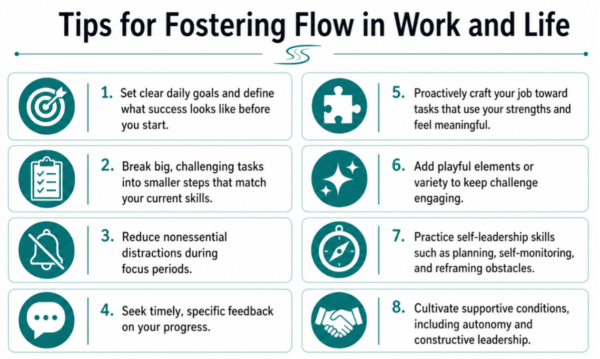
Table 1: Tips for Fostering Flow in Work and Life
Volume
63
Number
5.
Author
Ryan Lizerbram, Colorado State University; Jared Weintraub, Deloitte; Emmalee Diederichs, Bowling Green State University; Roy Shalev, Colorado State University
Topic
Burnout, Workplace, Workplace Safety
