In this 0 article, we reflect on the second I-O-community led art exhibition to occur at the SIOP Annual Conference, Workscapes 2.0. We highlight the overall purpose of Workscapes and discuss the event’s design as it relates to facilitating restoration and connection for conference attendees. Key findings from this year’s event feedback data collection are presented. We identify unique challenges related to successfully carrying out an arts-based event at a professional research conference, along with our responses to these challenges. We conclude our article by inviting members of the SIOP community to join Workscapes at SIOP 2027 as an artist, volunteer, and/or community sponsor.
What Is Workscapes?
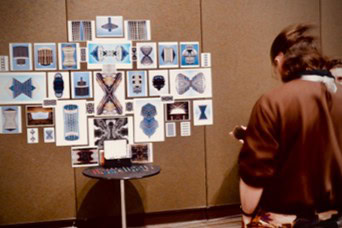 A stated core value of SIOP’s organization is to “inspire individual and organizational health, well-being, and effectiveness”. In line with this value, we saw an opportunity to curate a unique experience at SIOP’s annual conference; one that facilitated restoration, forged deeper connections, and more realistically met conference goers where they were with the week’s conference demands. These motives inspired the conception and development of “Workscapes,” which debuted at the SIOP 2025 conference and showcased over 100 creative artworks from I-O faculty, students, and practitioners (Bishop et al., 2025).
Members of our SIOP community have previously highlighted the need for more intentional conference approaches, such as Gentle SIOP, wherein conference attendees are encouraged to “slow down” and adjust their schedules as needed during the busy conference week (Cobb & Rauvola, 2024). Indeed, empirical evidence across disciplines of psychology, psychobiology, and behavioral science supports the claim that engaging with art has measurable health and well-being effect, and that these effects occur through a variety of mechanisms related to emotion regulation, cognition, and sense making (Fancourt et al., 2026). Therefore, the purpose(s) of Workscapes are:
- To provide a dedicated space for rest and recovery amid the conference intensity
- To encourage participation in the conference beyond its traditional format
- To celebrate the multidimensionality of I-Os and their often-hidden creative talents
- To spark more conversations about the intersection of I-O, creativity, and well-being
- To offer a tangible expression of “Gentle SIOP” values, a conference engagement approach that prioritizes rest, connection, and exploration over performance and productivity
Workscapes Is an Iterative Event
The German word freiraum, meaning “a space for freedom” (Auernhammer & Hall, 2014), describes the way we have intentionally put creativity at the center of the community-building scaffolding around Workscapes. Some attendees come to check out a few pieces of art, some to volunteer, some to connect with others through conversation, and some to make art themselves. Derived from placemaking literature, “Lighter, Quicker, Cheaper” (LQC) approaches best describe how we have informally reiterated this event through learning-by-doing and through the collection of event feedback at the end of each year’s event. Through its multi-purpose nature, Workscapes attracts an extremely diverse group of attendees. Workscapes would simply not exist without those who have shown up the last two years to experience it for themselves, for the first time.
Workscapes Is a Place to Rest and Recover
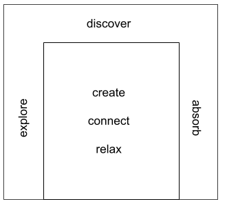 Workscapes accomodates different engagement preferences of attendees. Some may choose to pop in and walk by one exhibit before a networking event. Some may stay longer to engage on a deeper level by creating art. In thinking about the four recovery experiences conceptualized by Sonnentag and Fritz (2007), we aimed to curate a space that allowed attendees to detach from the typical conference environment (psychological detachment), find relief in a lower-stimulation context (relaxation), engage in art themselves at the activity table (mastery), and control how long and to what extent they interacted with the event (control). Additionally, Workscapes aims to facilitate both “passive” breaks (e.g., looking at art) and “active” breaks (e.g., creating art, connecting with artists). Pictured to the right of this paragraph is the Workscapes 2.0 event map included in this year’s event program to help guide attendee engagement. Overall, we wanted to create a place where SIOP attendees could mix and match their Workscapes experience in a way that made sense for them, their energy levels, and their already-busy schedule during the conference week.
Key Findings from Workscapes 2.0 Event Feedback
Artist and Artwork Descriptives
A total of 22 artists exhibited artworks at Workscapes 2.0. Of these, 12 (54.5%) exhibited their artwork in person, and 10 (45.5%) submitted their artwork digitally, several of whom were unable to attend the conference in person. Consistent with previous Workscapes events, we kept an open-call format wherein we imposed no eligibility criteria, peer review, or medium restrictions on artists, to maximize inclusiveness and diversity of art shown. Art mediums exhibited included paintings (e.g., acrylic, watercolor), mixed medium canvases, photography, glass jewelry, ceramics, crochet work, poetry, Minecraft pixel art, and 3D-printed art. We continued to accommodate digital submissions for artists unable to attend up until the day of the event. We also continued the tradition of starting an #IOsCreateToo banner at the front of the room for attendees to sign upon arriving. Last, we expanded this year’s event duration to 2 hours of viewing time, 2.4x longer than last year’s session allotment, while maintaining a come-and-go styled engagement and giving attendees the chance to interact with the event however they preferred.
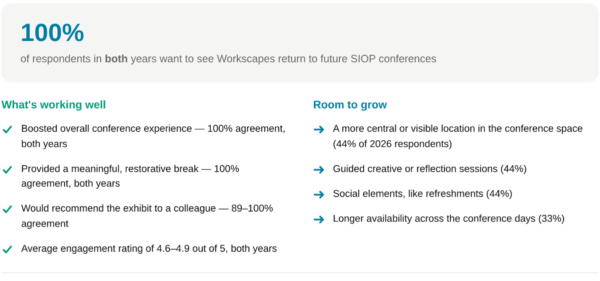
Figure 1. Take-Aways From Event Feedback Data Across 2025 and 2026
Featured Quotes:
“I was delighted to participate as an artist in Workscapes this year. Experiential events like this add so much to the conference experience. As a consultant who brings art-based learning into team building, it was a fantastic way to meet others who are combining I/O and art together in new and exciting ways.”
– Nicole Ennen, Workscapes artist since 2025
“[Workscapes] was a warm and inviting space that made conversations feel easier and more natural… Connecting with others through artwork as I learned about who they are, both in the professional and personal sense, made for really compassionate interactions that felt real.
There was a uniquely human element at Workscapes that was largely absent from the rest of SIOP. I felt like I was connecting with others, rather than trying to network… it was a comfortable space and breath of fresh air.”
– Philip Brust, Workscapes 2.0 volunteer
Challenges/Responses in Developing and Executing Workscapes
Challenge 1: Recruiting Talented Artists Within a Traditionally Professional Context
When we put the call out for artists, the most common thing people replied to us with was some variation of, “I would love to be a part of this, but I don’t consider myself an artist.” The tendency for individuals (especially those more technical) to view creativity as synonymous with the visual or performing arts, leading individuals to view themselves as “not creative enough,” despite innovative capability in their own domains (Karwowski, 2014). It also reflects a much older historical pattern, in which “art” compressed from a broad term for human-made skill into a specialized label for painting and sculpture, with “artist” reserved for practitioners of these so-called fine arts (Becker, 1982).
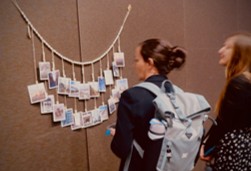 Several respondents who used “gate-negotiation” language asked whether their medium could be accommodated at all, whether the deadline could be flexed, whether new art needed to be made, or whether a digital submission was acceptable. The willingness to accommodate artists and their artwork seemed to matter most in curating not only an eclectic set of artist exhibits, but it motivated our artists and volunteers to continue working with us and to really see this event through once we were all together in person at SIOP.
Response 1: Co-Create the Event Alongside Artists and Volunteers
Despite the challenge of attracting initial artists and getting them to give themselves permission to participate, we could gain a better understanding of what co-creating the event with others would look like. We began thinking about how Workscapes could bypass this “gatekeeping” of creative processes and output. For example, as the event organizers, we met with all artists and volunteers virtually, prior to the conference, to ensure smooth execution of the day-of event. Those who did not submit art oftentimes found another way to engage with the event, whether that was as a volunteer or as an attendee. Many of them offered to help advertise our call for artists throughout their graduate programs, or within their own work organization. Related to placemaking, this pattern of distributed, peer-to-peer participation is known as a form of co-production (Ostrom, 1996; Auernhammer & Hall, 2014) in which community members transition from passive recipients of a designed space into active co-creators of it.
Challenge 2: Finding a Place for the Art (And Artists) at the SIOP Conference
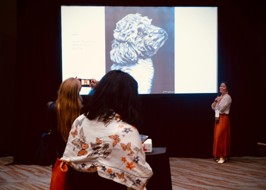 Each year, our artists pack up their suitcases with their artworks and transport them to whichever city our SIOP conference is being held in that year. What is more challenging about the Workscapes event is the fact that the event layout and formatting can also vary depending on where the conference is located that year. Additionally, because Workscapes does not follow a traditional session format, we found other ways to propose our event, such as through Community of Interest (COI) and auxiliary event formats.
Response 2: Enhance Inclusion and Accessibility Through Accommodation
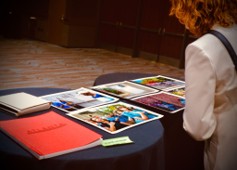 Similarly, Workscapes organizers and volunteers packed their suitcases with conference-friendly materials (e.g., museum putty, twine), to create hanging systems on the spot or to build out interactive elements of the event. Additionally, we put into a place a structured process for pre-event coordination that takes the form of a preconference call each year, wherein event organizers, artists, and volunteers meet for half an hour to discuss any concerns related to accommodations, what the event will look like the day-of, and what our layout will look like given this year’s location and space availability.
What’s Next? Workscapes at SIOP 2027 and Beyond
Two major insights emerge from what we have learned from Workscapes 2.0, with implications for next year’s Workscapes event and beyond, and for the broader question of creative engagement in professional communities.
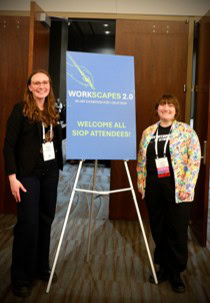 First, Workscapes keeps the “gate” open for artists by lowering stakes and imposing no eligibility criteria, no medium restrictions, and no peer-review process. Those unable to attend SIOP, or those were rejected at the proposal stage for their submission, have an additional opportunity to connect with our I-O community through Workscapes. It is a stricter, internalized definition of “artist” that led individuals to decide whether they were qualified enough, rather than criteria required by the event. This gap is consistent with research on creative self-perceptions, in which domain-specific arts bias leads otherwise-creative individuals to disclaim the creative label altogether (Karwowski, 2014). Future calls may benefit from more explicit framing of what counts, including illustrative examples of nontraditional mediums, to widen the perceived eligibility window.
Second, the recovery rationale underlying Workscapes theoretically (Meijman & Mulder, 1998; Sonnentag & Fritz, 2007) is not yet clear to prospective attendees at the recruitment stage. Our event feedback survey findings demonstrated that the Workscapes event functions as a recovery space for those who experience it. This recovery aspect of the event is something we hope to continually make visible through consistency in collecting and sharing event feedback data and publishing timely event recaps in TIP.
The Workscapes event evolves over the years because of the SIOP community that continues to show up for it. To date, this event is entirely self-funded with no outside sponsorship. We invite those in our SIOP network to continue supporting Workscapes through their engagement as artists, volunteers, and attendees, which is the primary mechanism through which we source event feedback and showcase the impact of this event on our greater community. Our team continues to explore how we can better meet the needs of our attendees and artists, such as gathering supplies we need for hanging or displaying artwork and printing Workscapes event programs.
Goals for Next Year
- A more central, visible location for the artwork: This is feedback we have received from both artists and volunteers. Our Workscapes team is hoping to expand visibility of Workscapes through the incorporation of art into more open and accessible spaces, or in places that facilitate momentary rest for SIOP attendees.
- More guided/interactive aspects to Workscapes: We have received more requests to increase the guided-activity aspect of this event, and we are excited to bring to life more of these ideas for SIOP 2027!
- Continued openness to new modalities: The event remains open to different kinds of art mediums, so long as we as event organizers are able to still curate a wide range of engagement experiences. This includes modes of performance art, music listening, narration, printed zines, and/or printed programs of digital submissions.
Interested in Being an Artist or Volunteer?
Keep an eye out for the opening of our artist and volunteer interest form for next year’s Workscapes event, which we plan to open in early January: https://tinyurl.com/workscapes-2027
Other Resources
More details about Workscapes: https://sites.google.com/view/brittanyikner/workscapesWorkscapes 2.0 event playlist: https://on.soundcloud.com/5E4w5LzS39QqdIxM5q
Acknowledgments
We’d like to recognize critical players of the Workscapes initiative, including SIOP staff, Workscapes volunteers, our talented artists, and especially the attendees whose engagement and feedback made Workscapes 2.0 a resounding success. Thank you to the returning artists, volunteers, and attendees – your enthusiasm, support, and engagement with the Workscapes initiative inspires us to develop this event further and truly deliver on our values as a SIOP community.
A Special Thank You
- All Workscapes volunteers and attendees
- Ian Siderits – Event poster design
- Matthew Rond – Event program support
- Jordan Britt – Event photography
Featured Artists
- Elaine Atay
- Lora Bishop
- Jordan Britt
- Luke Carpenter
- Allisen Casey
- Amanda Drescher
- Nicole Ennen
- Bernado Ferdman
- Charles Handler
- Anna Hulett
- Brittany Ikner
- Ryszard Koziel
- Janice Lam
- Daniel Maday
- Paige Matuszynski
- Haley Nelson
- Matthew Rond
- Jackie Scymcyk
- Christina Sia
- Ian Siderits
- Sami Smith
References
Auernhammer, J., & Hall, H. (2014). Organizational culture in knowledge creation, creativity and innovation: Towards the Freiraum model. Journal of Information Science, 40(2), 154–166. https://doi.org/10.1177/0165551513508356
Becker, H. S. (1982). Art worlds. University of California Press.
Bishop, L., Ikner, B., & Chawota, T. A. (2025). Workscapes: Bringing art, recovery, and creativity to the SIOP experience. The Industrial-Organizational Psychologist, 63(1). https://www.siop.org/tip-article/workscapes-bringing-art-recovery-and-creativity-to-the-siop-experience/
Cobb, H. R., & Rauvola, R. S. (2024). Gentle SIOP: A new conference approach. The Industrial-Organizational Psychologist, 61(4). https://www.siop.org/tip-article/gentle-siop-a-new-conference-approach/
Fancourt, D., Stringaris, A., & Sacco, P. L. (2026). Mechanisms underpinning the mental health impact of arts engagement. Nature Reviews Psychology, 5(4), 290-302. https://doi.org/10.1038/s44159-026-00545-2
Karwowski, M. (2014). Creative mindsets: Measurement, correlates, consequences. Psychology of Aesthetics, Creativity, and the Arts, 8(1), 62–70. https://doi.org/10.1037/a0034898
Meijman, T. F., & Mulder, G. (1998). Psychological aspects of workload. In P. J. D. Drenth, H. Thierry, & C. J. de Wolff (Eds.), Handbook of work and organizational psychology, Vol. 2: Work Psychology (2nd ed., pp. 5-33). Psychology Press.
Ostrom, E. (1996). Crossing the great divide: Coproduction, synergy, and development. World Development, 24(6), 1073-1087. https://doi.org/10.1016/0305-750X(96)00023-X
Sonnentag, S., & Fritz, C. (2007). The Recovery Experience Questionnaire: Development and validation of a measure for assessing recuperation and unwinding from work. Journal of Occupational Health Psychology, 12(3), 204–221. https://doi.org/10.1037/1076-8998.12.3.204
Volume
64
Number
2
Author
Brittany N. Ikner, Wayne State University, and Lora M. Bishop, Korn Ferry
Topic
2026 Annual Conference, 2027 Annual Conference