


Career Planning
Sergey Gorbatov (2024)
Want to take control of your career? This book is for you.
Careers don't just happen. Research and experience confirm that career success is associated with specific behaviors. The good news? You can intentionally improve your career by mastering 10 learnable skills.
Move Up or Move On is your ultimate guide to career success offering a clear blueprint for career development, intentional career planning, and mastering the 10 essential career behaviors that lead to professional growth and success at work.
This book is a blueprint for pursuing a career on your terms. In this highly accessible book, you’ll reflect on simple, yet thought-provoking questions about your personal definition of success and how to achieve it. Grounded in science, complex concepts are brought to life through a clear, memorable framework. Supported by a free, proprietary career diagnostic tool, this book provides customizable strategies for career advancement, personal success, and achieving your career goals.
Move Up or Move On is an indispensable companion to anyone who cares about their career growth.
Coaching
Shonna Waters (2022)
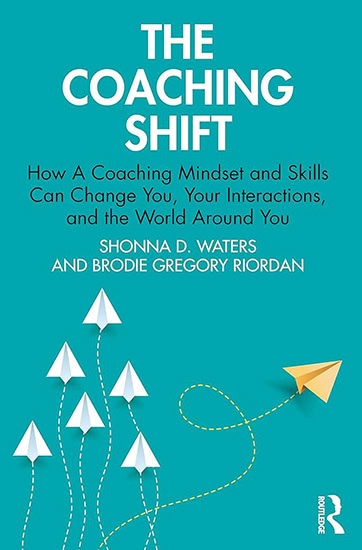
The Coaching Shift: How A Coaching Mindset and Skills Can Change You, Your Interactions, and the World Around You offers practical guidance on how to adopt a coaching mindset and how to build a coaching skill set to unlock better communication, stronger relationships, and high performance in others.
Accessible and practical, the book draws on research from coaching, neuroscience, cognitive psychology, social psychology, and industrial-organizational psychology to provide the best science-based practices that can be applied in work and life. It presents core coaching skills that anyone can develop and use to improve their own emotions, thoughts, behaviors, and interactions with others. It uses levels of analysis to help readers think about key concepts first in relation to themselves, and then in 1:1 interactions, group and team dynamics, organizational-level impact, and beyond. The book offers specific and tangible advice for readers to develop their coaching and communication skills, while also developing a deeper understanding of themselves.
The Coaching Shift, with its clear tone, anecdotal references, and practical application, will be essential reading for coaches in practice and in training, and for academics and students of coaching and coaching psychology. These concepts and practices are also relevant for anyone who wants to have more effective interactions with others.
Compensation/Benefits
Marco Behrmann (2016)
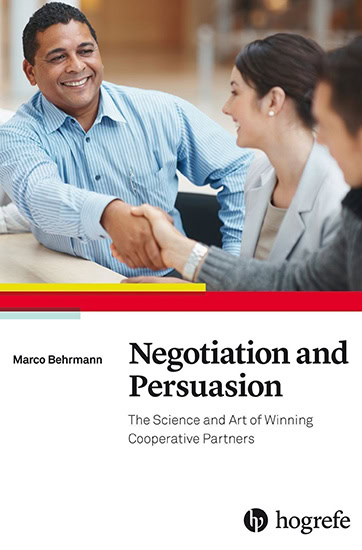
How to be more persuasive and successful in negotiations: the science of winning people over with a fair and cooperative attitude.
Scientific research shows that the most successful negotiators analyze the situation thoroughly, self-monitor wisely, are keenly aware of interpersonal processes during the negotiation – and, crucially, enter negotiations with a fair and cooperative attitude. This book is a clear and compact guide on how to succeed by means of such goal-oriented negotiation and cooperative persuasion. Readers learn models to understand and describe what takes place during negotiations, while numerous figures, charts, and checklists clearly summarize effective strategies for analyzing context, processes, competencies, and the impact of our own behavior. Real-life case examples vividly illustrate the specific measures individuals and teams can take to systematically improve their powers of persuasion and bargaining strength. The book also describes a modern approach to raising negotiation competencies as part of personnel development, making it suitable for use in training courses as well as for anyone who wants to be a more persuasive and successful negotiator.

Employee Motivation/Satisfaction/Job Attitudes
Joel Lefkowitz (2023)
The 3rd edition of Ethics and Values in Industrial-Organizational Psychology is entitled Values and Ethics of Industrial-Organizational Psychology. The changes make explicit what was mostly implicit in the first two editions. First, the primary role played by personal, group, organizational and societal values in influencing and shaping ethical (and unethical) behavior at each level. Second, that professional ethics involves not only the ethical quality of a profession’s constituent practices (“ethics in…”), but also the implicit and explicit values and moral justification of the profession qua profession in society (“the ethics of…”).
The 3rd edition maintains features that made the first two notable—an integration of moral philosophy, developmental-moral psychology, applied psychology, political science, political and social economy, and business scholarship. It incorporates these perspectives into a “framework for taking moral action” based on learning points from each chapter, with a practical model for ethical decision-making--still in a course-friendly structure of 15 chapters. Examples and references have been updated throughout, and sections on moral psychology, economic justice, the “replicability crisis,” and open science have been expanded and the “radical behavioral challenge” to ethical decision-making is critiqued. The book includes 23 verbatim ethical incidents reported by practicing I-O psychologists.
Human Resources
George Alliger (2021)
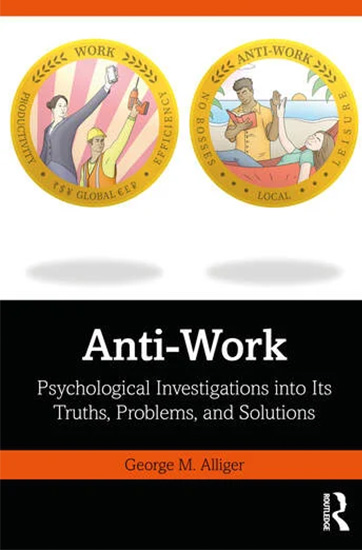
The first book to delineate anti-work in a systematic fashion by identifying and compiling positions from a wide spread of literature, Anti- Work: Psychological Investigations into Its Truths, Problems, and Solutions defines the tenets of anti-work, reviews them from a psychological and historical point of view, and offers solutions to aid the average person in his or her struggle with work.
By highlighting the tensions that exist between anti-work and pro-work positions, the book provides new ways to view and plan life, and will give thought- provoking and valuable insights for students, instructors, and practitioners in industrial and organizational psychology and related fields, as well as all people who have worked, will work, have never worked, or will never work.
Leadership
Alicia Grandey (2025)
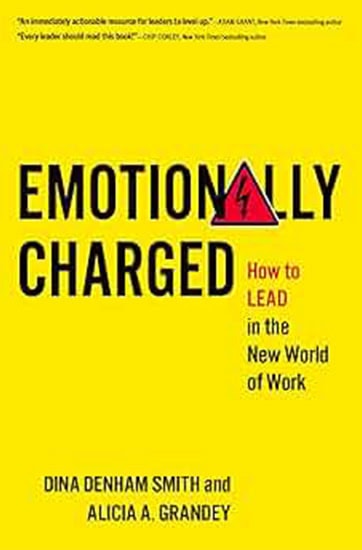
Executive coach Dina Denham Smith and distinguished professor Alicia A. Grandey combine their 50 years of experience to debunk myths, offer strategies, and equip you to handle emotionally loaded work events, support distressed employees, and recover effectively after being drained at work.
Blending real-world cases from leaders and evidence-based insights about the current science of emotions, Emotionally Charged will help all leaders—from front-line managers to C-Suite execs—manage the new work landscape.
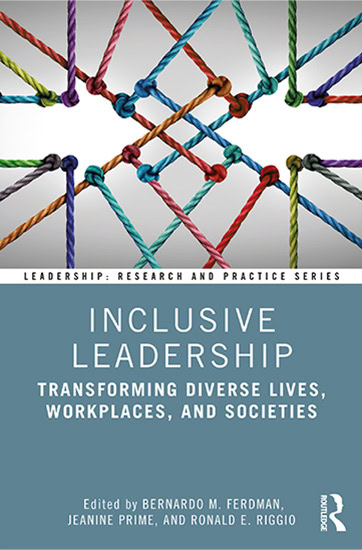
Bernardo Ferdman (2020)
Inclusive Leadership provides a comprehensive, research-based roadmap for leaders seeking to unite people and leverage the full power of diversity in an increasingly divided world. Moving beyond basic cultural competence, the book explores the pivotal role of leadership in creating the conditions where all individuals—across their various differences—can be their authentic selves and contribute their best.
Spanning chapters authored by leading scholars and practitioners, the volume offers:
- Evidence-Based Guidance: Deeply researched insights into inclusive leadership development, diversity management, team effectiveness, and organization development.
- Practical Strategies: Actionable suggestions and hands-on tools for fostering inclusive climates at the interpersonal, team, organizational, and societal levels.
- Multilevel Impact: A focus on how inclusive leadership serves as a fulcrum for broader transformation, driving innovation, organizational performance, and social justice.
This essential resource is designed for leaders at all levels, HR professionals, and I-O psychologists committed to bringing inclusion to life in the 21st-century workplace.

George Alliger (2025)
Do the words of the mystics have practical applications for managers? This book, Mystics and the World of Work: 31 Meditations for Managers suggests yes! and offers brief, challenging reflections that can aid managers in tackling their jobs. Although many of the mystics cited will be those to whom the term traditionally applies (Islamic Sufis, Zen masters, Hasidic visionaries, Christian mystics, Jewish sages, Hindu gurus), the definition of “mystic” is not strict. Included will be some philosophers (e.g., Ludwig Wittgenstein, Simone Weil, Alfred North Whitehead), scientists (e.g., physicists Neils Bohr, David Bohm, Erwin Schrödinger), literary figures (e.g., William Blake, Jorge Luis Borges), and psychologists (e.g., Carl Jung, William James), to each of whom can be attributed writings or statements are clearly mystical. Also, the research findings and writings of various fields of psychology both challenge and round out the thoughts of the mystics as they apply to management.
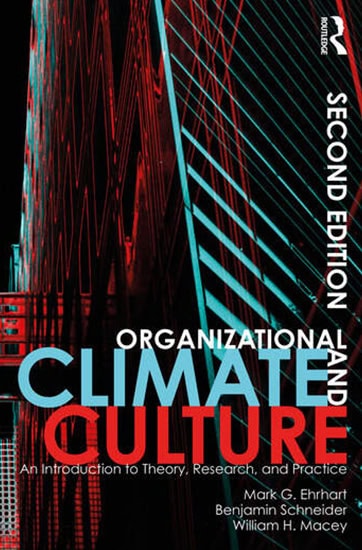
Organizational Culture/Development/Performance
Mark Ehrhart (2025)
Organizational Climate and Culture breaks down the barriers between the fields of organizational climate and organizational culture to encourage a broader understanding of how an organization’s environment affects its functioning and performance.
Building on in-depth reviews of the development of both the organizational climate and organizational culture literatures, the book identifies key research issues as well as how practitioners can utilize the key concepts when conducting organizational cultural inquiries and leading change efforts. The book identifies the key strengths and limitations of research and theory on each topic and then presents ways each field could learn from the other. The authors also identify how practitioners can leverage the key concepts in the two literatures when conducting organizational cultural inquiries leading to climate and culture change efforts. The end product is an in-depth discussion and reconciliation of organizational climate and culture unlike anything that has come before it.
In this updated edition, Mark G. Ehrhart, Benjamin Schneider and William H. Macey present a thorough examination of both the history and current status of research in each field, as well as areas for their potential integration. Academics, practitioners, and students will all deepen their understanding of how organizations function and will gain insights into how to improve both organizational research and organizational effectiveness.
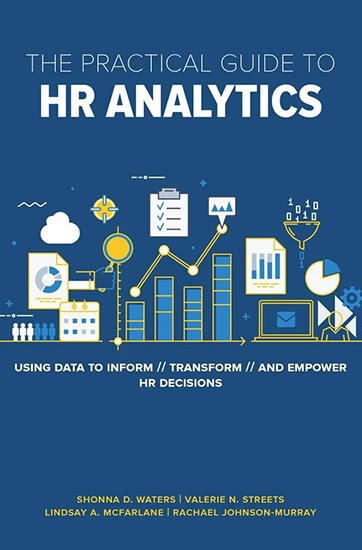
People Analytics
Shonna Waters (2018)
The Practical Guide to HR Analytics offers a clear, practical guide to understanding and applying data to real-world HR issues. From making the business case for analytics to launching an HR analytics function, the book walks readers through the forms, uses, and interpretations of data in an HR context. It covers essential topics like avoiding common pitfalls, visualizing data effectively and using storytelling to communicate findings. With straightforward language and actionable advice, it helps demystify analytics for professionals at all levels.
Whether you're new to analytics or seeking to sharpen your skills, this is your go-to resource for data-driven HR.
Performance Reviews/ Appraisals/Feedback
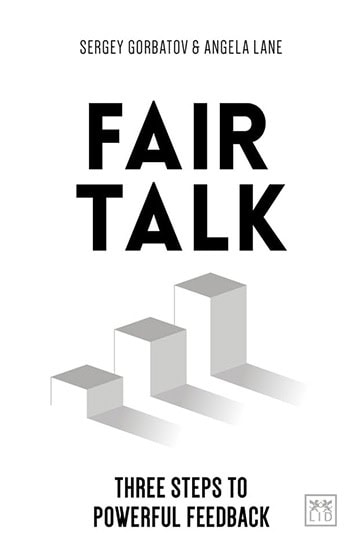
Sergey Gorbatov (2019)
Employees around the world are deprived of honest objective feedback, and the higher you go in the organisation, the less feedback you are going to get. Researchers confirmed that the less facetime employees have with their managers, the more impact seeking and receiving feedback will have on their performance. Gorbatov and Lane propose a simple, systematic approach to giving fair and honest feedback, in ways that improve performance and prove that, if done properly, feedback simultaneously improves performance while engaging and developing employees.
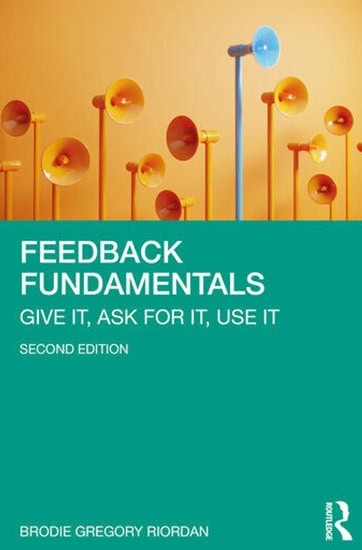
Brodie Riordan (2026)
Now in its second edition, "Feedback Fundamentals" provides a clear and evidence-based approach to highlighting what makes for effective feedback exchanges, how people can learn and grow from feedback, how to be more effective and less daunted as a feedback provider, and how to practically put feedback to use. "Feedback Fundamentals: Give It, Ask for It, Use It" balances research, testimonials, and practical tools to provide readers with a thorough understanding of feedback exchanges.
Critical findings from decades of research in psychology, business, and other disciplines are distilled into tools and strategies that readers can easily adopt in their own lives, regardless of who they are or what they do. Equipped with practical activities, reflective questions, and case studies, this book has a wealth of examples from a variety of people and situations, both within and outside traditional work contexts.
Feedback Fundamentals: Give It, Ask for It, Use It is a resource for professionals, leaders, and anyone from any industry or stage in life looking to give better feedback, proactively ask for feedback, gracefully receive feedback, and put that feedback to use.
Kenneth Nowack (2025)
Providing performance feedback is one of the most challenging tasks leaders face. Feedback often sparks frustration and fear for both leaders and their teams. Why? Because there is a disconnect between what leaders think they are communicating and what employees receive.
In this essential book, leadership expert Nowack and his co-author offer leaders their four-part Performance Feedback Coaching Model, designed to bridge this gap. After over a decade spent developing, testing, and refining their model with leaders around the world, the authors offer this powerful framework based on research in neuroscience and psychology.
The book equips leaders at all levels with practical strategies and tools to deliver tailored feedback that aligns with each employee’s unique skills and interpersonal strengths. By personalizing feedback, leaders can inspire significant improvements in employee behavior, creating a workplace where leaders achieve their goals and employees thrive—a true win-win situation. The authors share powerful stories, real-life examples, and user-friendly tips, as well as questionnaires, worksheets, and other tools leaders can apply immediately in managing today's diverse and global workforce.
Work/Life Balance
Maura Mills (2015)
Conflict between work and family has been a topic of discussion since the beginning of the women's movement, but recent changes in family structures and workforce demographics have made it clear that the issues impact both women and men. While employers and policymakers struggle to navigate this new terrain, critics charge that the research sector, too, has been slow to respond.
Gender and the Work-Family Experience puts multiple faces – male as well as female – on complex realities with interdisciplinary and cross-cultural awareness and research-based insight. Besides reviewing the state of gender roles as they affect home and career, this in-depth reference examines and compares how women and men experience work-family conflict and its consequences for relationships at home as well as outcomes on the job. Topics as wide-ranging as gendered occupations, gender and shiftwork, heteronormative assumptions, the myth of the ideal worker, and gendered aspects of work-family guilt reflect significant changes in society and reveal important implications for both research and policy. Also included in the coverage:
- Gender ideology and work-family plans of the next generation
- Gender, poverty, and the work-family interface
- The double jeopardy effect: the importance of gender and race in work-family research
- When work intrudes upon employees’ personal time: does gender matter?
- Work-family equality: the importance of a level playing field at home
- Women in STEM: family-related challenges and initiatives
- Family-friendly organizational policies, practices, and benefits through the gender lens
Gender and the Work-Family Experience will find interested readers in the fields of industrial and organizational psychology, business management, social psychology, sociology, gender studies, women’s studies, and public policy, among others.
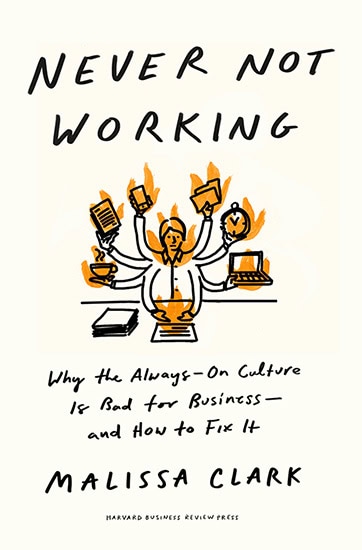
Malissa Clark (2024)
Many workers believe that to compete with other top talent they must embrace a culture that rewards long hours and constant connection to work. Businesses and society endorse busyness, overwork, and extreme commitment as the most valued traits in workers. Sometimes that endorsement is explicit, as when Elon Musk told Twitter employees to work "long hours at high intensity" or get fired. More often it's an implicit contract, a buildup of organizational and cultural norms and the adoption of new technologies that make it easy to tether people to work. Either way, this workaholic behavior is unhealthy and counterproductive for workers and for organizations. It's time to fight back. Malissa Clark—the preeminent researcher on the culture of overwork—shows you how in Never Not Working.
Clark examines overwork and burnout not just from the individual's perspective, but from an organizational perspective, too. She delivers a comprehensive, nuanced definition of workaholism, busting myths along the way—working long hours, it turns out, doesn’t automatically make you a workaholic. She also helps you assess if you’re falling prey to the phenomenon if you're creating workaholics in your organization. Clark shows you how to escape the trap of putting work at the center of everything and thus losing your well-being—or your company's performance—in the process. Deeply researched and written for everyone from leaders to individual contributors, Never Not Working is the essential guide to identifying workaholism in yourself and others and starting on the road to recovery.
Worker Mental Health and Well-Being
Katina Sawyer (2025)
Discover exclusive research-backed insights into the secrets to employee wellness and performance in today's world of work.
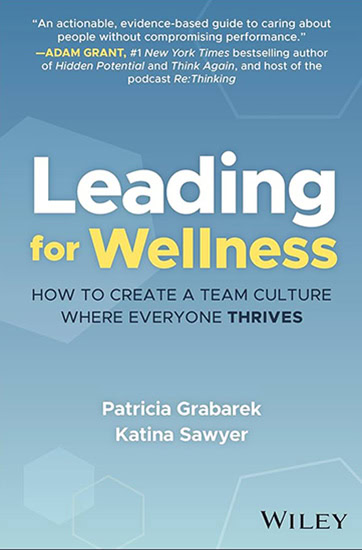
Through a straightforward, science-based approach, Leading for Wellness: How to Create a Team Culture Where Everyone Thrives explains the steps to become a Generator―the type of leader who people want to work for and organizations want to hire―by leading in a way that fosters trust and positive connections with employees. This book is based on two in-depth studies conducted by the authors, where they found that the keys to employee satisfaction, wellbeing, retention, and productivity were found in the behavior of leaders and the environment those leaders cultivated.
Written by experienced industrial/organizational psychologists Dr. Patricia Grabarek and Dr. Katina Sawyer and packed with real-life stories to add context, this book explores topics including:
- Addressing the mismatch in the definition of wellness between employees and employers
- Focusing on the tone leaders set at work, as opposed to time they spend at work
- Crafting work to support life, instead of the other way around, to support and respond to employees' unique needs.
At a time when employee morale has never been lower, Leading for Wellness is an essential read for current and aspiring business leaders and managers seeking exclusive data-based insights on how to solve one of the most pressing problems in business today.
Book Submission Form
Disclaimer
The views expressed in these books are those of the authors and do not necessarily reflect the views of the Society for Industrial and Organizational Psychology or its affiliates.
