
Email correspondence about this article can be sent Dr. Sayeedul Islam at islams@farmingdale.edu
Construct proliferation is not just an I-O psychology problem; it has been highlighted in many related fields, such as HR, from a variety of perspectives (Gupta et al., 2012; Jiang et al., 2012; McIver et al., 2012; Rosh et al., 2012) and advertising (Bergkvist & Langner, 2019). But this is not just an issue of the academy versus practice but one that involves the larger culture. The cultures around human resources and talent development initiatives are full of concept proliferation and serve as the root cause of many new constructs. Popular press and social media sites like LinkedIn have a constant churn of new work-related constructs, such as quiet quitting, silent resignation, quiet firing, microretirement, job hugging, and the list of two words pushed together goes on. Although many of these popular constructs have significant degrees of overlap, they seem to get coverage and attention as if they are new and important phenomena. Construct proliferation is also exacerbated by the sources of information I-O professionals use (Islam, Chetta, et al., 2018), such as consultant white papers and industry blogs, where similar constructs may be repackaged as completely new constructs. Why do we love our old wine in new bottles? In this article, we propose that this phenomenon is partially due to the fact that people love stories. New constructs represent new stories to explain current problems, whereas old constructs were framed around past problems. Although the current and past problems may share significant overlap in their inherent natures, the stories may be different and feel different in salience. The concept of storytelling helps us to understand this state of affairs. We highlight how storytelling plays a role in how stakeholders see their current needs. We then consider how storytelling can help us in our quest to reduce construct proliferation through the creation of a construct-tracking wiki.
Stories We Tell Ourselves
One core aspect of construct proliferation that many researchers (Bowling et al., 2025) have failed to note is that of storytelling. People engage in storytelling to make sense of complex phenomena in their lives (Ready, 2002) and provide guidance on what should be paid attention to (Smircich & Morgan, 1982). Storytelling as sensemaking highlights some of the challenges that drive construct proliferation. As scientists, I-O psychologists may imagine that constructs are concrete building blocks of a shared reality. However, what we see in the production of the research literature and its application in the world of work are multiple attempts to create compelling stories around workplace experiences.
Prior research has noted that storytelling creates a shared reality (Schmidt & Van Dellen, 2022; Smircich & Morgan, 1982) and is often used by organizations and individuals to communicate ideas and argue for needed courses of action (Schmidt & Simha, 2025). Organizations, practitioners, academic researchers, and even workers are attempting to explain their situations in the workplace through storytelling. Different constructs become popular or used more prominently than others as time goes by. In Figure 1, we present the forces pushing for construct proliferation. These forces include vendors creating new constructs to sell products that fit their marketing stories. Academics create new constructs from research findings and their own experiences, trying to tell a story of how these constructs fit into the lives of workers. Scientists also create constructs from their own thought processes and experiences. Finally, the general public has an impact on the nature of a construct proliferation, especially stories on social media. As people share stories and examples of a construct, attention and perceived importance of the construct can grow. Construct proliferation is a function of storytelling and has no clear gatekeeper.
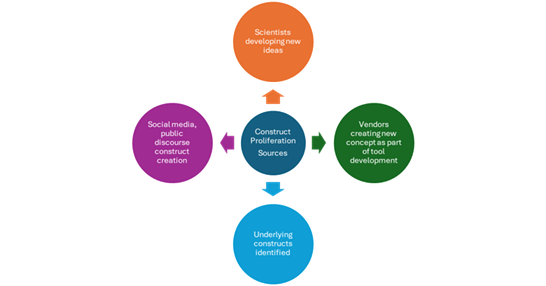
Figure 1 . Forces Pushing for Construct Proliferation
We wish to use two examples to illustrate the idea of storytelling. The first example is of quiet quitting. Quiet quitting began as a concept presented in a TikTok video (Creeley, 2022). In the summer of 2022, the topic became a social media sensation and entered into the practitioner lexicon, with SHRM even noting that parts of their research “validated the narrative” of quiet quitting (Stanchak, 2022). This led to more practitioners talking about the topic of quiet quitting. Applied researchers from Gallup also weighed in on the topic, providing further legitimacy (Wooldridge (2022). This has led to numerous research articles on the topic of quiet quitting, eventually leading to the development of a separate scale (Galanis et al., 2023). Although quiet quitting may be a real construct, we must ask ourselves: Is it conceptually distinct from other concepts, such as employee withdrawal (Zimmerman et al., 2016)? For the general public, practitioners, and human resources vendors, it matters little whether the construct is distinct or unique or scientifically sound, as long as it fits into a narrative that creates sense for those in the workplace to understand current workplace happenings.
Another example of construct proliferation is that of employee engagement. Employee engagement (Kahn, 1990) began as a scale that looked at how people used different parts of themselves in the workplace. It redefined motivation in the workplace and, over time, became a popular construct. Engagement has grown in popularity over the years, with many consulting firms offering annual updates on employee engagement levels (Harter, 2025). Despite concerns around the lack of a consistent construct definition for employee engagement since its inception (Chandel, 2018), the construct continues to be used in research articles and various applied settings. Researchers and practitioners often create their own definition of employee engagement to fit with the situation and context they are interested in.
No matter where new constructs begin, we see that they are part of the larger storytelling efforts of practitioners, laypeople, and academics alike related to why things happen in work life. Bowling et al. (2025) suggest a moratorium on new constructs, but given the variety of sources, we are severely limited in our ability to stop the creation of new constructs! There are no higher authorities to contact regarding new constructs. It’s best for us to look at constructs as ways in which academics, practitioners, and lay people try to create a sense of the workplace.
In order to better understand how these various stakeholders work within the construct proliferation space, we conducted a stakeholder analysis. Stakeholder analysis attempts to evaluate and understand stakeholders to determine their impact on a given process (Islam, Lahti, et al., 2018). Table 1 contains the stakeholder analysis conducted by the authors. We included the following groups: academic researchers, journal editors, applied I-O practitioners, talent management (TM) and human resources (HR) practitioners, and vendors of assessment technology as potential major stakeholders in the construct proliferation process.
The results of the stakeholder analysis, as seen in Table 1, indicate that no single group of stakeholders has complete power over the nomological network or constructs that are used in the lay literature. Although those in industry tend to have the greatest impact on new constructs being created and supported, academics have their influence as well. Editors wield the most power among academics, as they can encourage or discourage new constructs. Editorial decisions shape the attitudes of journals toward constructs and can facilitate or limit construct proliferation. Journal editors can impact the research literature by increasing or decreasing the importance of construct innovation (as needed based on trends). They can even create paper calls that focus on construct proliferation or create opportunities for construct clarity through the review process. Individual academics may have lesser influence, but as a group, they can create and test constructs the most. Although no single group of stakeholders holds all the power in these relationships, each group has the unique ability to meaningfully impact the construct proliferation discussion.
Applied I-O practitioners can create avenues in the applied world to illustrate and share new concepts with client organizations. Vendors, along with HR, TA, and TM practitioners, can create opportunities for better I-O practice by focusing on construct issues when making recommendations to organizations (Rotolo et al., 2018). These practitioners can lean on academic research or research summaries to identify constructs that are useful in practice. However, there is limited time for applied practitioners to sift through the research literature to identify constructs. Many practitioners depend on vendor-supported research to keep up with trends (Islam, Chetta, et al., 2018).
Because no single stakeholder has all the power, we must look for new solutions outside of established power structures. This leads to a need to potentially create a new power structure that helps with the concerns related to construct proliferation. Utilizing this methodology, a new power structure as a framework to build upon and move forward would certainly be a step towards limiting unnecessary construct proliferation.
Table 1
Stakeholder Analysis Author Version
| Impact (How much does construct proliferation affect them?) | Influence (How much influence do they have on constructs?) | What is important to the stakeholder? | What the stakeholder has to offer? | Why might they create or cocreate new construct? | |
| Academic researcher | High: Can impact them in a myriad of ways on tenure track or in their research space | Medium: They can promote and cite key research to promote constructs or conduct additional research to support or reduce impact of a construct | Achieving tenure, recognition for research, scientific rigor and quality | Scientific analysis, communication with other scientists | Novelty is rewarded in the academic literature |
| Applied I-O practitioner | Medium: Constructs may vary depending on the client | High: They can wield influence in organizations and in their promotion to other key stakeholders | High validity, reliability, ease of use of scale, ease of understanding for laypeople | Can create and provide opportunities for the use of different constructs in organizations | They may be responding to an executive or a social media trend |
| HR/TM practitioner (non-I-O) | Low: Constructs may not impact them at all outside of evaluating vendors and offerings | High: The constructs of interest and the names used often come from HR/TM practitioners who serve as clients | Ease of use, insights into their employees, construct integration into existing HR and talent systems | Access to employees, opportunities for application of constructs and evidence for their existence in an applied setting | They may be responding to an executive or a social media trend |
| Vendors (assessment and technology) | High: Creating and promoting new constructs and ideas through their tools | High: Their marketing has an outsized effect on practitioners | Sales, speed, reliability, UX, brevity | Access to larger constructs across multiple industries and organizations and further validation, simple benchmarking | This may be a part of the marketing process to create a new construct or a new concept for a better story. |
| Journal editor | High: Construct proliferation makes their work harder and more difficult to wrangle the scientific literature on a particular topic | High: They can create opportunities for construct clarity through special issues and through the review process | Rigorous science, high-quality journal metrics | Access to a forum in the scientific literature | New construct and ideas can generate increased attention for the journal |
NAMING a Solution
The solution we propose to help the current construct proliferation issue is a metascience initiative that moves the conversation around constructs outside of the realm of I-O psychology and its journals. Metascience is a scientific attempt to improve science (Malich & Rehmann-Sutter, 2022). Construct proliferation and validation require more than just a commitment among I-O journals but among numerous stakeholders. Because we cannot stop the attempts by a variety of stakeholders to create and generate new constructs, we propose a new approach to the construct proliferation problem that we call NAMING or Nomological Attempts Made In Good faith. Rather than looking for an imagined supervisor or control lever, we suggest that practitioners, applied researchers, and journal editors try to create a wiki-like Wikipedia (Bridge, 2001; Hu et al, 2007) database of constructs. This NAMING database would list constructs that are similar to one another and would allow practitioners and researchers to communicate and share their constructs in a common nomological network. This is similar to an idea that has been proposed in drug development to map drugs across a variety of industries, along with their uses (Dubner, 2026).
So, for one example, job satisfaction has multiple measures and similar constructs, such as employee involvement, employee engagement, and perceived organizational support. The NAMING initiative would plot the various constructs on a map to illustrate how they are related to one another and provide links to existing studies connecting these constructs. Ideally, this would include correlations between similar constructs and dissimilar constructs for ease of use by practitioners and academics.
Researchers have noted that similar constructs are created across disciplines (Bowling et al., 2025), and a service like NAMING would allow interdisciplinary collaboration and easy access to information around constructs. Following a wiki-style approach, the concept of NAMING may include elements similar to the Mental Measurements Yearbook (Buros, 2025), which offers a list of constructs and consumer-oriented reviews of assessment tools. An initiative such as this would address many of the concerns regarding construct proliferation and would create a new resource for researchers as they develop the nomological network. The database could define the construct broadly and then provide links to papers and resources that connect constructs to one another. This process would further validate the nomological network. This initiative could also be more responsive to the changes of the public around issues like quiet quitting. It could help to connect the individual constructs to existing constructs and stories in an open way.
This initiative would take the idea of constructs as storytelling seriously. Scientists and laypeople from across several different fields could start to see the various ways in which people try to make sense of the workplace through psychological constructs. User-generated content with editorial control would allow new ideas to flourish. Rather than gatekeeping the field, we would allow more people to engage with the ideas and concepts in I-O psychology. A NAMING style initiative would also address one of the chief challenges of many applied I-O practitioners: the lack of access to scientific research (Islam, Chetta, et al., 2018). By creating a place where constructs can be placed into a larger nomological network, we could start to create opportunities for practitioners to learn more about existing constructs and contribute to them in their own right.
We hope that this paper generates new ideas and approaches to addressing the ever-expanding world of constructs. Innovation can effectively lead to new science communication initiatives and new metascience approaches that impact practice and science for the better. We can use stories to help our science rather than passively watch them increase construct proliferation.
References
Bergkvist, L., & Langner, T. (2019). Construct heterogeneity and proliferation in advertising research. International Journal of Advertising, 38(8), 1286–1302. https://doi.org/10.1080/02650487.2019.1622345
Bowling, N. A., Sessa, V. I., Shaffer, J. A., & Banks, G. C. (2025). Read my lips: No new constructs! Construct proliferation as a threat to the future of I-O psychology. Industrial and Organizational Psychology, 19, 1–17.
Bridge, A. M. (2001). Wikipedia, the free encyclopedia. Wikimedia Foundation.
Buros Center for Testing. (2025). Mental measurements yearbook. https://buros.org/test-reviews-information/mental-measurements-yearbook/
Chandel, P. (2018). The evolution of employee engagement: A unique construct. International Journal of Human Resource Management and Research, 8(6), 199, 216.
Creeley, B. (2022, March 4). More people are quiet quitting. https://www.tiktok.com/@alifeafterlayoff/video/7071415799247949099?lang=en
Dubner, S. J. (2026, February 20). Are thousands of medical cures hiding in plain sight? [Audio podcast episode]. Freakonomics Radio. https://freakonomics.com/podcast/are-thousands-of-medical-cures-hiding-in-plain-sight/
Galanis, P., Katsiroumpa, A., Vraka, I., Siskou, O., Konstantakopoulou, O., Moisoglou, I., Gallos, P., & Kaitelidou, D. (2023). The quiet quitting scale: Development and initial validation. AIMS Public Health, 10(4), 828–848. https://doi.org/10.3934/publichealth.2023055
Gupta, N., Conroy, S. A., & Delery, J. E. (2012). The many faces of pay variation. Human Resource Management Review, 22(2), 100–115. https://doi.org/10.1016/j.hrmr.2011.12.001
Harter, J. (2025, August 5). Anemic employee engagement points to leadership challenges. Gallup Blog. https://www.gallup.com/workplace/692954/anemic-employee-engagement-points-leadership-challenges.aspx
Hu, M., Lim, E. P., Sun, A., Lauw, H. W., & Vuong, B. Q. (2007, November). Measuring article quality in Wikipedia: Models and evaluation. Proceedings of the Sixteenth ACM Conference on Conference on Information and Knowledge Management, 243–252.
Islam, S., Chetta, M. H., Martins, A., van Govan, D., Kozikowski, A., & Needhammer, J. (2018). The scientist–practitioner gap among master’s level I-O psychology practitioners: A text-analytic exploration. Industrial-Organizational Psychologist, 55(3).
Islam, S., Lahti, K., & Chetta, M. H. (2018). Research partnerships between academics and consulting firms: A stakeholder analysis. Industrial and Organizational Psychology, 11(4), 596–605. https://doi.org/10.1017/iop.2018.121
Jiang, K., Lepak, D. P., Han, K., Hong, Y., Kim, A., & Winkler, A.-L. (2012). Clarifying the construct of human resource systems: Relating human resource management to employee performance. Human Resource Management Review, 22(2), 73–85. https://doi.org/10.1016/j.hrmr.2011.11.005
Kahn, W. A. (1990). Psychological conditions of personal engagement and disengagement at work. Academy of Management Journal, 33(4), 692–724. https://doi.org/10.5465/256287
Malich, L., & Rehmann-Sutter, C. (2022). Metascience is not enough–A plea for psychological humanities in the wake of the replication crisis. Review of General Psychology, 26(2), 261–273. https://doi.org/10.1177/10892680221083876
McIver, D., Lengnick-Hall, C. A., Lengnick-Hall, M. L., & Ramachandran, I. (2012). Integrating knowledge and knowing: A framework for understanding knowledge-in-practice. Human Resource Management Review, 22(2), 86–99. https://doi.org/10.1016/j.hrmr.2011.11.003
Ready, D. A. (2002). How storytelling builds next-generation leaders. MIT Sloan Management Review, 43(4), 63.
Rosh, L., Offermann, L. R., & Van Diest, R. (2012). Too close for comfort? Distinguishing between team intimacy and team cohesion. Human Resource Management Review, 22(2), 116–127. https://doi.org/10.1016/j.hrmr.2011.11.004
Rotolo, C. T., Church, A. H., Adler, S., Smither, J. W., Colquitt, A. L., Shull, A. C., Paul, K. B., & Foster, G. (2018). Putting an end to bad talent management: A call to action for the field of industrial and organizational psychology. Industrial and Organizational Psychology, 11(2), 176–219. https://doi.org/10.1017/iop.2018.6
Schmidt, G. B., Simha, A. (2025). Storytelling through social media: How organizations and leaders can support peacebuilding efforts. Business Horizons, 68(4), 491–500. https://doi.org/10.1016/j.bushor.2025.04.003
Schmidt, G. B., & Van Dellen, S. A. (2022). Leadership of place in virtual environments. Leadership, 18(1), 186–202. https://doi.org/10.1177/17427150211045153
Smircich, L., & Morgan, G. (1982). Leadership: The management of meaning. Journal of Applied Behavioral Science, 18(3), 257–273. https://doi.org/10.1177/002188638201800303
Stanchak, J. (2022, September 15). Quiet quitting is real. Here’s what you should do about it. SHRM Blog https://www.shrm.org/executive-network/insights/quiet-quitting-real-heres
Wooldridge, S. (2022). New data from Gallup adds to the debate over “quiet quitting.” BenefitsPRO. https://www.benefitspro.com/2022/09/16/new-data-from-gallup-adds-to-the-debate-over-quiet-quitting/
Zimmerman, R. D., Swider, B. W., Woo, S. E., & Allen, D. G. (2016). Who withdraws? Psychological individual differences and employee withdrawal behaviors. Journal of Applied Psychology, 101(4), 498–519. https://doi.org/10.1037/apl0000068
Volume
63
Number
4
Author
Sayeedul Islam, Farmingdale State College/Talent Metrics Consulting; Gordon B. Schmidt, University of Louisiana-Monroe; & Michael H. Chetta, Talent Metrics Consulting/University of Central Florida
Topic
Future of Work
