
Note. The views expressed in this article are those of the authors and do not necessarily reflect the views of U.S. Customs and Border Protection or the U.S. Federal Government.
As you are reading this, the 2026 SIOP Annual Conference in New Orleans, LA, is right around the corner. The Conference and Program Committees have planned an exciting conference, packed with scientific and practical insights and many fun networking activities. The conference will begin with an opening plenary session at 7:00 p.m. on Wednesday, April 29, followed by a Welcome Reception and Top Poster Display at 8:00 p.m. that night. There will be 3 full days of peer-reviewed programming on Thursday, Friday, and Saturday. This year, SIOP is bringing back the Closing Plenary session, which will take place at 4:00 p.m. on Saturday, May 2, followed by a Mardi Gras-themed reception.
In our last report in TIP (Cucina et al., 2026), we mentioned that we received a total of 1,259 proposals for the peer-reviewed portion of the program and that 1,091 individuals signed up to be peer reviewers. Thank you to everyone for signing up to be reviewers. We would not have a program without the volunteer efforts of so many amazing SIOP members. Overall, the peer review process went very smoothly. Some reviewers were unable to complete their reviews, and a team of emergency reviewers graciously jumped in and conducted reviews over the Thanksgiving break. All proposals were reviewed by at least three peer reviewers.
In mid-December, the Program Trio (consisting of Jeffrey Cucina, Program Chair, Joe Allen, Past Program Chair, and Vipanchi Mishra, Program Chair-in-Training) and Robin Ganzel, the SIOP staff liaison for the Program Committee, met and built the program. The process of building the 2026 program was roughly similar to the process that Tonidandel and McCune (2019) described in their TIP article “Peering Behind the Curtain of the SIOP Program Building Process.” In a nutshell, the Program Trio reviewed submissions that were flagged by peer reviewers for potentially not following the Call for Proposals. For example, the Call for Proposals stated that “proposals with a commercial intent and focus are not permitted,” and the Program Trio reviewed proposals that were flagged for potentially violating that rule. Any submissions that were clearly not in compliance with the Call for Proposals were marked for rejection. Next, the group compiled the average peer reviewer ratings for each proposal. The average is taken across the rating scales and reviewers. The distributions of the ratings were then examined and the Program Trio and determined cutoff scores for acceptance decisions. Cutoff scores varied by session type (e.g., posters), session length (i.e., 50 vs. 80 minutes), and space availability. The Program Trio considered a number of factors when determining the cutoff scores, including the anchors for the peer reviewer ratings (e.g., the lowest ranked anchors are “Not at all” and “Definitely not accept,” and the cutoff had to be set above these) and the impact of various cutoff scores on content area and session type representation in the accepted program. Any proposal meeting the cutoff scores was accepted, provided it followed the guidelines stated in the Call for Proposals. Finally, the group handled special requests for proposals (e.g., requests for roundtables, scheduling requests due to religious or other accommodations) and created the new Content Area Theme Tracks, which will be described later.
Incorporating Conference Attendee Feedback
The Program Trio has received both formal and informal feedback from SIOP Annual Conference attendees and SIOP leadership about potential enhancements to the program. In terms of informal feedback, some common concerns among attendees from past conferences have been regarding challenges for finding the sessions in their areas of interest, avoiding the need to shuffle between different rooms, and deciding between competing sessions at the same time. Some attendees also stated that particular content areas (e.g., artificial intelligence) and session types (e.g., panel discussions) were overrepresented.
In terms of formal feedback, the 2025 SIOP Annual Conference Survey asked attendees to provide planning suggestions for the 2026 SIOP Annual Conference. Nine themes were identified in that survey and are listed in Table 1. The Program Trio aimed to address Themes 2 (i.e., include broad range of topics/experts), 3 (i.e., increased representation across topics), 4 (i.e., improve scheduling of similar topics), 5 (i.e., increase research/less “fluff”), and both 6 and 9 (specifically more seating/space) during the program building process. Aspects of some themes (e.g., scheduling similar topics at different times) may be addressed in the future with adjustments to the scheduling system, and several other themes in Table 1 are not related to the program building process but can be addressed by SIOP staff and other committees. The Program Trio did decide to retain the current number of sessions for the 2026 SIOP Annual Conference because this is suggested by the SIOP Conference & Program Charter: Conference Years 2023–2027 and because the Program Trio wanted to include as many presenters and presentations as possible in the program. The 2025 SIOP Annual Conference Survey also identified themes for negative reactions from attendees. Of these, three were related to the program building process. Attendees stated that certain topics, such as artificial intelligence, were overrepresented, there were too many sessions at the same time, and that there needs to be “more diversity in types of sessions, more symposia, and fewer panels.”
Table 1
2025 SIOP Annual Conference Survey Respondent Suggestions for the 2026 SIOP Annual Conference
| # | Theme |
| 1 | Consider safety and logistics in New Orleans; expressed by domestic and international attendees |
| 2 | Broader range of topics and experts in the field |
| 3 | Increased representation across all topics/areas |
| 4 | Scheduling of similar content/areas should be at different times |
| 5 | Increased research focus/less “fluff” |
| 6 | Less concurrent sessions and more seating/space at sessions to avoid capacity; possibly reduce number of sessions available |
| 7 | Materials should be available in Whova before/during/after sessions |
| 8 | More considerations for food, accessibility, water, coffee, etc. |
| 9 | Better projections of attendance for sessions to guide room assignments and technology use; space considerations as to not run out of room, have sessions out of seating, etc. |
To address the feedback, the Program Trio set a goal of creating a program that (a) included a sufficient number of live sessions (ideally at least 10) for each content area; (b) did not overrepresent the technology/artificial intelligence content area, but still included many sessions because this is a hot topic; (c) had a balance in terms of the number of symposia, panel discussions, and alternative sessions; (d) still met quality standards based on peer reviewer ratings; and (e) included experimental Content Area Theme Tracks to avoid scheduling highly rated sessions covering the same content areas at the same time.
Content Area Theme Tracks
This conference year, the Program Committee is experimenting with Content Area Theme Tracks in the program. The Content Area Theme Tracks will consist of back-to-back highly rated presentations in a content area that occur throughout the day in the larger rooms of the convention center, followed by a joint poster session consisting of the top posters in a content area. Each day, there will be four Content Area Theme Tracks in four separate rooms. The joint poster session will contain the top (usually 10 posters) in each day’s content areas.
This approach allows attendees interested in, for example, training/coaching/mentoring, to go to room B2-2 on Thursday and attend sessions just on that topic, then grab coffee and snacks with others interested in that topic (during the coffee break in the exhibit hall), and finally see the top 10 posters on training/coaching/mentoring. The SIOP Program Trio selected the presentations for each Content Area Theme Track from among the proposals with the highest peer reviewer numerical ratings. Some additional adjustments were made based on how well the submission information matched a content area and to balance the session types (e.g., panel discussions vs. symposia) for each content area. The posters were selected entirely based on numerical ratings. A list of the Content Area Theme Tracks can be found in Table 2. We expect that this type of programming format will make SIOP a more enriching experience for the attendees. Note that two topic areas (i.e., global/international/cross-cultural issues and legal/ethical/current events/humanitarian/prosocial) had too few submissions to warrant a track this year. Sessions for these content areas were scheduled using the same process for the remaining sessions that were not selected for the Content Area Theme Tracks. This process uses an autoscheduler that assigns sessions in a semirandom manner while avoiding scheduling conflicts.
Table 2
Content Area Theme Tracks
|
Content Area |
Day |
Room |
Live presentation (Nonposter) times | Poster session |
| Diversity, Equity, Inclusion, and Accessibility | Thurs. | 218/219 | 8:00 a.m.-3:20 p.m. | 4:00 p.m. |
| Organizational Processes/Development/Culture | Thurs. | 220/221/222 | 8:00 a.m.-3:20 p.m. | 4:00 p.m. |
| Technology/Artificial Intelligence | Thurs. | B2-2 | 8:00 a.m.-3:20 p.m. | 4:00 p.m. |
| Training/Coaching/Mentoring | Thurs. | B2-1 | 8:00 a.m.-3:20 p.m. | 4:00 p.m. |
| Groups/Teams | Fri. | 218/219 | 8:00 a.m.-3:20 p.m. | 4:00 p.m. |
| Leadership/Leader Development | Fri. | B2-1 | 8:00 a.m.-3:20 p.m. | 4:00 p.m. |
| Occupational Health/Work and Family | Fri. | 220/221/222 | 8:00 a.m.-3:20 p.m. | 4:00 p.m. |
| Selection/Assessment/Individual Differences | Fri. | B2-2 | 8:00 a.m.-3:20 p.m. | 4:00 p.m. |
| I-O Psychologist Career Development/Teaching | Sat. | B2-1 | 8:00 a.m.-2:50 p.m. | 3:00 p.m. |
| Job Performance/Withdrawal/Misbehavior | Sat. | 218/219 | 8:00 a.m.-2:50 p.m. | 3:00 p.m. |
| Motivation, Attitudes, and Emotions | Sat. | 220/221/222 | 8:00 a.m.-2:50 p.m. | 3:00 p.m. |
| Research Methods/Measurement/Statistics | Sat. | B2-2 | 8:00 a.m.-2:50 p.m. | 3:00 p.m. |
Balanced Program
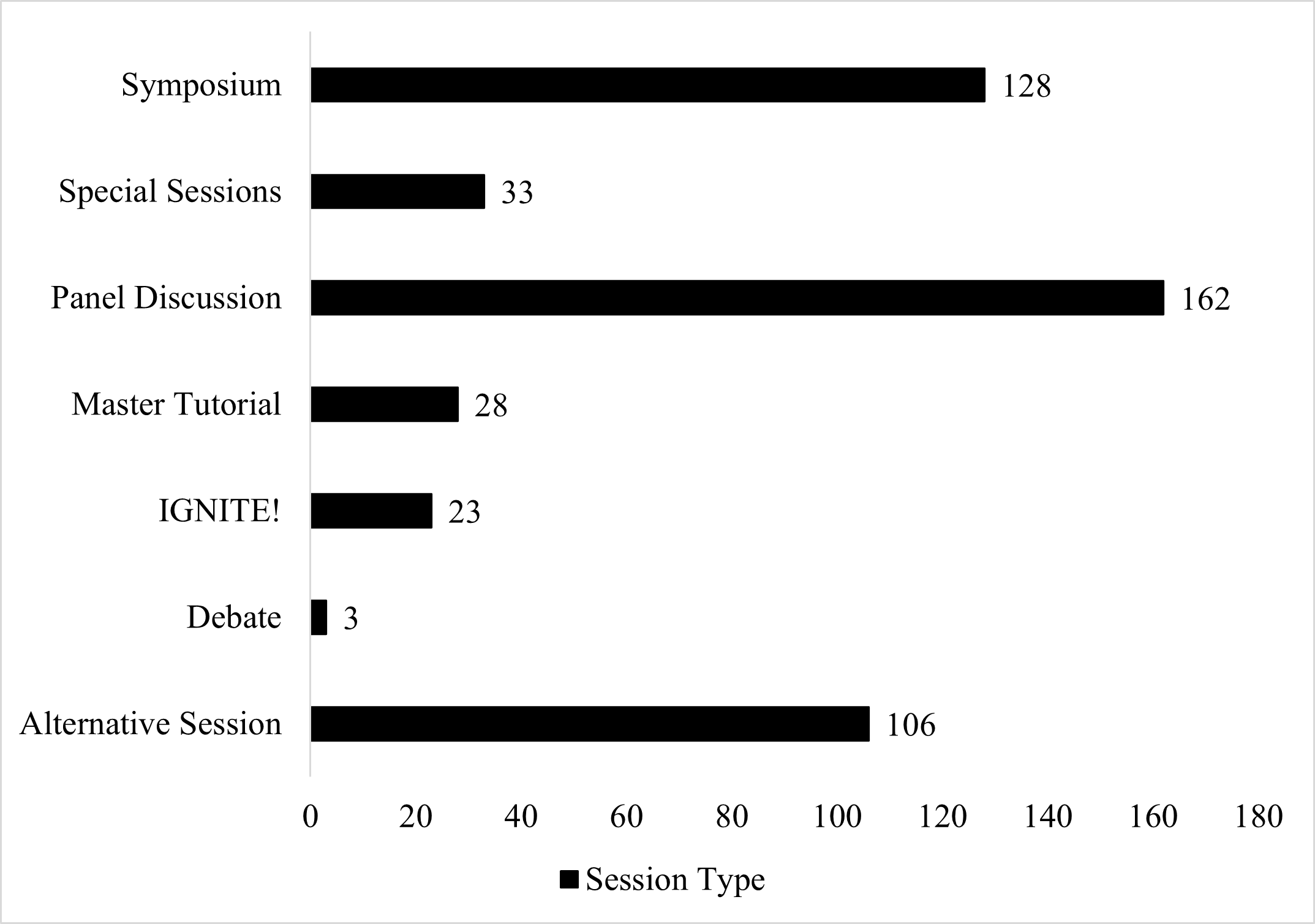
Another goal of the Program Committee for this year’s conference was to create a balanced program in terms of content areas and session types. This goal addresses complaints and concerns that the Program Committee has received in recent years that the sessions are too heavily oriented toward certain topics or session types. This year’s narrowing of the number of content areas from 31 to 14 better allowed the Program Trio to monitor and adjust the content area balance. In general, the balancing effort resulted in an adequate representation of most content areas in the program and a reasonable balance of session types. Figure 1 shows the number of live presentation sessions and posters for each content area. Almost all of the content areas have at least 10 live presentation sessions. Many traditional I-O psychology content areas are well-represented, including leadership/leader development (with 44 live presentation sessions) and organizational/processes/development culture (with 51). Figure 2 shows the number and percentage of each live presentation session type. Although panel discussions (with 162 sessions) were the most numerous session type, there were also 128 symposia and 106 alternative sessions.
Figure 1. Number of Live Presentation (Nonposters) Sessions and Posters by Content Area
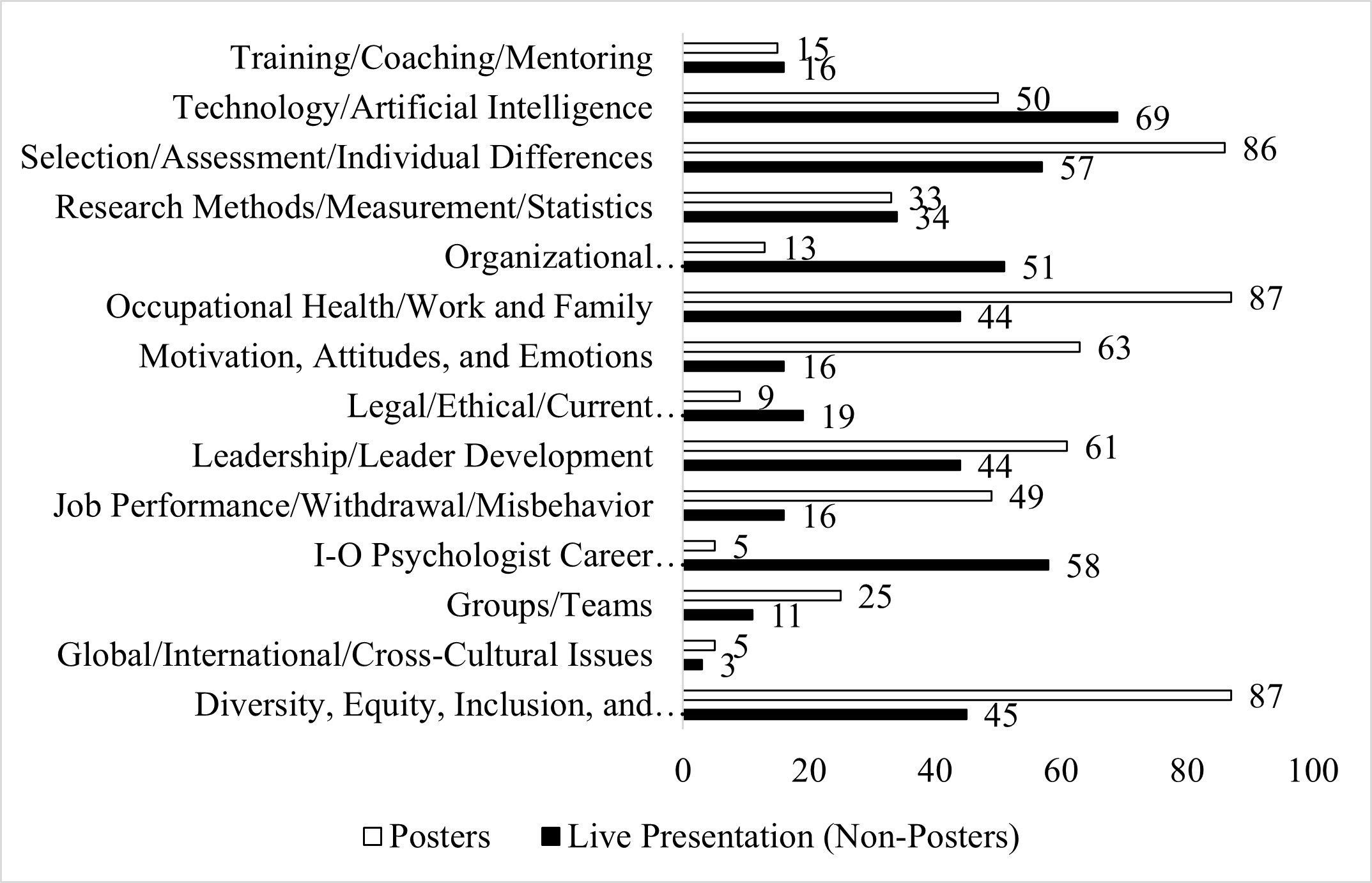
Figure 2. Number of Live Presentation Session Types
Room Assignments
After the schedule was created, the Program Chair shifted the room assignments for the live presentation sessions to better group those covering the same content area into the same general rooms throughout each day. For example, almost all of the technology/artificial intelligence sessions are in the Riverside (R) rooms and occupational health/work, and family sessions are typically in rooms 207 to 220/221/222. Due to differences in the number of sessions for a content area across timeslots, special requests (e.g., requests for roundtables), and scheduling issues, the relationship between rooms and content areas is not perfect. However, the room assignments should help attendees better connect with other scientists and practitioners in their interest areas and minimize the amount of shuffling between rooms.
Decision Letters
As was mentioned in our previous TIP article this year (Cucina et al., 2026), the Program Committee set a goal of sending out acceptance and rejection notifications in mid-to-late December or early January. After the program was finalized, decision letters were emailed to all submitters of proposals for the 2026 SIOP Annual Conference during the first full week of January.
Conference Committee Updates
When you need a break from meetings, posters, panels and symposia, the Conference Committee has activities planned to provide a change of pace. Get into the spirit of the conference at the Welcoming Reception after the Opening Plenary. Drop in on a book discussion during lunch, or explore ways I-O psychology is contributing to society as a whole during the midday breaks. Visit the Career Open House. Check out the talents of fellow conference goers or showcase your own at the Art Exhibition and SIOP’s Got Talent. Remember to check out the sponsors in the Exhibit Hall! Finally, wrap up your conference experience at the New Orleans-themed reception immediately after the Closing Plenary.
See you in New Orleans, and “Laissez les bons temps rouler!”
References
Cucina, J. M., Kennedy, J. K., Jr., & Allen, J. A. (2026). Updates on the 2026 SIOP Annual Conference. The Industrial-Organizational Psychologist, 63(3), 39–41.
Tonidandel, S. & McCune, E. (2019). Peering behind the curtain of the SIOP program building process. The Industrial-Organizational Psychologist, 57(1), 43–45.
Author
Jeffrey M. Cucina, 2026 SIOP Program Chair, U.S. Customs and Border Protection; John K. (Jack) Kennedy, Jr., 2025–2026 Conference Chair, Half Moon Consulting; Joseph A. Allen, 2025 Program Chair/2026 Past Program Chair, University of Utah; & Vipanchi Mishra, 2026 SIOP Chair-in-Training, West Chester University of Pennsylvania
Topic
2026 Annual Conference
