This workshop on executive coaching psychology is designed for I-O practitioners for whom executive coaching is an integral part of their professional practice and/or who aspire to provide leadership coaching services to business leaders and C-suite executives.
Goal: Participants come away with new insights/methods/tools for further enhancing coaching expertise.
This Executive Coaching workshop is designed for I-O practitioners for whom executive coaching is an integral part of their professional practice and who work – or aspire to work with – C-suite business leaders. The workshop leaders – I-O and social psychologists – have worked with leaders in a wide array of industries representing every global sector. The workshop includes case studies/vignettes for participants to analyze, interpret, and determine issues, strategies, and approaches to coaching. Learning is immersive – from workshop leaders’ and participants’ insights relative to case vignettes. The goal of this workshop is for participants to come away invigorated with new insights for ongoing learning and development approaches as coaches of senior leaders/executives. Another benefit will be the identification of “peer colleagues” with whom participants can have future consultations.
Presenters
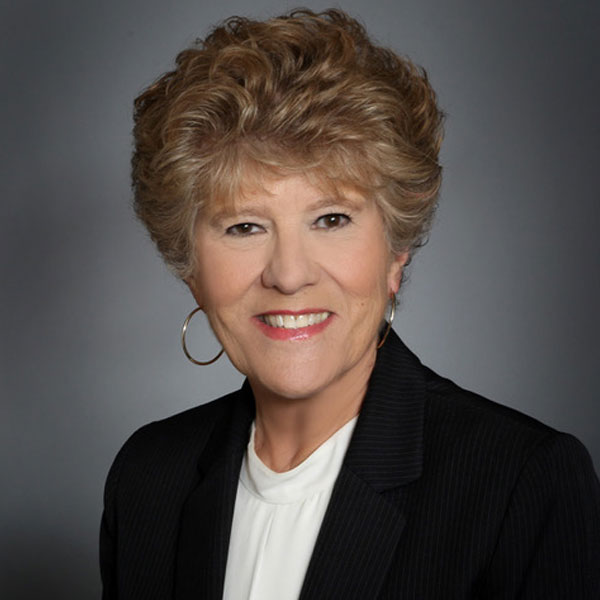
A business consulting and coaching psychologist, Dr. Vandaveer helps leaders and their organizations excel in today’s rapidly changing, increasingly complex and uncertain world. From the “C-suite,” managing partner executives, and/or senior academic leadership – to midlevel high potential individuals – she helps leaders improve individual, team and organizational performance through more effective leadership and strategic organizational change.
She worked 11 years inside two very large corporations in oil and gas and telecommunications industries; and the past 32 years in independent national and international consulting in a variety of industries and different cultures in 22 countries on five continents. Clients include large international, and medium-size companies in oil and gas, energy services, engineering and construction; consumer products; professional services; academic medical centers; healthcare systems; and nonprofits.
As a confidential thought partner, she helps leaders achieve their bold goals by (a) advising on all aspects of people, performance and change at the organizational, group, and individual, and levels; (b) facilitating their thinking through complex issues.
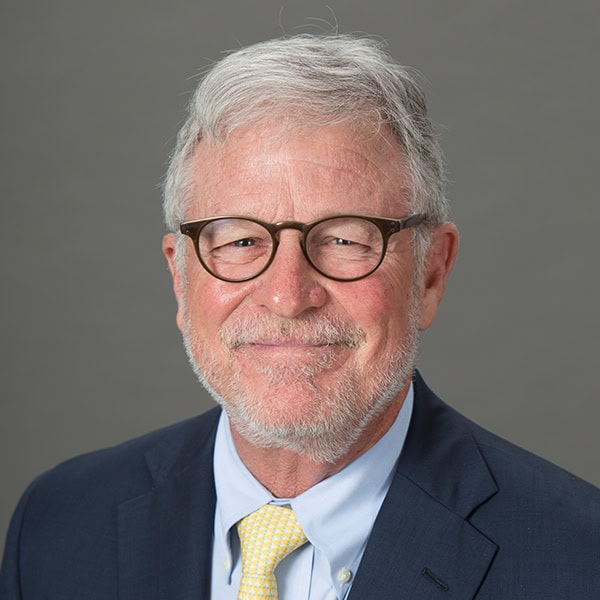
Randall P. White, PhD, is the co-head of leadership in TRIUM, a joint program from HEC, London School of Economics, and NYU Stern. He has served as the head of leadership in the English modular eMBA at HEC in Paris and Doha, taught at the Johnson School of Business, Cornell University, and at the Fuqua School of Business at Duke University. His early career was spent at the Center for Creative Leadership.
Dr. White works regularly with C-suite executives, senior teams, and the boards of large global organizations. He continues to serve as an adjunct faculty member at the Fuqua School.
The author of three books and more than 100 articles and book chapters, Dr. White’s writing illuminates leadership, talent management, and executive coaching. He is a quoted source on leadership in the consumer and trade press.
In 1987, Dr. White coauthored the best-selling business book, Breaking the Glass Ceiling: Can Women Reach the Top of America’s Largest Corporations?; and in 1996, The Future of Leadership: Riding the Corporate Rapids into the 21st Century. He also coauthored Four Essential Ways That Coaching Can Help Executives in 1998, a much-quoted source in coaching literature. In 2001, Dr. White coauthored Relax, It’s Only Uncertainty, which culminated in the development of Ambiguity Architect, a 360 assessment that measures the ability to cope with uncertainty. Relax was updated and rereleased with a new chapter in 2020. In 2009, Dr. White contributed the capstone chapter to The Perils of Accentuating the Positive, challenging the strengths-based leadership movement.
In the past several years, he has written a variety of pieces for Chief Learning Officer and the Journal of Consulting Psychology, as well as Duke Fuqua Insights. Most of Dr. White’s books appear in multiple Western languages and Chinese.
Dr. White earned an AB from Georgetown University, an MS from Virginia Polytechnic Institute, and a PhD from Cornell University.
As past president of the Society of Consulting Psychology (SCP), Division 13 of the American Psychological Association, a Fellow in Divisions 1 and 13 of the American Psychological Association, a Lifetime Fellow of the American Psychological Society, a Salzburg Fellow on Women’s Issues, and a past board member of the American Society for Training and Development, Dr. White continues to participate in the advancement of consulting psychology for leadership development. This includes teaching psychologists from clinical fields who seek to become certified coaches.
As an active member of the American Psychological Association, he has served as a member-at-large and then chair of the Council Leadership Team (CLT), and as a member of the Board of Directors. In 2026, he will become chair of the Policy & Planning Board. He also serves as a reviewer for several APA journals including the Journal of Consulting Psychology and the Polish Journal of Psychology.
In 2021, Dr. White was awarded a presidential citation for his leadership in consulting psychology and his contributions to the Council of Representatives and Board of Directors of APA. He was awarded Division 13’s highest honor of the RHR International Award for Excellence in Consultation. The Association for Talent Development (formerly American Society for Training & Development) presented Dr. White with its David Campbell Innovation Award in 1988.
Pro bono, Dr. White contributes consulting time to Save The Children, the Paralympics (in sailing), and other international philanthropic causes.
When not in airports, Dr. White enjoys cycling, sailing, and the people and food of Miami.
Level
Advanced
Learning Objectives
- Describe at least three areas of psychology (other than I-O related) that scientific research has shown to have important contributions for maximum effectiveness in leadership coaching.
- Describe the most important “tool” for effective executive coaching, including explaining why and how that tool is the most important.
- Name at least three indirect “clients” for any given coaching client as identified and explained by the late Dr. Edgar Schein from Harvard.
- Describe what is meant by “embedded” executive coaching and consulting, and name at least three benefits for maximum effectiveness of a coaching engagement.
- Describe and compare/contrast the two different paradigms (nomothetic and idiographic) used in consulting psychology, including the value of each to coaching outcomes.
Topic
2026 Annual Conference
Times Offered
All times are in
timezone.
- Wed Apr 29th 8:00 a.m. to 12:00 p.m.
- Wed Apr 29th 1:00 p.m. to 5:00 p.m.
Workshop Coordinator
Katherine L. Bittner, Bittner and Associates, LLC
Add to Calendar
All times are in
timezone.