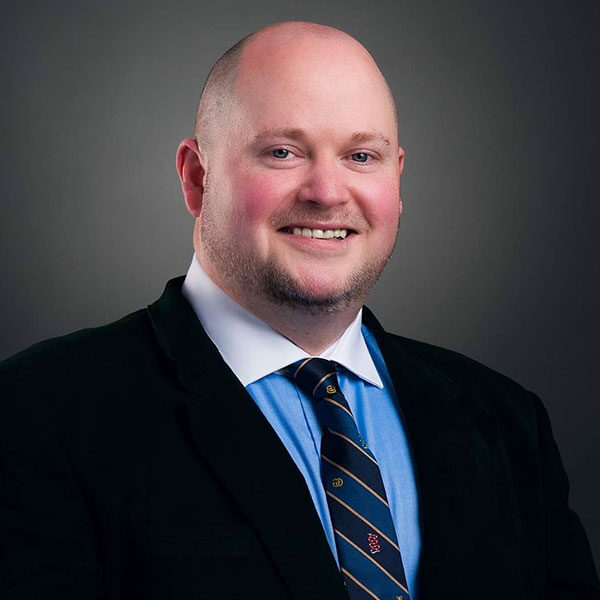
Meet SIOP Member Clinton Campbell Jr.
Name
Clinton Campbell Jr.
Position/Employer
State of Arizona
How long have you been a SIOP member?
8 years
What roles have you had within SIOP?
SIOP Annual Conference Program Reviewer; Government Relations Advocacy Team (GREAT); Licensing, Certification, Credential Committee; Anti Racism Grant Research Committee
Interest area(s)
Organizational Psychologist focused on leadership, hiring, and culture transformation within local and state government. Extensive law-enforcement and public sector experience, with a background in investigations, regulatory governance, and high stakes personnel decision-making. Skilled in leadership development, organizational culture, policy design, and evidence-based practices that strengthen public agencies in talent retention, employee well-being, and community trust.
What sparked your interest in I-O psychology?
I knew I had an interest in I-O psychology long before I knew the field had a name. As a young police investigator, I became fascinated by the way leadership, communication, and organizational culture shaped outcomes for both employees and the communities they served. I watched talented people struggle under poor systems, and I watched others thrive because they were supported with clarity, purpose, and strong leadership.
Those early experiences raised questions that stayed with me. Why do some teams excel under pressure. Why do others fracture. And what can leaders do to create environments that bring out the best in people.
When I discovered I-O psychology, I realized it was the scientific foundation for everything I had witnessed throughout my career. It gave me the tools to transform practical observations into evidence-based insights that strengthen organizations and support the people who serve in them.
What role do you see I-O psychology playing in the future of work?
I see I-O psychology shaping the future of work by helping organizations recalibrate around people, purpose, and long-term sustainability. As workplaces evolve, leaders will need more than technical expertise. They will need psychological insight, evidence-based systems, and a deep understanding of how talent is developed, supported, and retained across an employee’s entire career cycle.
I-O psychology is uniquely positioned to guide that transformation. The field offers tools to build healthier leadership pipelines, redesign work for human capacity, and strengthen cultures where employees can thrive.
At the same time, artificial intelligence is rapidly changing how organizations recruit, select, and manage people. I-O psychologists play a critical role in ensuring these technologies are valid, fair, transparent, and supportive of employee well-being.
In public sector environments, where I spend much of my time, the future will rely heavily on I-O psychology to improve talent retention, modernize HR systems, enhance leadership selection, and build structures that foster trust in both employees and the communities they serve.
As work becomes more complex, more technology enabled, and more human centered, I-O psychology will serve as the scientific anchor that helps organizations adapt with clarity, empathy, and purpose.
What work trends are you seeing and hearing about and how can I-O psychology practitioners, educators, and students impact these trends?
I am seeing several defining trends reshape the workforce. The first is the rise of cognitive overload and chronic burnout. I-O psychology can help organizations redesign work to support psychological sustainability, reduce unnecessary complexity, and create environments that genuinely protect employee well-being.
Second, talent retention has become a strategic priority across every sector. I-O psychology can strengthen leadership pipelines, improve internal communication, and design multifaceted onboarding and offboarding programs that reinforce belonging and clarity from start to finish.
Third, artificial intelligence is transforming how organizations hire, train, and evaluate talent. I-O psychologists can ensure AI-based tools are valid, fair, transparent, and ethically aligned with the science of human behavior. As organizations adopt AI, we have a responsibility to safeguard both efficiency and humanity.
Finally, trust has become the currency of modern organizations. Employees want authenticity, integrity, and leaders who understand their lived experiences. This is where two guiding principles matter deeply: the discipline of perspective taking and the simplicity of treating people with respect, empathy, and sincerity. These fundamentals are strategic levers that stabilize retention and drive high performance.
When we ask ourselves about the deeper meaning behind the behaviors that motivate us, the work becomes clearer. Establishing a purposeful foundation begins with identifying our own Question Zero. Question Zero is the grounding reminder that precedes every other question we ask. It calls us back to the original purpose that inspired us to enter this work in the first place. When stress, complexity, or organizational noise begins to erode our focus, returning to that purpose helps realign our direction. I-O psychologists can help individuals and organizations rediscover that purpose and anchor their systems in clarity, meaning, and long-term resilience.
Did you start a career in I-O psychology after a different career? If you are open to it, please share your career tips for anyone wanting to move from their current role into one in the field of I-O psychology.
My journey into I-O psychology began through a very nontraditional pathway. I started my career in sales before entering law enforcement, first working in the sheriff’s department within the corrections division and then serving as a municipal police officer. Over the years, I held roles in patrol, youth programs, school-based prevention work, and the traffic unit. I later returned to patrol as a lead officer before being promoted to investigator.
Those experiences taught me how high stress environments influence human behavior, how people make decisions under pressure, and how leadership, communication, and culture shape outcomes. The transition into I-O psychology felt natural because the field provided the scientific structure behind the human patterns I had witnessed for years.
For anyone shifting into I-O psychology from another profession, remember that your background is not a barrier; it is a strength. The field benefits from practitioners who bring real world insight and a deep understanding of people and the workplace. Your previous experience gives you unique perspective, your job is to articulate that value with clarity and confidence.
What advice would you give to students or those early in their career?
Learn the science deeply, but never forget the people behind the data. Technical skill opens doors, but empathy, professionalism, and curiosity determine the impact you make once you’re inside.
Listen before you diagnose. Observe before you recommend. The best insights often come from truly understanding someone’s experience rather than interpreting their behavior from a distance.
Remember that support and accountability are not opposites; they are the twin pillars of trust. People respond to leaders who care enough to understand them and respect them enough to hold them to meaningful standards.
When you encounter complex environments, return to Question Zero. Remind yourself why you set out to do this work in the first place. Purpose provides direction, resilience, and clarity, especially when the path gets difficult.
Approach the field with sincerity, humility, and a desire to leave people and organizations better than you found them. If you do that, your work will matter.
Please share one non-I-O-related bit of information about yourself.
Outside of psychology and public service, I enjoy spending meaningful time with my family. I am also a collector of historical law-enforcement memorabilia and rare coins, and I have a deep appreciation for studying the United States Constitution and the history surrounding its development. These interests keep me grounded, connect me to our nation’s past, and reinforce my respect for the principles, people, and traditions that shaped our country. Writing and storytelling are additional passions of mine, giving me a reflective space to explore leadership, resilience, and personal growth.
Is there anything else you would like to add?
Only that I-O psychology continues to offer something rare and valuable to the world: a science that helps people work, lead, and live better. As organizations face increasing complexity, our field provides clarity, evidence, and a renewed focus on human dignity.
Question Zero teaches us to return to the purpose behind our work. For me, that purpose is simple: help people succeed, help leaders grow, and help organizations earn trust through integrity and empathy. I am grateful to be part of a community that shares that mission.
If you would like to be considered for a Membership Spotlight, please fill out this form.